

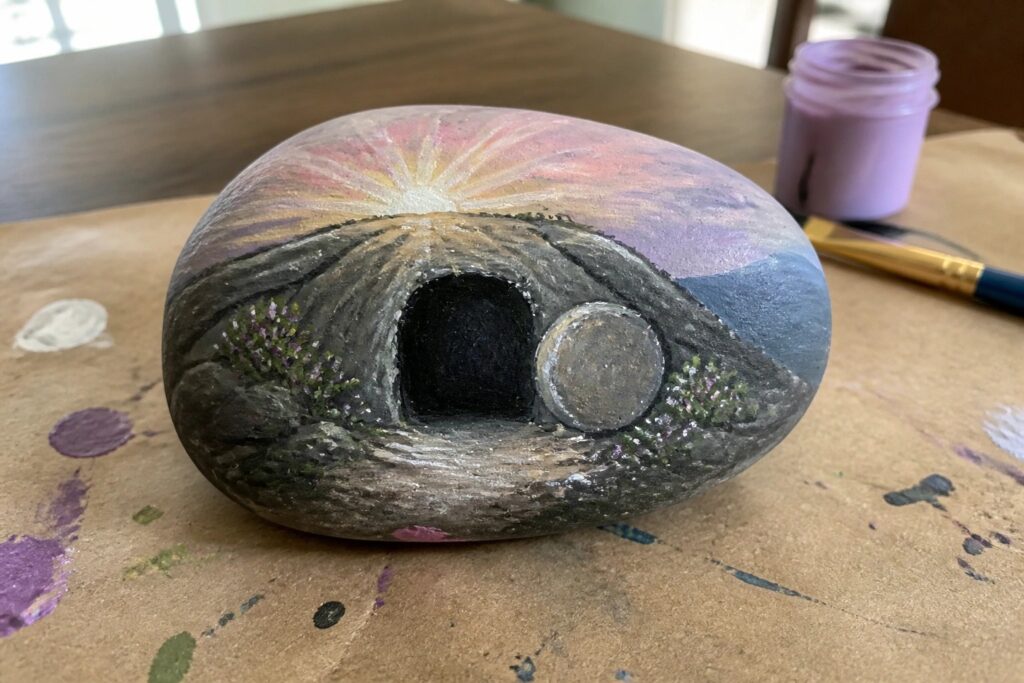
I started painting rocks a few years ago when my kids were little.
It turned into something I do every Easter now.
Lately I’ve been trying to make the messages more direct about what the empty tomb means.
These are some of the designs that felt right to me this time around.
I painted most of them on stones from my backyard.
Empty Tomb with Sunrise and Rolled Stone
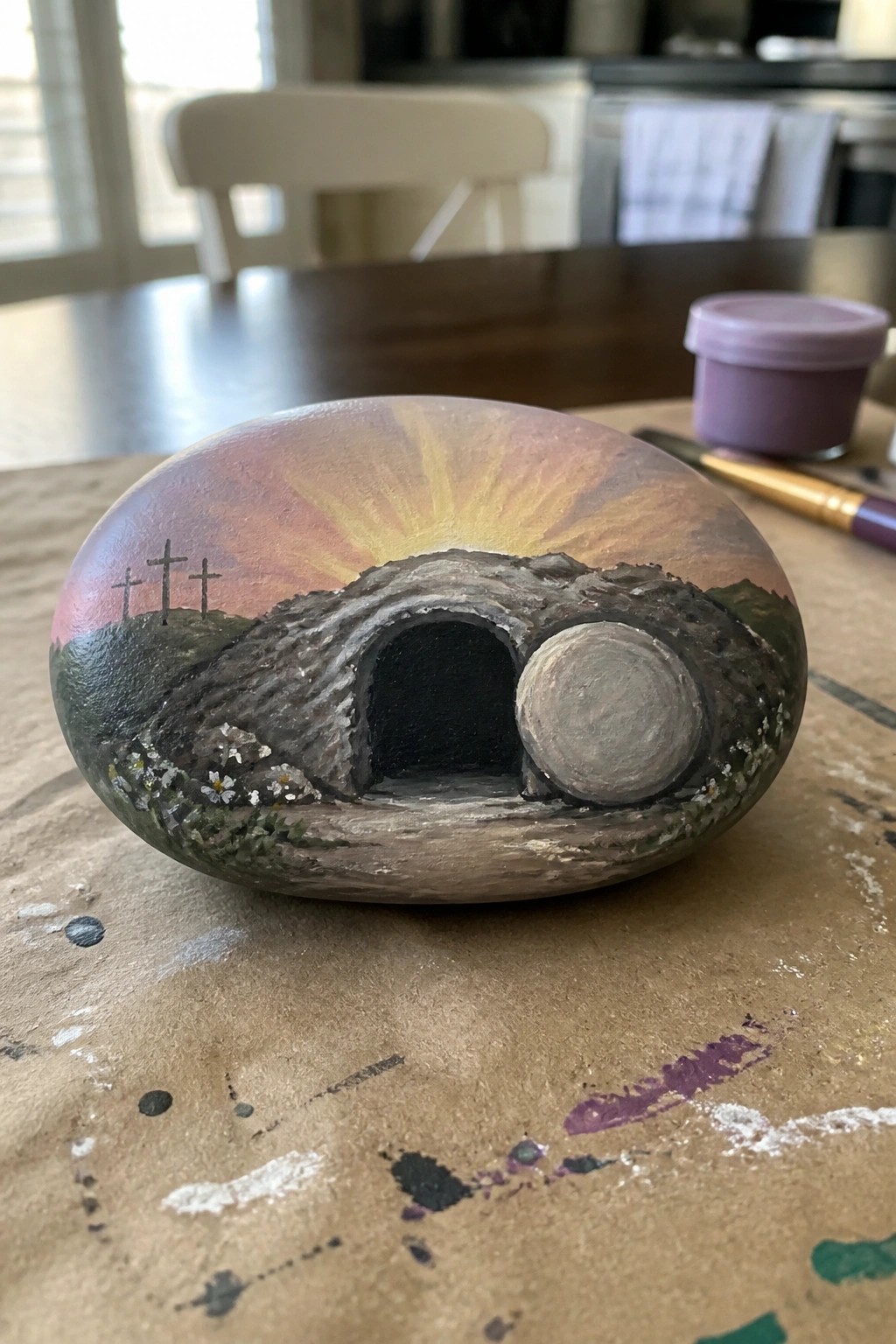
A rounded oval rock serves as the base for this resurrection scene, with the natural curve helping the painted sunrise spread across the top and the tomb entrance sit naturally in the middle. The design shows three crosses on a hill to the left, an open cave-like tomb, and a separate round stone painted beside the entrance to represent it has been moved. Simple landscape details at the bottom, including small flowers and grass, keep the focus on the central tomb while using the rock’s shape to frame the whole view.
What makes this idea useful is how the rock’s smooth, compact form lets the sunrise and tomb elements fit without extra borders or framing. The same layout can be simplified by reducing the number of crosses or skipping the landscape strip if you have a flatter stone. For garden decor, this type of painted rock works in a flower bed or near a porch step where the sunrise colors catch the light. The motif could easily be changed into a smaller version on river pebbles for a set of Easter table accents.
Cross at Sunrise Rock
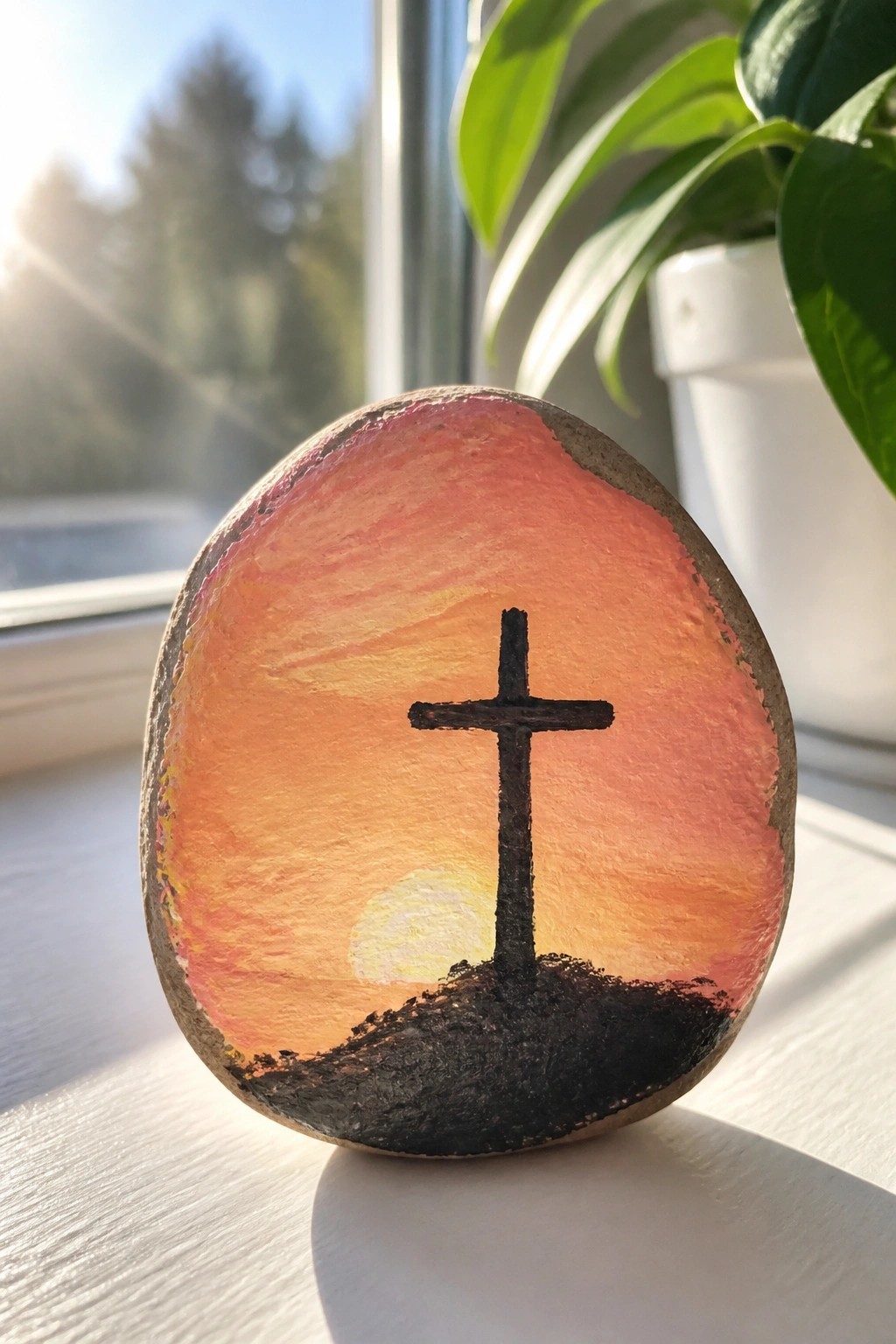
A smooth, rounded river rock works well for this resurrection-themed project. The painter used warm gradient colors in orange, pink, and yellow to create a sunrise sky, then added a bold black cross silhouette rising from a dark hill shape at the base. A small yellow glow near the bottom of the cross gives the impression of light breaking through. This style fits the Christian symbol rock category and uses the stone’s natural curve to hold the sky and ground elements in one compact scene.
The rounded stone shape makes this easy to place in a garden bed, on a windowsill, or near a planter. You could swap the sunset colors for softer pastels or keep the black cross and hill for stronger contrast on lighter stones. The simple color blocking and single motif keep the design quick to paint even on smaller pebbles. For Easter displays, the same idea works on a flatter stone so the cross stands out more when grouped with other resurrection rocks.
Butterfly Rocks for New Life Themes

Smooth oval river rocks painted as butterflies make a simple project using the stone’s natural curved shape. Each butterfly spans three or four rocks placed side by side, with wings divided into color blocks of soft purple, pink, blue, or yellow, accented by white dots and a black body with antennae lines. The rounded edges of the stones help the wings look full without extra shaping.
What makes this idea useful is how the small scale works for both indoor shelves and outdoor planters during spring. You can swap the wing colors to match other seasonal tones or shrink the design onto single rocks for quicker versions. The clear color blocking and dot details translate easily to different stone sizes while still reading as butterflies from a short distance. For garden decor this type of painted rock adds a light motif that fits among mulch or along path edges without needing extra hardware.
Empty Tomb Rock with Lilies
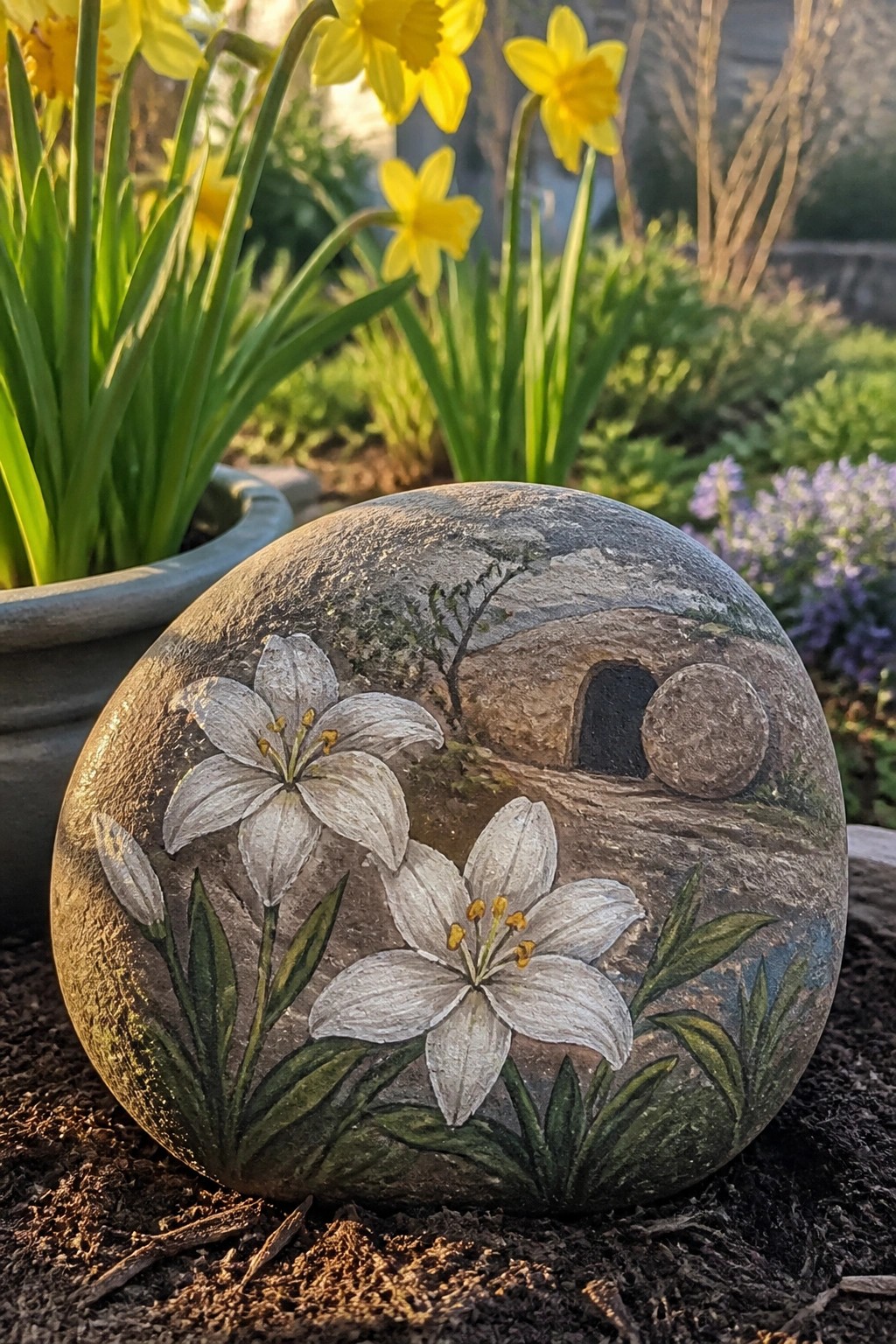
A rounded garden stone provides a solid surface for painting an empty tomb scene complete with the stone rolled aside. White lilies with yellow centers occupy the lower half while the tomb entrance and path sit higher on the curve. The rock’s natural texture and outdoor placement help the painted motif read as part of the garden rather than a separate object.
What makes this idea useful is how easily it fits among spring flowers or in a large planter. You can scale the tomb smaller on a flatter stone or reduce the number of lilies if the surface is more limited. The same layout works for other spring blooms if lilies prove too detailed, keeping the focus on the open tomb as the main element.
White Dove Rock
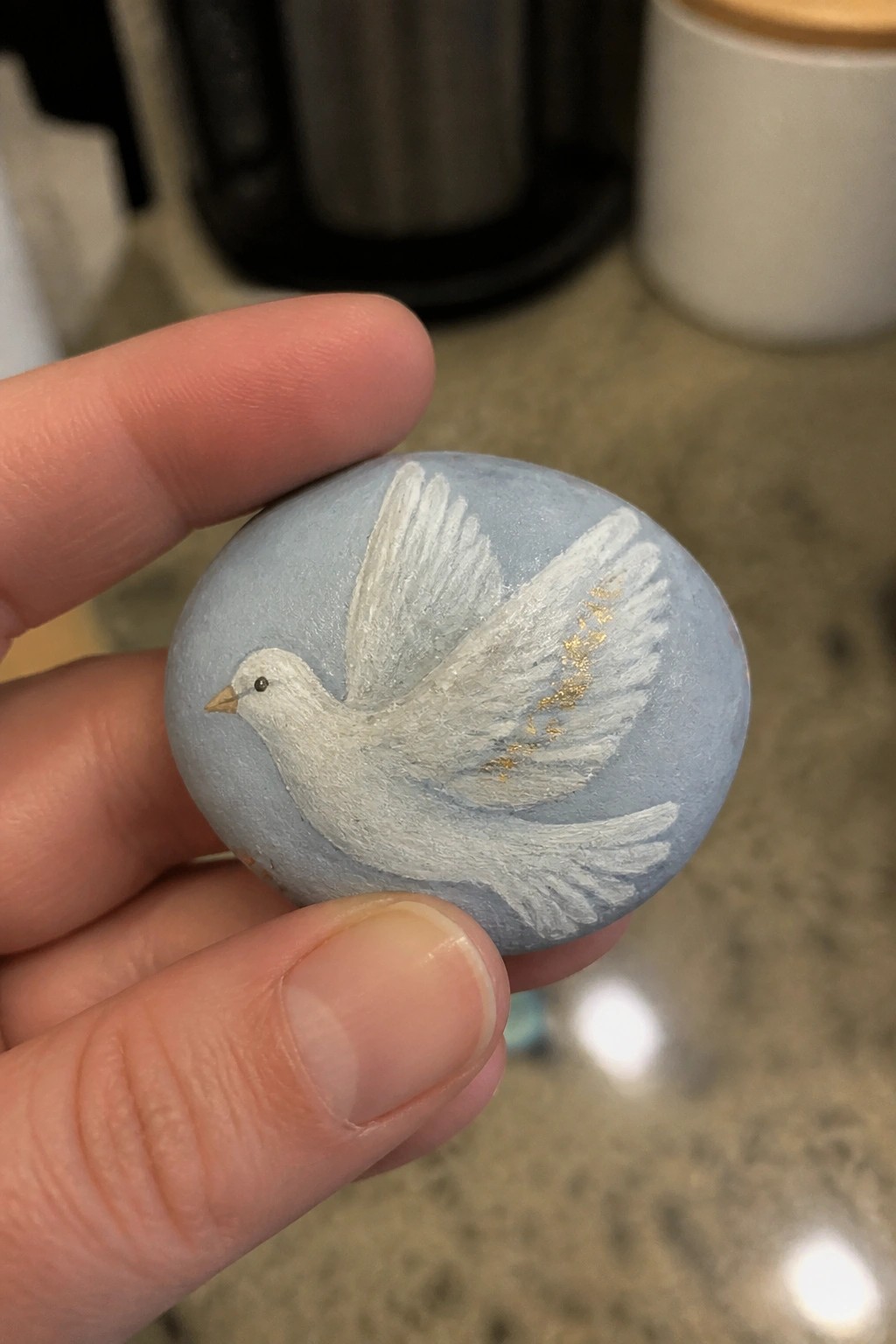
A smooth rounded stone painted light blue works as a simple sky background for a white dove shown in flight. The bird uses basic brush strokes to shape the body and wings, with a few small gold accents along one wing for contrast. This turns an ordinary physical rock into a Christian symbol rock that fits resurrection or Easter themes.
What makes this idea useful is how the dove motif connects directly to resurrection ideas while staying easy to paint on a small stone. The rounded shape helps the design sit nicely in a planter, on a shelf, or among garden stones without tipping. You could change the background to a soft sunrise tone or add a faint cross outline to link it more closely to the empty tomb. The same layout adapts well to other flat or oval rocks if you want a different size for porch decor or table displays.
Three Crosses Hill Rock
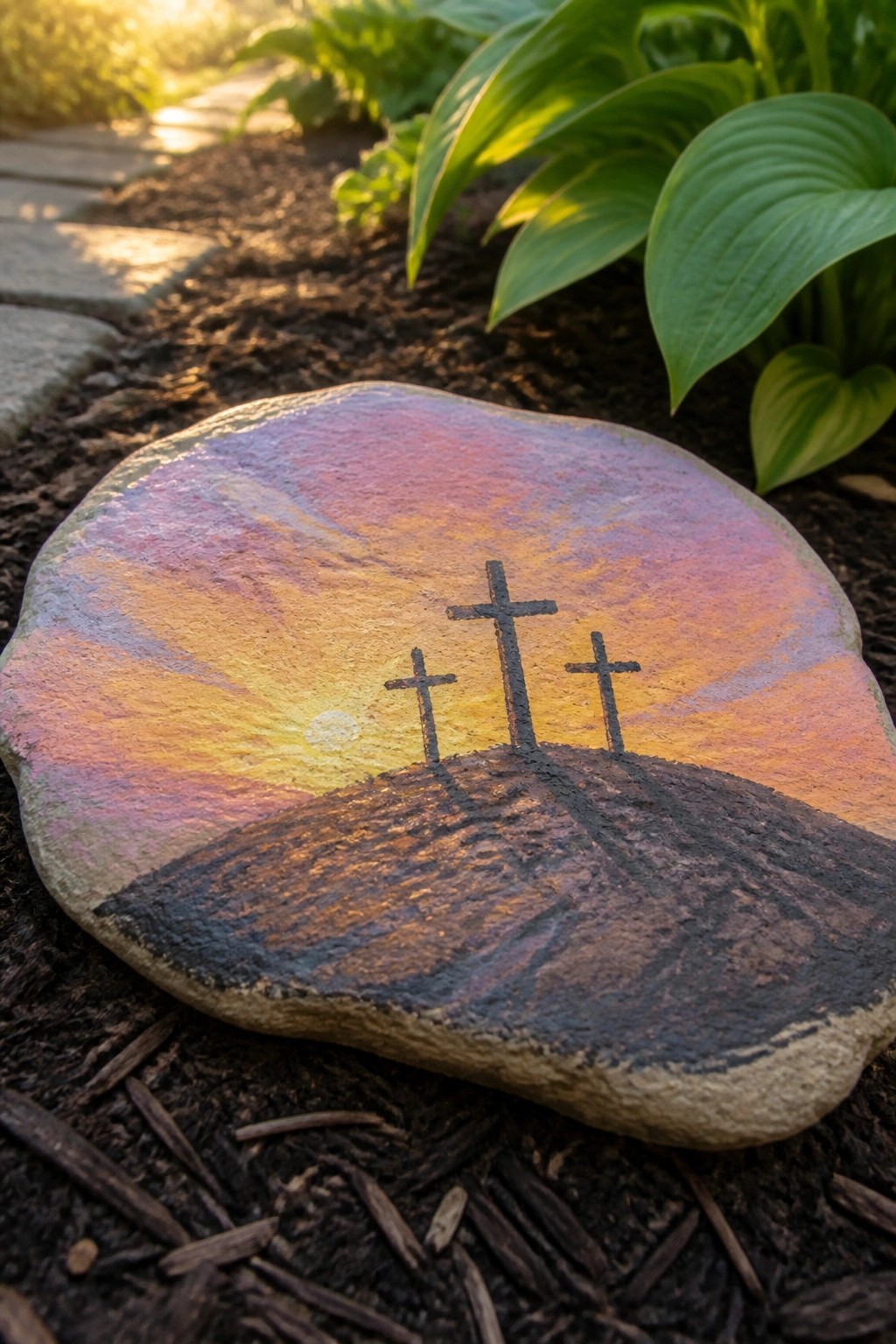
A flat, rounded garden stone carries this resurrection scene with three crosses placed along the top of a dark hill. Warm orange, pink, and yellow paint blends across the upper half to form the sky, while a small white circle sits low as the sun. The hill uses rough brown and black strokes that follow the rock’s curve, and the central cross is painted taller than the two beside it. This Christian symbol rock uses the stone’s natural shape to frame the crosses without extra borders.
What makes this idea useful is its direct fit for garden paths, flower beds, or porch steps where the warm sky colors stand out against mulch or soil. The rounded edges let the sky area wrap naturally, so the same layout works on both small pebbles and larger stones. You could swap the sunset tones for softer dawn shades or keep the hill simple and focus only on the three crosses. For Easter displays, this painted rock fits well in a planter or near an entryway without needing text.
Cracked Stone with Emerging Sprout
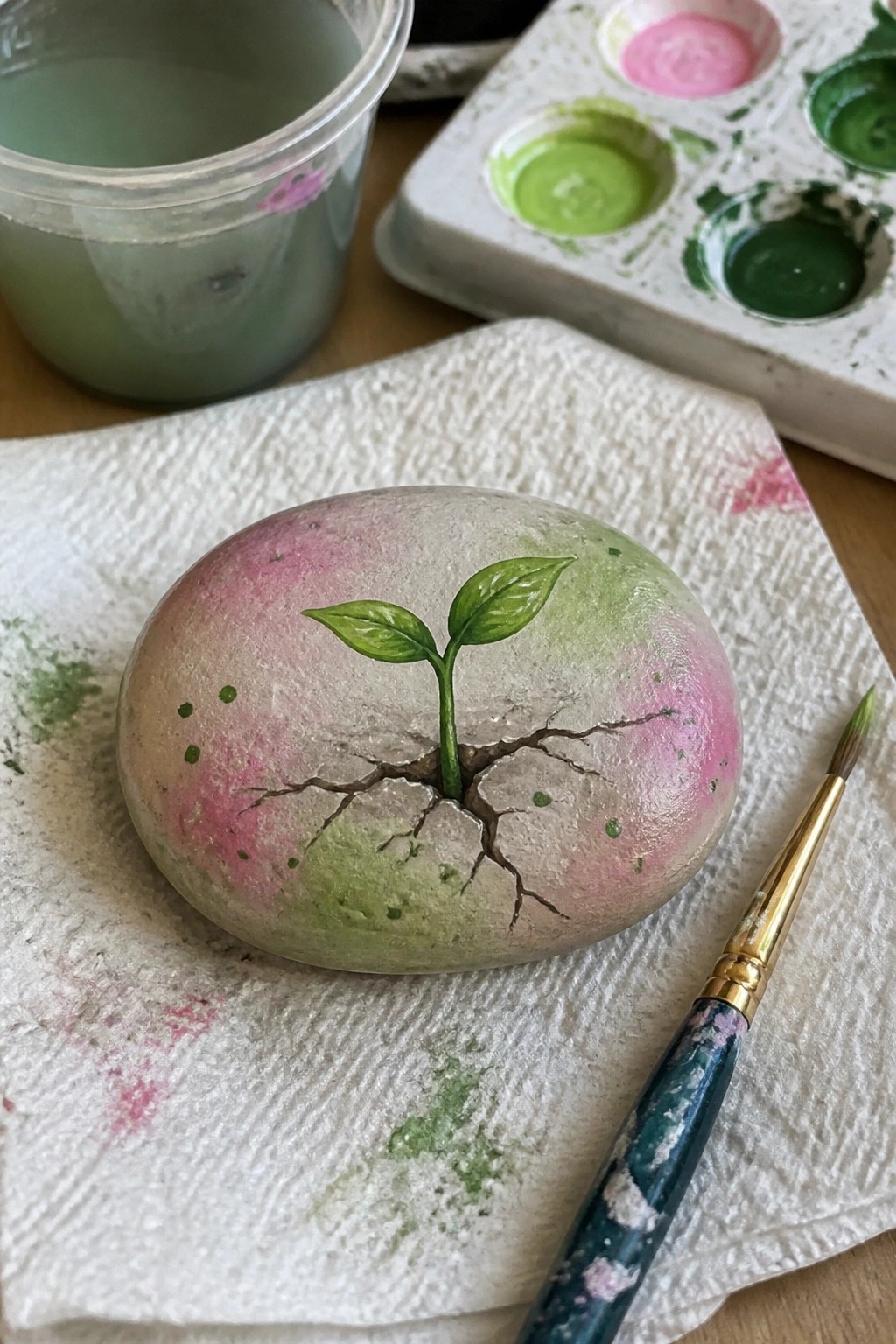
A smooth rounded rock works well for this resurrection project because the curved surface lets the painted cracks run naturally across the top. The design uses a central green stem and two leaves rising from the cracks, with soft pink and green washes around the edges and small dots scattered near the break lines. This approach keeps the focus on the sprout as the main symbol of new life coming from the empty tomb. The physical rock stays visible under the thin paint layers so the stone texture adds to the cracked effect without extra materials.
What makes this idea useful is how the natural rock shape supports the cracked surface without needing perfect lines. The same sprout motif can be scaled down for smaller stones or widened for a flatter rock to fit different planters or garden beds. A painted rock like this works especially well as a seasonal accent near entry steps or in a flower pot during Easter week. The simple color areas make it easy to rework with different leaf shapes or crack patterns on future stones.
Painted Lily Bud Rocks
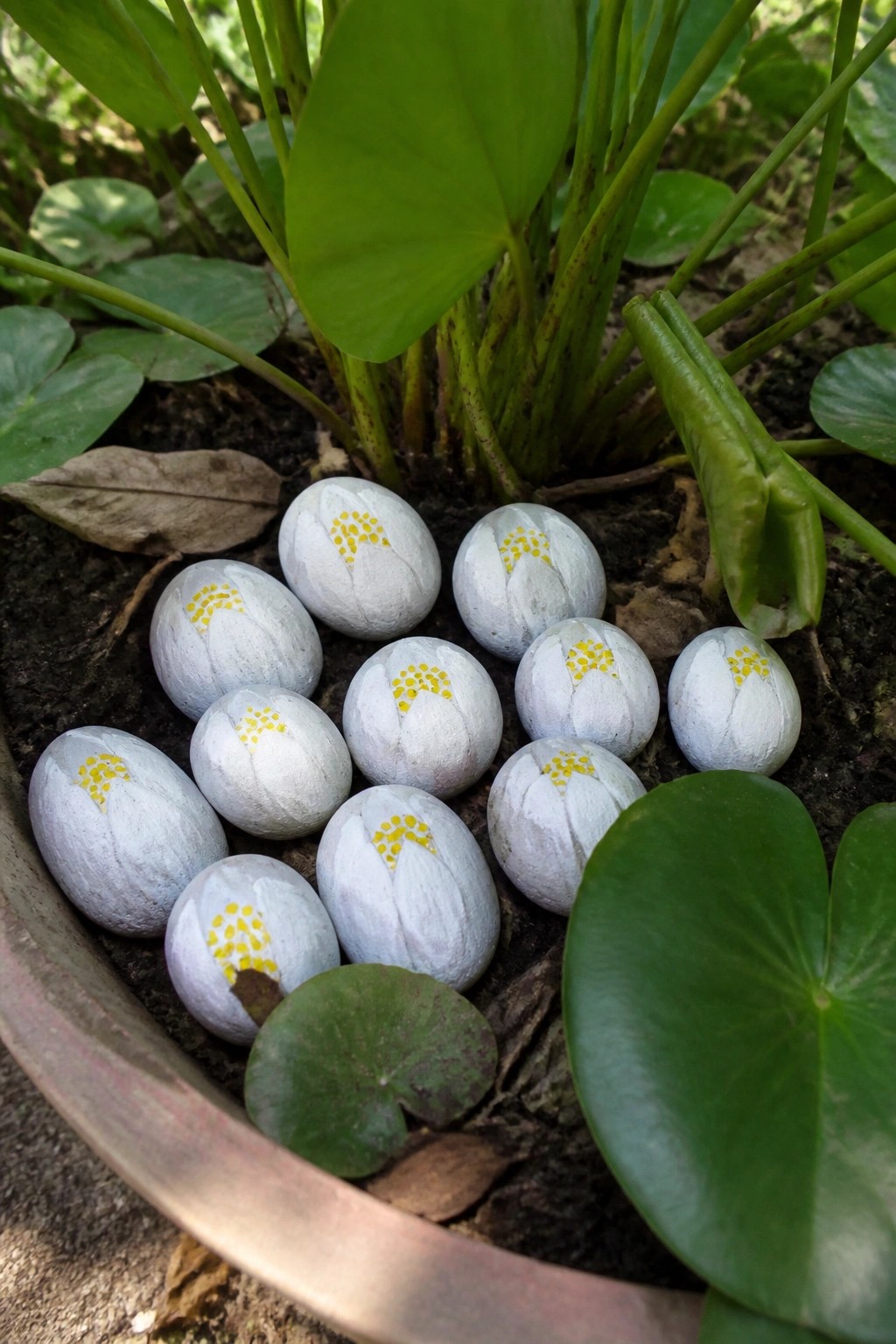
Smooth oval rocks painted white with simple petal outlines and clusters of yellow dots at the top create a set of lily bud designs. The natural rounded shape of the stones supports the curved bud form, and the contrast between the white base and bright dots makes the motif readable even in a garden setting. This approach fits the flower rock category and works well as garden decor placed directly in soil or planters.
What makes this idea useful is how the oval rock shape already suggests a closed bud, so only light outlining and dots are needed to complete the look. A painted rock like this works especially well in spring planters or around flower beds for seasonal displays. You could adapt the same design to slightly larger stones or swap the dot color for other flower varieties while keeping the white base consistent.
Empty Tomb Rock Painting
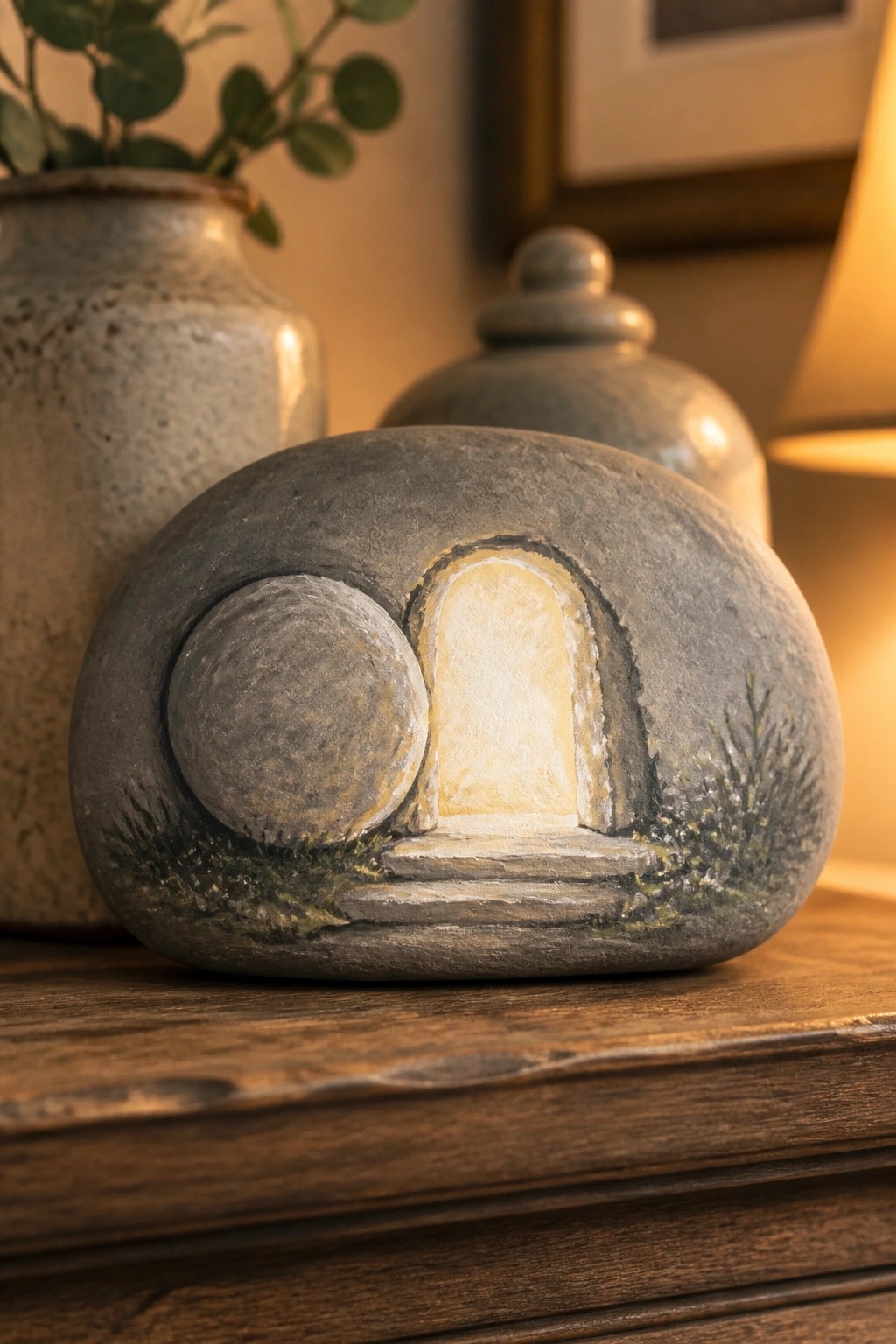
A large rounded gray stone serves as the base for this empty tomb design, with a smaller circular shape painted on the left to show the stone rolled away. The central arched entrance is filled with a light color and outlined in darker tones, while steps lead up to the opening and small foliage accents appear along the edges. This Christian symbol rock uses the natural curve and texture of the stone to shape the tomb without needing additional forms.
What makes this idea useful is how the oval rock shape already suggests a cave entrance, so the painting stays simple with basic color blocks for the arch and steps. A painted rock like this works especially well as an Easter accent placed in a planter, on a porch step, or among garden mulch. The design adapts easily to smaller smooth stones by shrinking the arch size and keeping the rolled circle as the main focal point.
Lamb Rock with Cross Accent
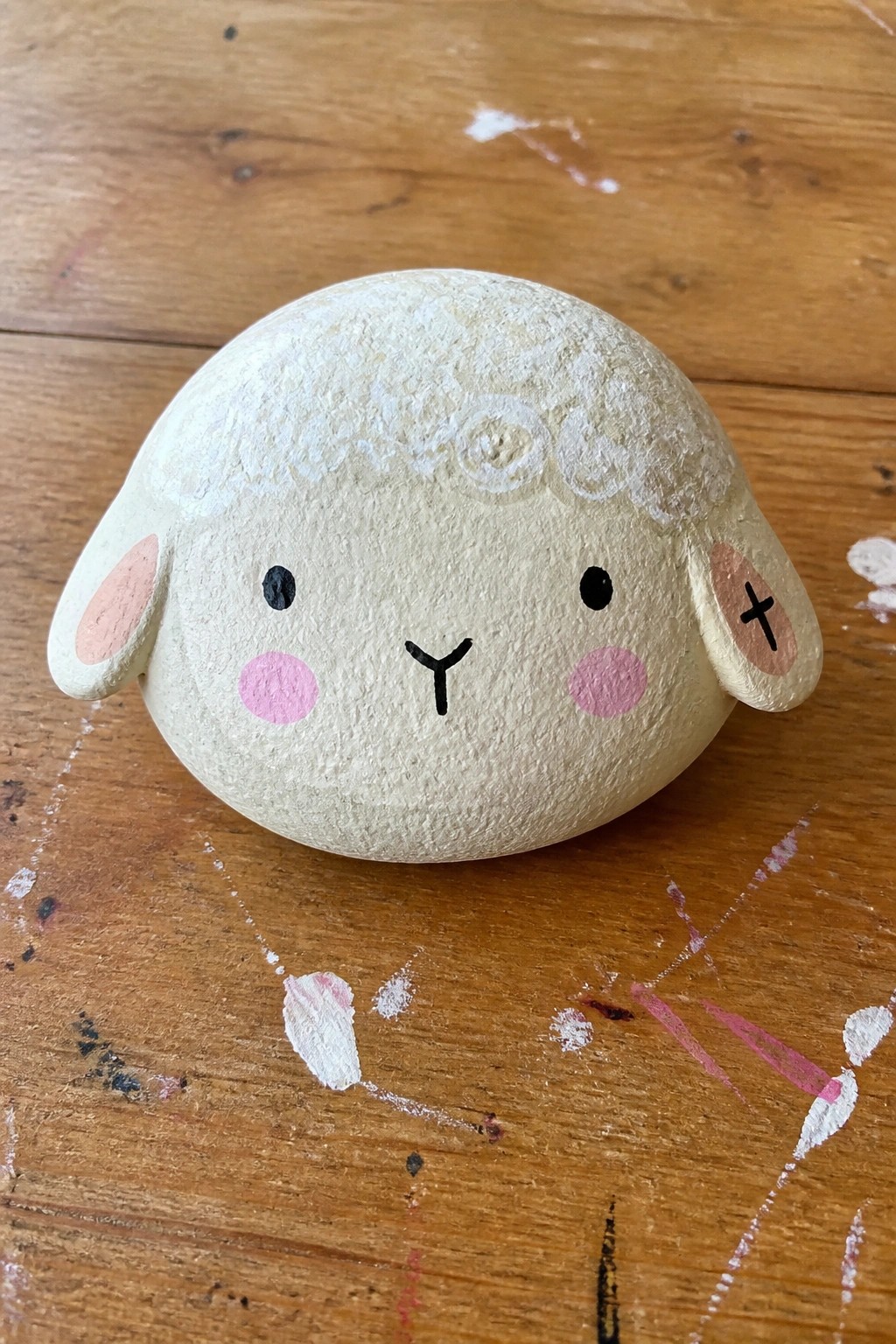
A rounded stone works well for this lamb design because its smooth curve supports the simple face and rounded body shape without extra carving. The base is painted a soft cream color with textured lines on top to suggest wool, while black dots form the eyes and a Y-shaped line creates the nose and mouth. Pink dots make the cheeks and inner ears, and a small black cross is painted directly on one ear to add the Christian symbol. This approach keeps the project to basic color blocking and linework on a physical rock that fits easily in a hand or small display spot.
What makes this idea useful is how the natural stone shape already forms the lamb’s head and body, so you only need to add the face and ear details rather than build a full figure. The same design could be scaled down to a smaller pebble for a basket filler or enlarged on a flatter stone for a porch accent during Easter week. Placing the cross on the ear instead of the body keeps the motif subtle while still tying it to resurrection themes. You could swap the pink accents for other soft colors or repeat the cross on both ears if you want a version that reads more clearly from a distance in a garden bed or on a mantel.
Sunrise Rock for the Empty Tomb
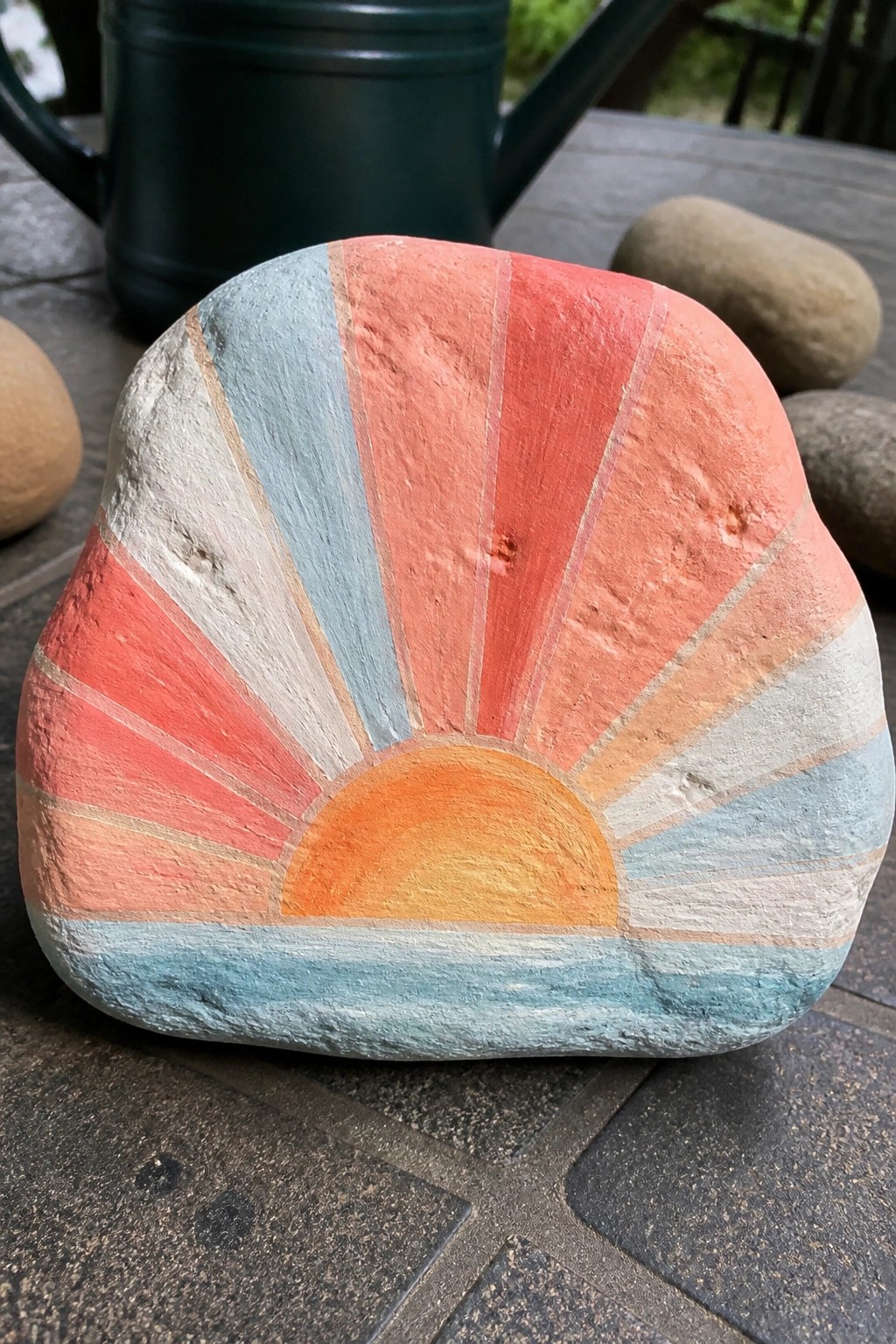
A smooth, rounded stone makes a strong base for a sunrise motif that points to the resurrection. Paint a solid orange half-circle sun along the lower edge, then add straight radiating stripes in coral red, peach, light blue, and off-white that spread upward across the curved surface. A narrow blue band at the very bottom suggests the horizon or water line. The natural rock shape lets the rays follow the contours with minimal extra planning.
What makes this idea useful is how well the radiating pattern adapts to any oval or slightly flattened stone. Set the finished rock in a garden bed, near a front door, or inside a planter during Easter season for a simple seasonal accent. You can reduce the number of colors or widen the sun on a larger stone to change the scale without losing the effect. The bold stripes and limited palette photograph clearly, which helps the design stand out when shared as a project idea.
Butterfly Life Cycle Rocks
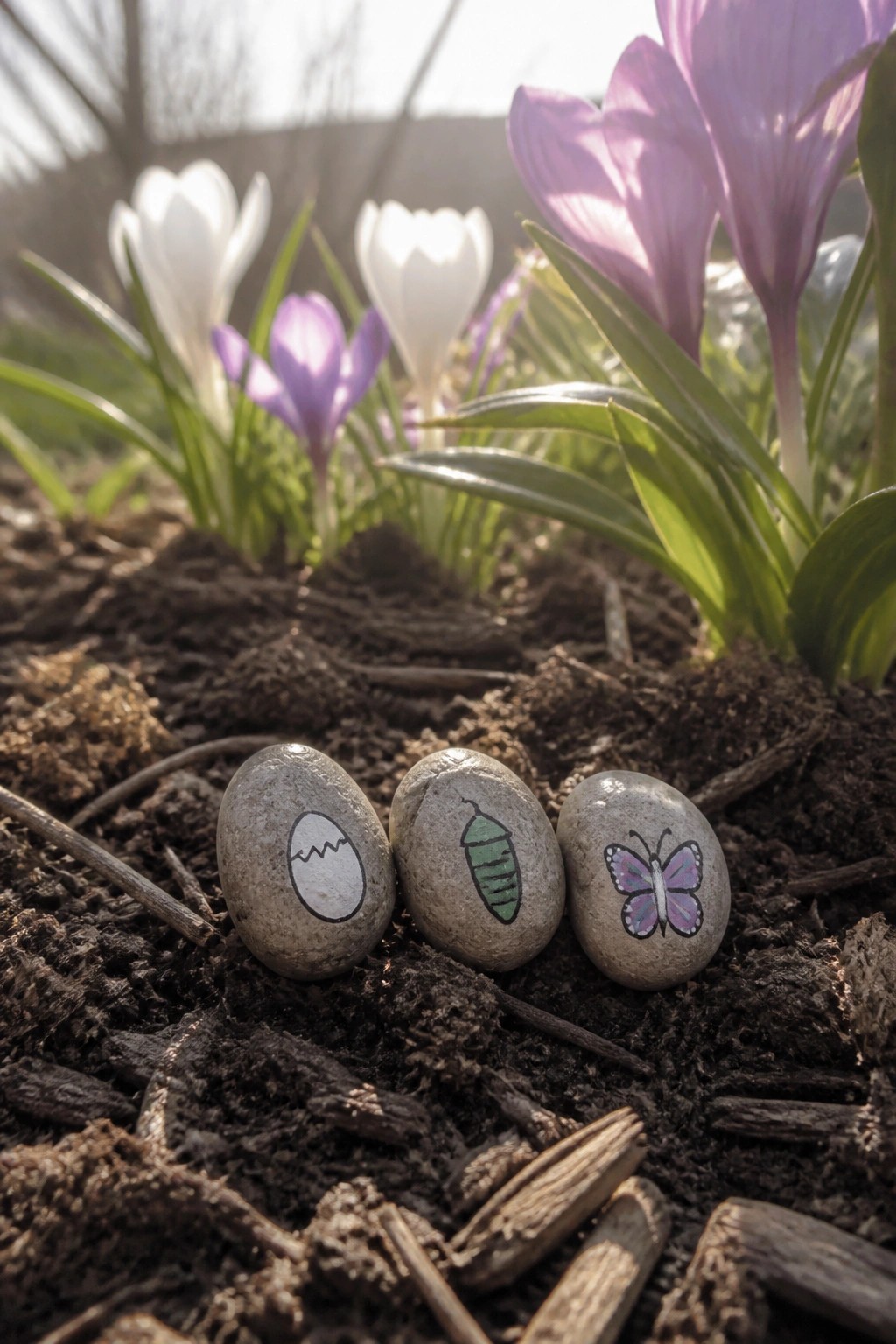
Three rounded garden stones painted with the stages of a butterfly work well as a resurrection craft. One stone shows a simple cracked egg, the middle one a green chrysalis, and the last a purple butterfly with basic wing details. The oval shapes of the stones match the curved forms of each stage, and the natural stone texture remains visible under the paint. This approach fits the painted rock collection category for seasonal or symbolic garden use.
What makes this idea useful is how the three rocks can be placed together in soil, a planter, or along a garden path for Easter displays. The small scale makes it easy to adapt the same motifs to any smooth stones you have on hand or to change the butterfly colors for variety. For a gift, something like this works as a compact set that needs no extra text. The straightforward outlines and color areas keep the project quick to repeat on different rock sizes.
Dove and Olive Branch Rock
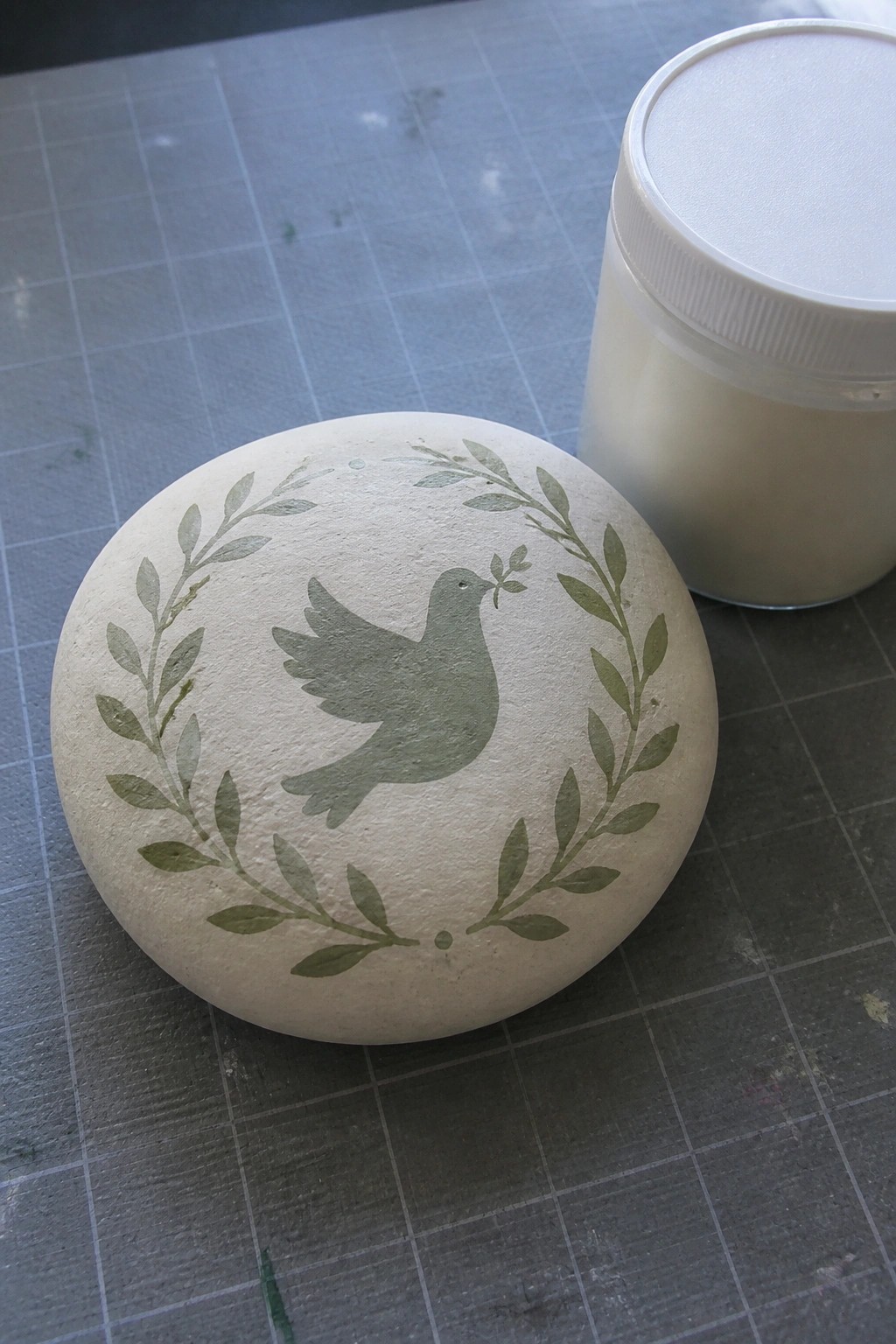
A smooth, rounded stone serves as the base for this project, with the flat top providing space for a central flying dove that holds an olive branch in its beak. The design uses a muted green tone for the bird and the surrounding circle of leafy branches, which creates clear contrast against the light stone without needing extra layers. This fits the Christian symbol rock category and works for resurrection themes because the dove and branch are direct visual motifs tied to new life and peace.
What makes this idea useful is how the circular wreath keeps the focus on the dove even on smaller stones. You could drop the wreath and paint just the dove on a flatter rock for a simpler version, or repeat the same green on a set of stones to place along a garden path or in a planter. For seasonal displays, this painted rock fits easily into an Easter table arrangement or a small collection meant for porch steps.
Empty Tomb Rock
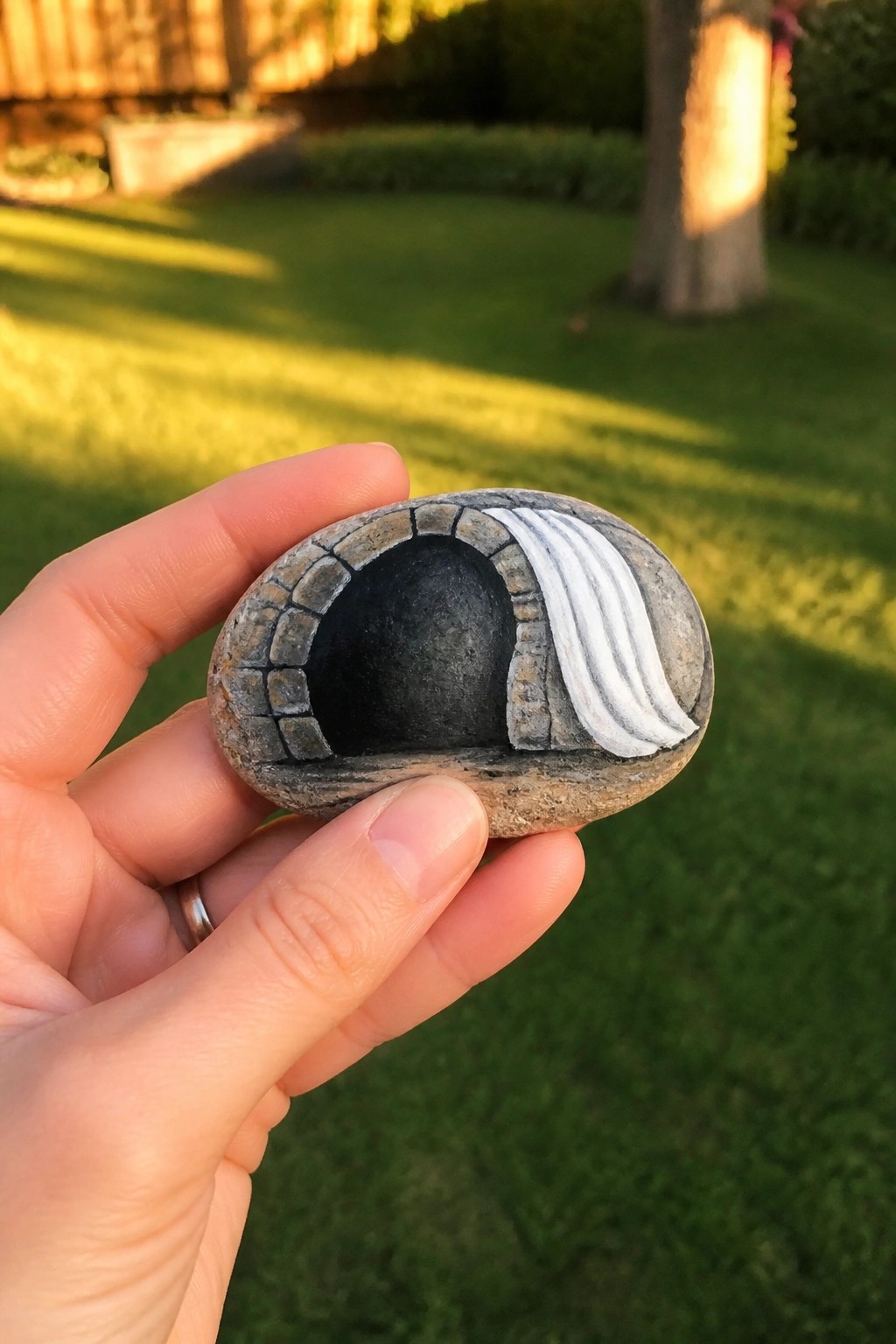
A smooth oval rock painted as an empty tomb creates a clear Christian symbol for resurrection themes. Gray paint forms a brick arch around a solid black opening, while white brush strokes on one side suggest the stone rolled away. The natural curve of the rock helps the arched entrance look three-dimensional without extra layers. This fits the category of a Christian symbol rock meant for seasonal display.
What makes this idea useful is how the oval shape already supports the tomb motif, so the main work is just outlining the arch and blocking in the dark center. For garden decor, this type of painted rock sits well in mulch or a planter during Easter without needing a stand. The same layout could be simplified on a flatter stone by using fewer bricks around the edge, or reworked onto a round pebble for a smaller version in a tabletop display. The painted detail helps this stand out on Pinterest when paired with other resurrection-themed rocks like a sunrise or cross.
Empty Tomb with Sunrise and Crosses
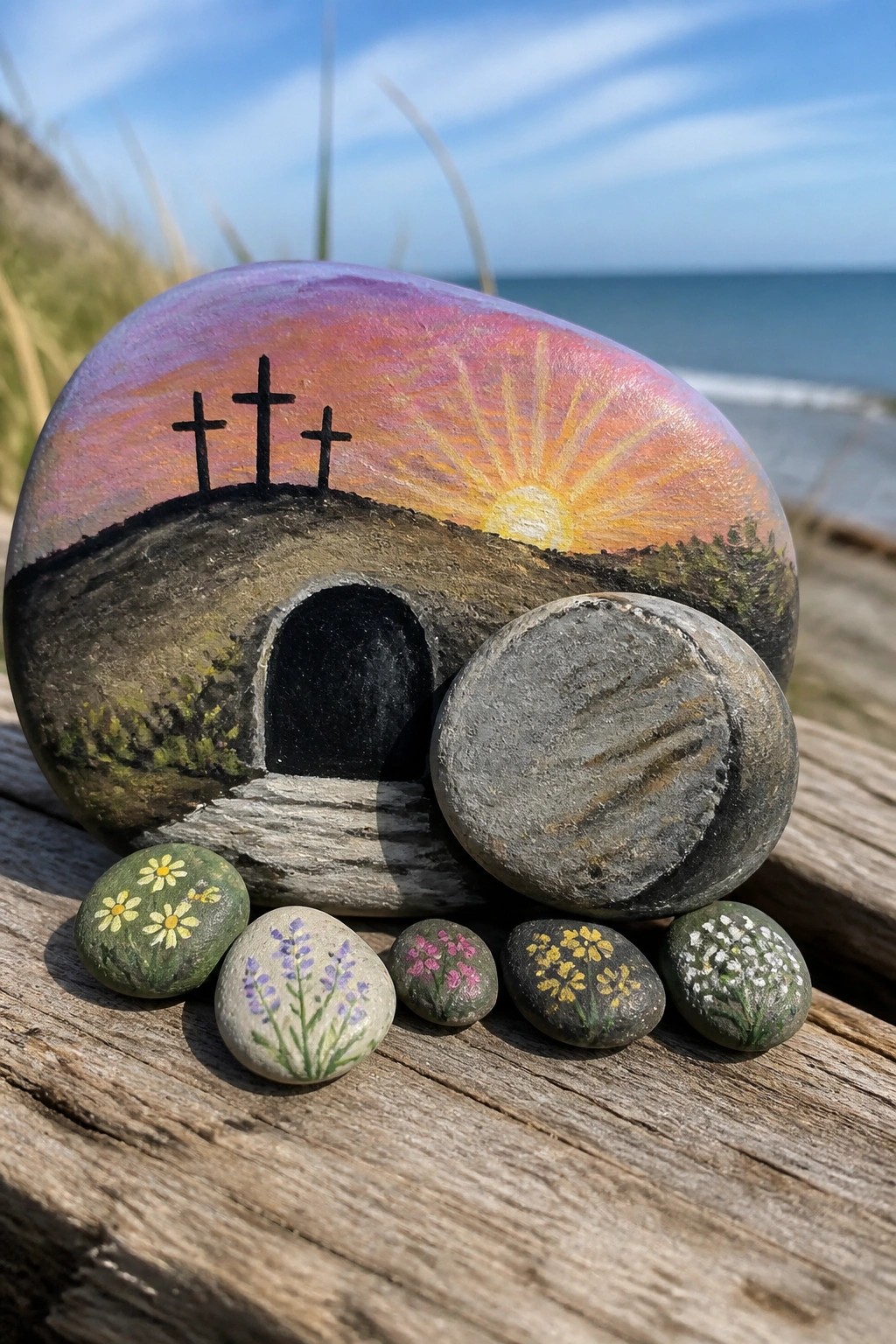
A large rounded stone forms the base for this Christian symbol rock that depicts three crosses on a hill above a recessed cave opening meant to represent the empty tomb. The painted sunrise uses blended warm colors behind the hill to draw focus to the scene, while a simple path leads into the dark opening and smaller stones with basic flower designs sit at the front. The natural curve of the main rock helps the hill shape sit naturally without needing extra shaping. This approach works as a resurrection rock idea that relies on visible symbols like the crosses and tomb rather than text.
What makes this idea useful is that the recessed area already present on the stone can stand in for the tomb without added carving. You could adapt the same layout to a flatter rock by using a painted arch instead of a physical opening and keeping the crosses and sun as the main focus. This kind of painted rock works especially well as a seasonal accent in a garden bed or on a porch step during Easter. The smaller flower stones could be swapped for other simple motifs like a single cross or a lamb if you want to scale the project down.
Empty Tomb Rock with Rolled Stone and Sunrise Sky

A smooth, rounded stone serves as the base for this empty tomb design. The upper section uses a blended gradient of blue into pink and purple to create a sunrise effect, while three dark birds fly across the open space. Below sits a black arched opening for the tomb, paired with a separate gray circle as the rolled stone and simple dark foliage along the sides to frame the scene. The natural curve of the rock helps the sky wrap around the top without extra shaping.
What makes this idea useful is how the rock shape already suggests a hillside setting for the tomb. The design works well as a seasonal accent in a planter, on a porch step, or tucked into a garden bed during Easter. You could scale the same layout down to a smaller pebble for a tabletop display or enlarge the sky area on a flatter stone to fit more birds. The strong contrast between the light sky and dark tomb keeps the empty entrance easy to read even from a distance, which helps it perform on Pinterest feeds.
Lily and Empty Tomb Rock
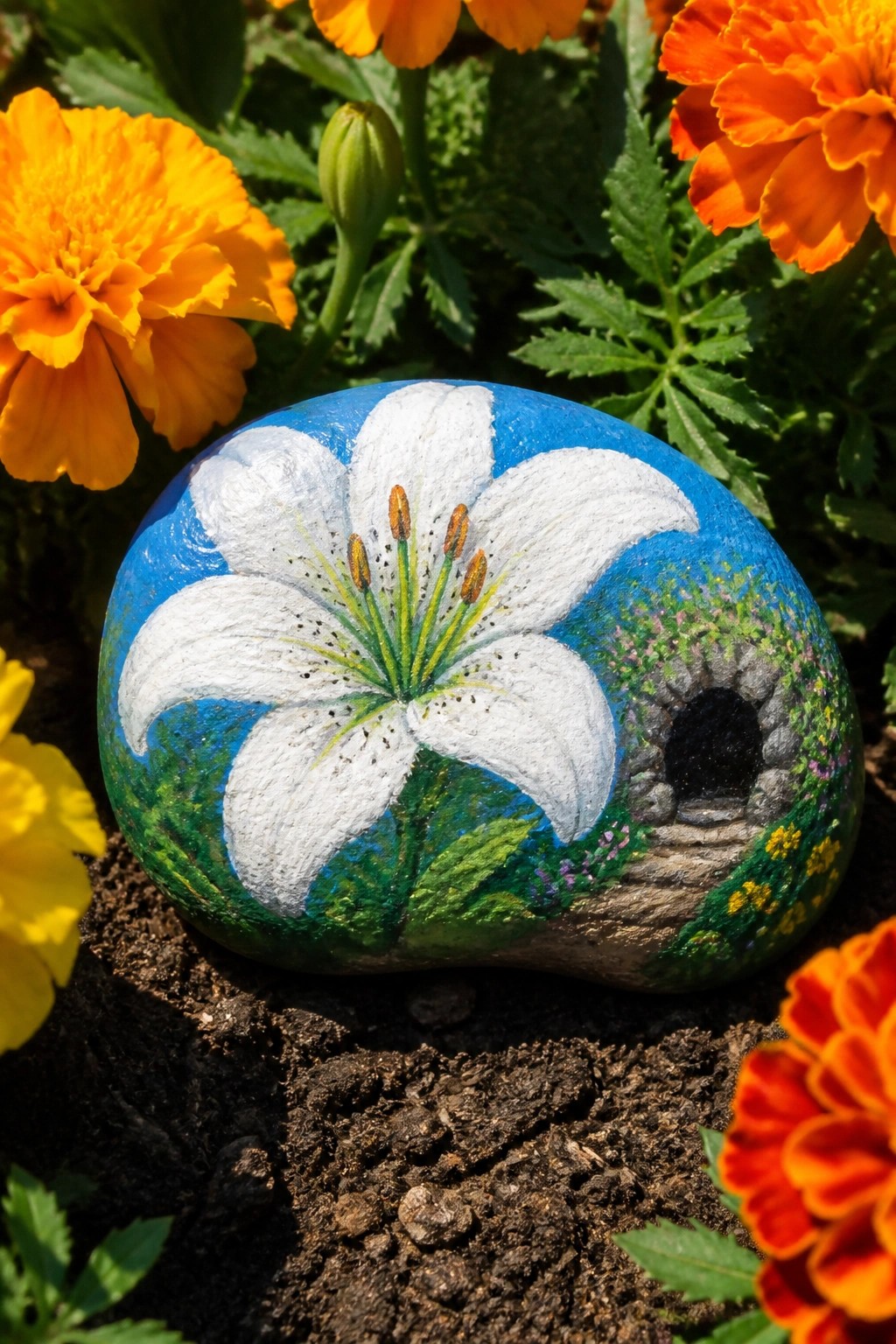
A rounded garden stone serves as the base for this resurrection project. One side shows a large white lily with green and yellow center details against a solid blue background, while the opposite curve holds a small gray stone archway with a dark opening. Green painted foliage and scattered dots run along the bottom edge to connect the two sides. The natural curve of the rock lets both the flower and the tomb show clearly depending on the viewing angle.
What makes this idea useful is how it places two resurrection symbols on one stone that can sit in a flower bed, mulch, or seasonal planter. The rounded shape helps the lily span across the surface without crowding the tomb detail on the side. You could swap the lily for a simpler bloom or enlarge the arch opening if the rock is flatter or smaller. This painted rock works well for Easter displays because the white flower and dark opening read clearly even from a short distance.
Angel Wings Resurrection Rock

A smooth oval stone forms the base for this project because its rounded shape naturally supports a pair of wings without extra shaping. Paint the wings in soft white and pale blue tones, then add gold lines along the edges and through the feather details to create contrast against the stone surface. The result is a clear Christian symbol rock that works for Easter or resurrection displays.
What makes this idea useful is how the wing motif can be adjusted to fit smaller pebbles or larger garden stones depending on where you want to place it. Set the finished rock on a shelf with other seasonal items or add it to a planter for a simple outdoor accent. The same gold outline technique can be reused on different color backgrounds or paired with a small cross on another stone to build a matching set.
Paired Butterfly Stones
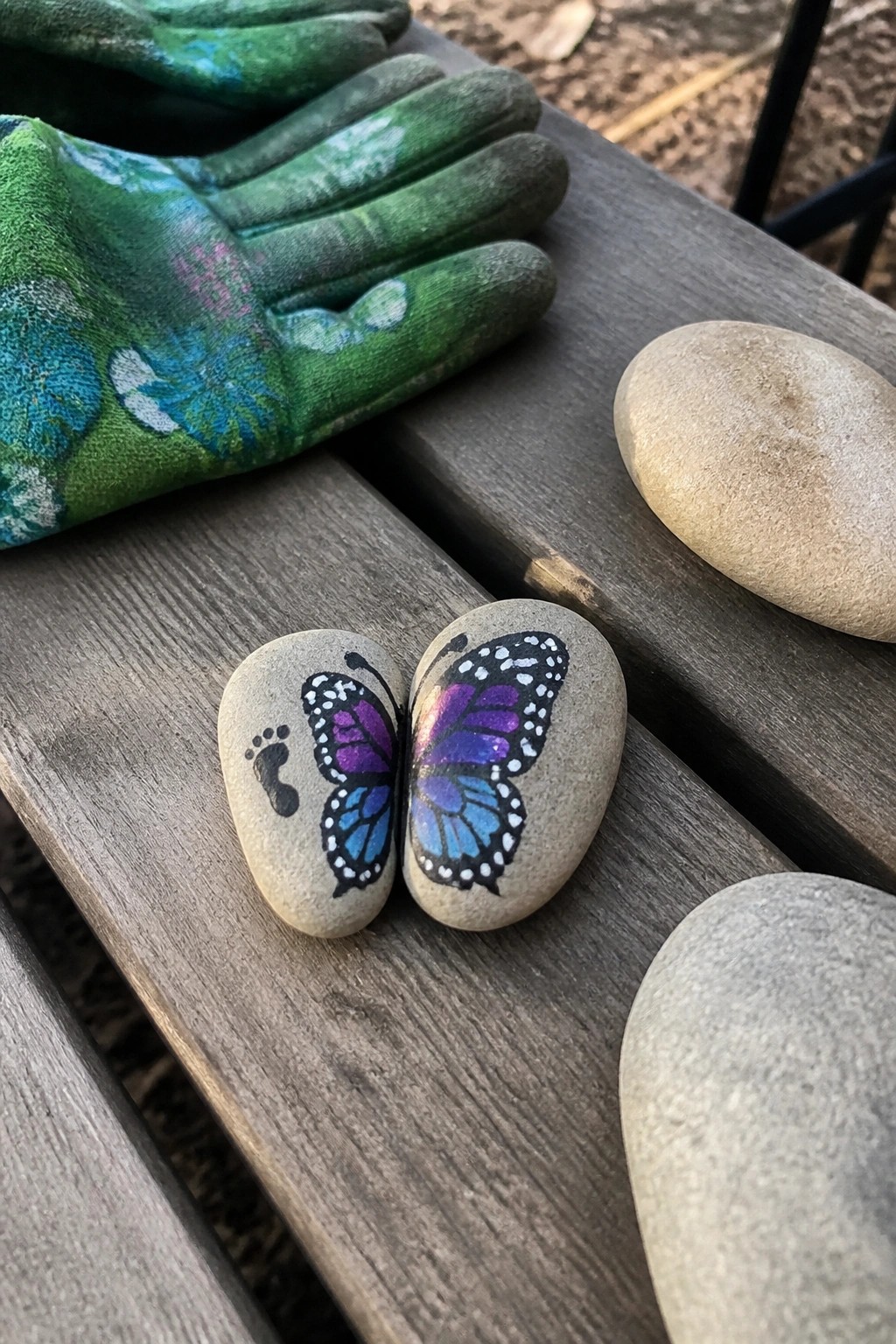
Two rounded river stones sit side by side to form a single butterfly when their painted surfaces meet. Each stone carries one wing in a purple-to-blue gradient with white dots along the outer edges and black outlines that follow the stone’s curve. One stone also shows a small black footprint near the center. The design uses the stones’ natural oval shape and flat faces to keep the wings balanced without extra cutting or shaping.
What makes this idea useful is how easily the split format can be repeated on any pair of similar stones you already have. The same wing layout works in different color combinations or with simpler dot patterns if you want a quicker version. Place the finished pair in a planter, on a porch step, or among other garden stones where the butterfly appears only when the rocks stay together. The approach also scales down to smaller pebbles for a tabletop display or up to larger stones for a flower bed accent.
Empty Tomb at Sunrise
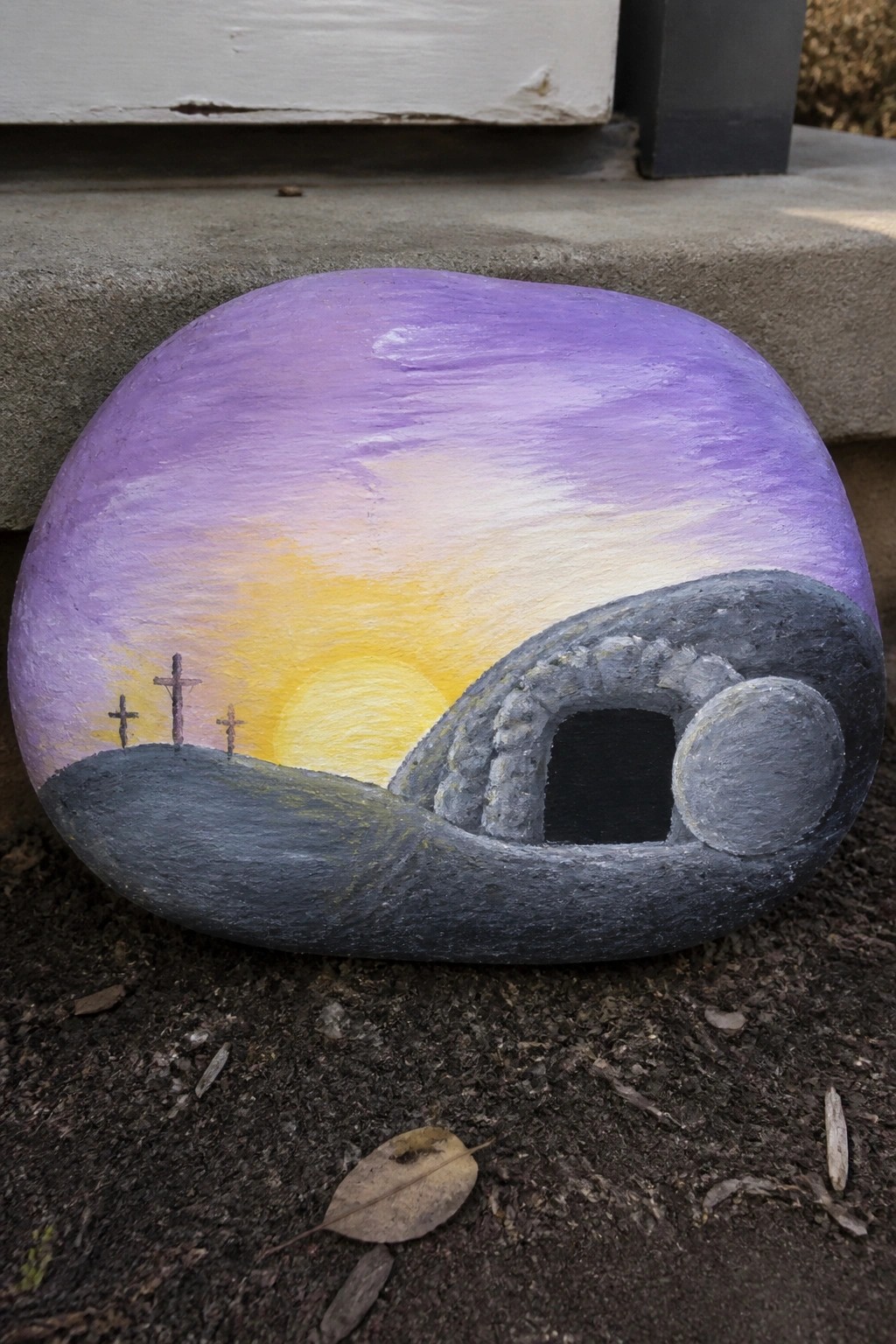
A large rounded stone carries this resurrection scene through a purple-to-yellow gradient sky with a rising sun, three small crosses on a low hill, and a stone tomb painted with an open doorway and the round sealing stone moved aside. The design uses the rock’s natural curve to let the hill slope across the bottom and the tomb structure sit on the right side without extra shaping. Dark gray and black paint defines the tomb’s rough stone blocks and the crosses while the bright sun area keeps the center of the scene clear.
What makes this idea useful is that the rock shape already suggests a hillside so the main work is just the sky gradient and the tomb outline. You could scale the same layout down onto a smaller oval stone by shrinking the crosses and moving the tomb slightly lower. This painted rock works especially well placed among garden mulch or on a porch step during Easter week because the symbols stay readable even when viewed from a few feet away. The simple color blocks make it easy to repeat on other stones with different sky colors if you want a matching set.
Shepherd’s Lamb Painted Stone
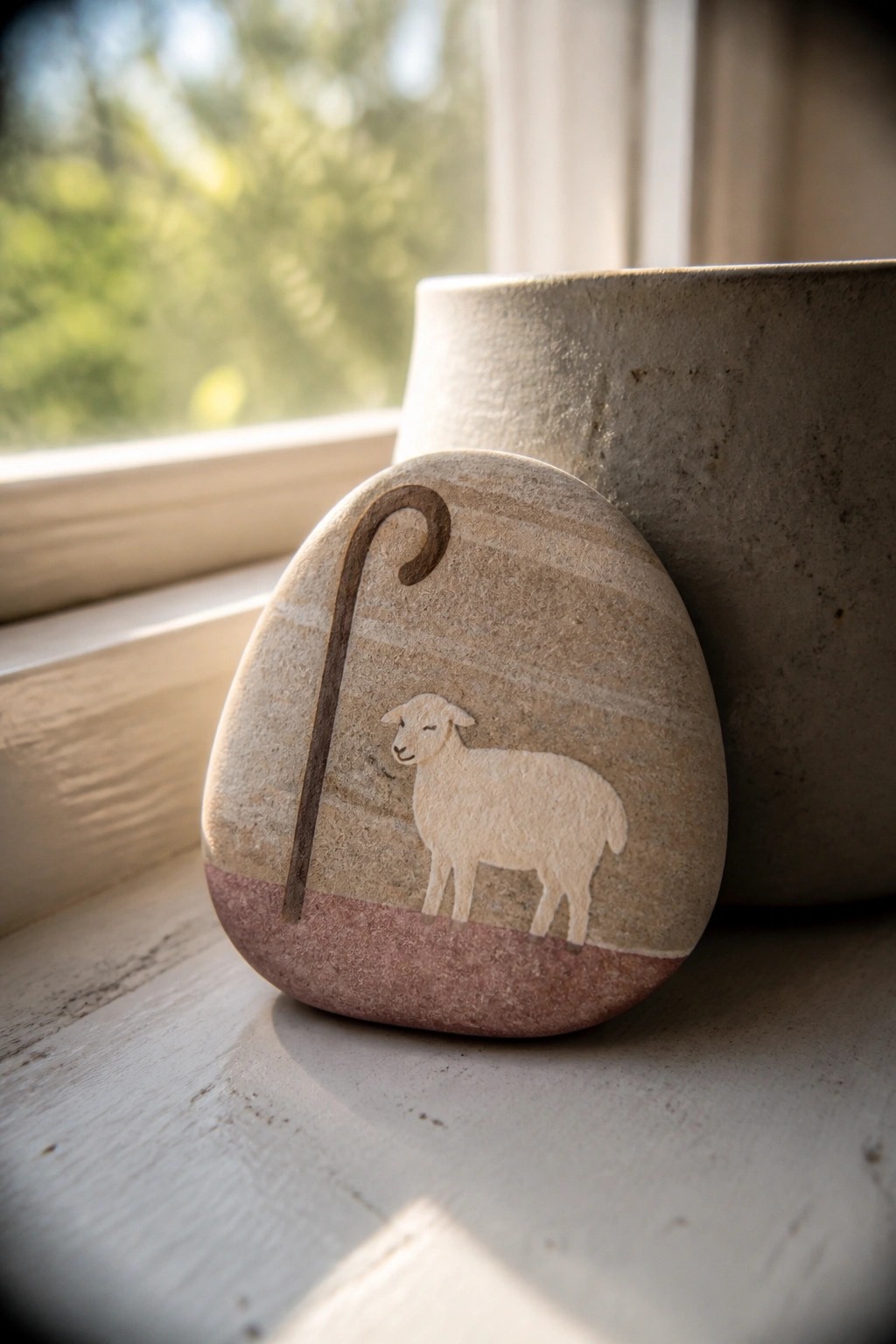
A smooth rounded stone makes a strong base for this Christian symbol design. The lamb is painted in a light color with simple body lines while the shepherd’s crook curves along the upper edge in a darker tone. A narrow band of contrasting color at the bottom creates a ground line that keeps the motif centered on the rock face.
What makes this idea useful is how the natural stone shape supports the staff curve without extra outlining. A painted rock like this works especially well as a seasonal accent in a flower bed, on a porch step, or inside a planter during spring. The motif could easily be changed into a plain lamb alone or paired with a small cross if you want a more direct resurrection reference. For a gift, something like this stays meaningful without needing lettering.
Frequently Asked Questions
What materials work best for creating durable resurrection rocks that can withstand outdoor weather?
Use smooth river rocks or stones from a craft store as your base since they hold paint well. Apply acrylic paints in colors like white for the empty tomb theme or earth tones to represent the garden setting. Seal each rock with a clear outdoor varnish after the paint dries to protect the designs from rain and sun. This approach ensures your rocks last through multiple seasons while clearly displaying messages about Jesus rising from the dead.
How can families with young children participate in making these resurrection rock ideas without frustration?
Start by assigning simple tasks such as choosing a rock or adding basic symbols like a cross or heart that represent hope and new life. Provide pre-drawn outlines for kids to fill in with markers or stickers featuring verses such as John 11:25. Work together on a table covered with newspaper and celebrate each completed rock to keep the focus on the joy of the empty tomb rather than perfect artwork.
Where are effective places to position resurrection rocks so they encourage reflection on the resurrection?
Place them along garden paths, near church entrances, or in flower beds at home to mimic the setting of the empty tomb described in the Gospels. Hide a few in public parks or hiking trails with permission so others discover the messages unexpectedly. This placement turns everyday spaces into reminders of Christ’s victory over death and invites quiet moments of prayer or scripture reading.
Which Bible verses pair well with the 21 resurrection rock designs for deeper meaning?
Select short passages like Matthew 28:6 that directly reference the empty tomb or 1 Corinthians 15:55 about victory over the grave to match rock themes involving angels or rolled-away stones. Write the verse on one side and a simple illustration on the other to reinforce the connection. These pairings help turn each rock into a portable teaching tool that strengthens faith during Easter celebrations and beyond.
How can someone expand the 21 ideas into an ongoing community outreach project?
Organize a rock-painting event at church or with neighbors where participants create extra rocks to distribute at food banks or schools. Follow up by tracking where rocks are placed and sharing stories of conversations sparked by the messages. This builds on the original concepts to foster ongoing discussions about the resurrection while creating lasting connections among participants.
