

I’ve been painting rocks to line the paths in my garden for a few seasons now.
It gives the walkways a bit more color and keeps the edges neat without needing much upkeep.
Some patterns and colors have worked better than others depending on the spot.
I gathered up the ones that held up well and looked nice over time.
These are the ideas I keep coming back to when I want to refresh a border.
Rainbow Striped Rocks for Colorful Garden Path Borders

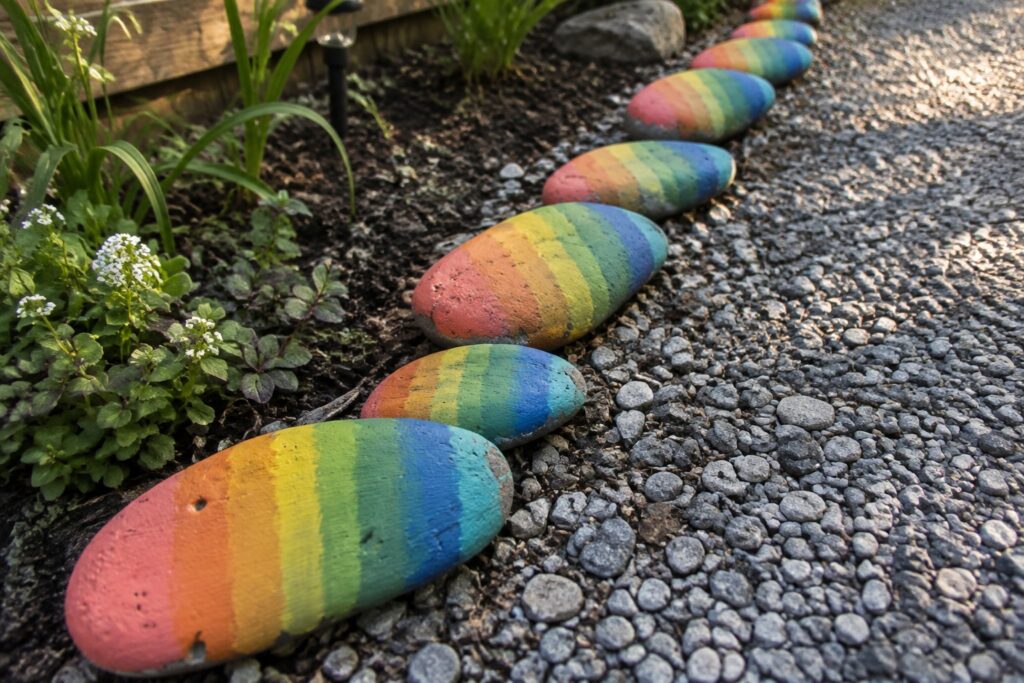
Elongated smooth stones painted with horizontal rainbow stripes make a strong border along gravel walkways. Each rock shows wide bands of red, orange, yellow, green, and blue that run across its curved surface, creating a continuous color line when the stones are placed end to end. The natural oval shape of the stones lets the stripes follow the rock without needing extra outlines or details. This approach belongs to the decorative stone craft category and works as a painted rock collection for garden paths.
What makes this idea useful is the way the rock shape supports the stripe pattern so the colors read clearly from a distance. The design adapts easily to different stone sizes or to a shorter run of rocks near a planter or step. You can swap the rainbow sequence for two or three bold colors if you want something simpler for a smaller path section. The same striped layout stands out in photos for Pinterest because the repeated color blocks create a graphic look against gravel or mulch.
Strawberry Rocks Add Color to Garden Path Edges
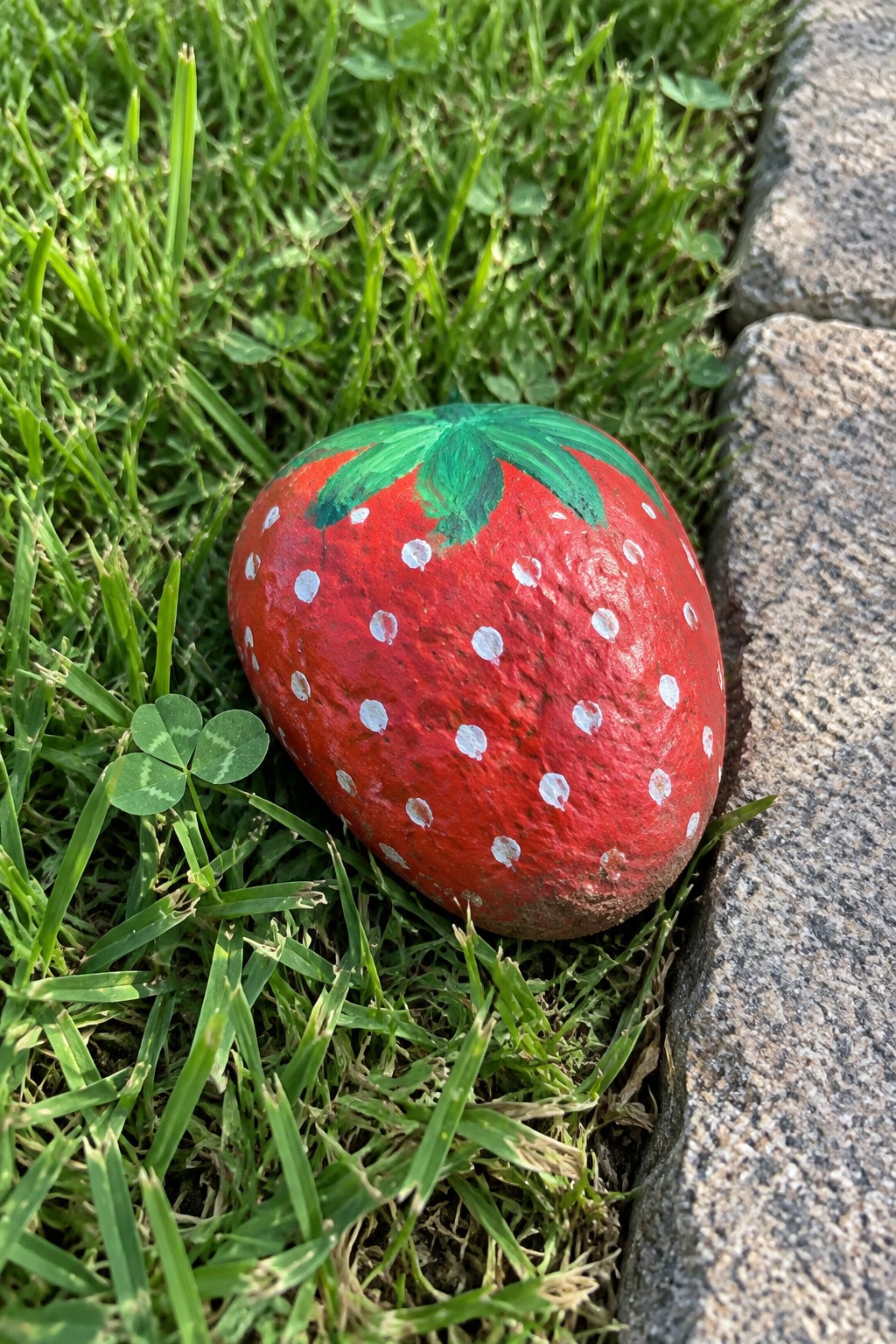
A smooth oval stone painted solid red with rows of white dots and a green leafy cap at one end forms a strawberry motif that sits directly on the ground. The rounded rock shape lets the design follow the curve naturally so the painted surface faces upward without tipping. This fruit rock category keeps the project simple by using broad color blocks and basic dot placement rather than fine details.
What makes this idea useful is how the bright red stands out against mulch or grass when placed along a walkway border. You can repeat the same pattern on several stones of different sizes to create a scattered line without matching them exactly. The motif adapts easily to flatter stones by shortening the leaf area or to smaller pebbles by using fewer dots. For garden decor this type of painted rock works well tucked into existing borders where it adds color without taking up much space.
Ladybug Painted Stones for Walkway Borders
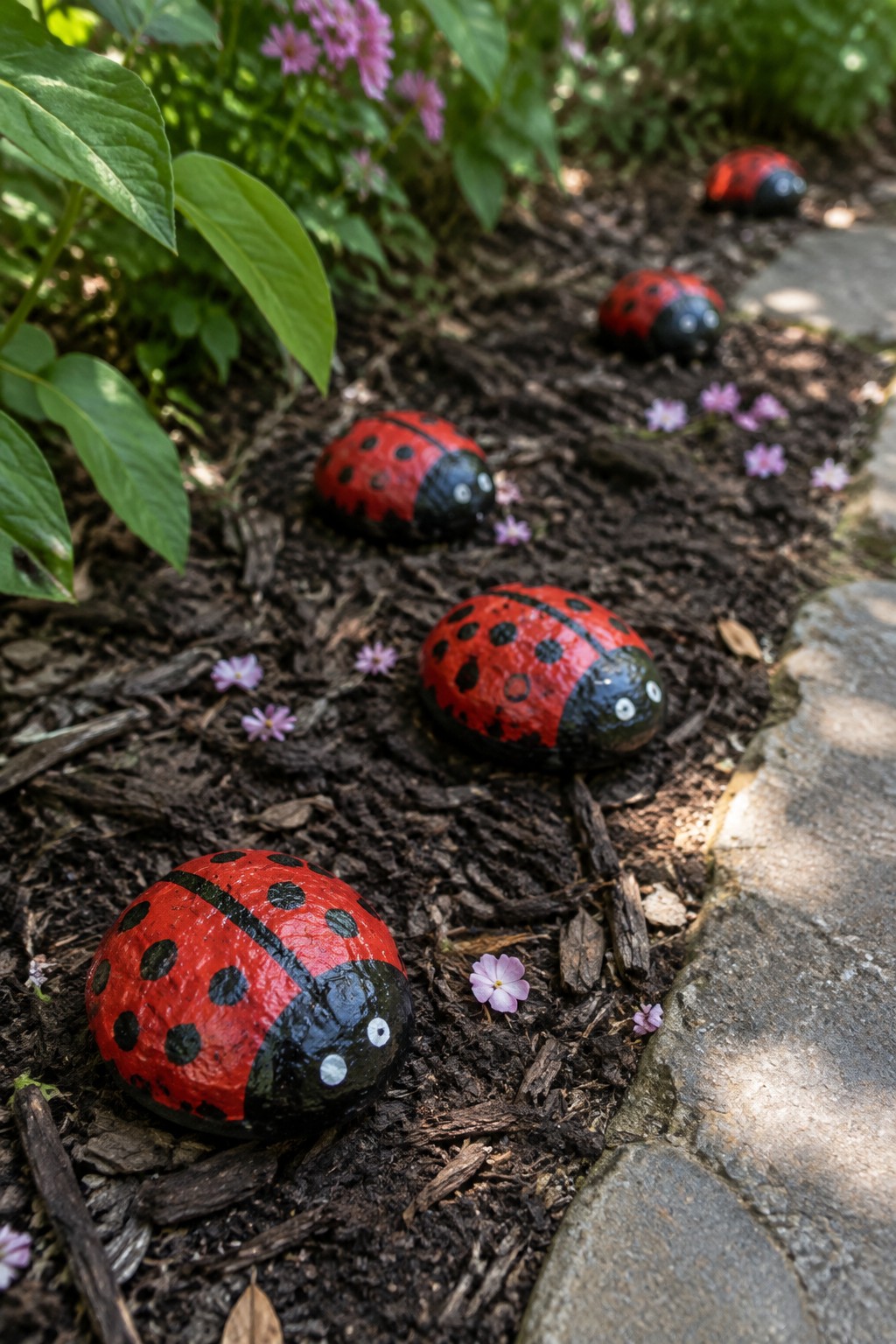
Painting rounded garden stones with red bodies, black spots, and black head sections creates simple ladybug accents that stand out against dark mulch. The natural curve of each stone helps the painted shape read as a beetle without extra carving or shaping. White dots on the black areas give the eyes clear definition, and the color blocking keeps the design bold even from a short distance. This approach fits the bug rock category and works as a repeatable garden decor element for path edges.
What makes this idea useful is how the rounded stone shape already supplies the beetle silhouette, so only basic color areas and dots are needed. A painted rock like this works especially well as a border accent next to stepping stones or along mulched paths where the red shows up against soil and foliage. The small scale makes it easy to adapt by using different sizes of stones or changing the number of spots to fit longer stretches. For garden decor, this kind of painted rock adds color without needing text or complex patterns.
Daisy Painted Stones for Path Borders

A rounded garden stone painted with clusters of white daisies and yellow centers creates a simple flower motif that blends into planted areas. The natural gray surface of the rock serves as the background, letting the white petals and small green accents stand out while following the stone’s curves. This fits the flower rock category for garden decor since the design uses the rock shape itself rather than covering it completely.
What makes this idea useful is how the rounded form lets the daisies sit naturally along a walkway edge without looking flat. These stones work well placed in mulch beds or beside brick paths where the scale matches nearby plants. You can adapt the same approach by painting fewer flowers on smaller stones or changing the colors to match other blooms already in the garden.
Bold Chevron Rocks as Path Markers

A smooth, rounded garden stone painted bright yellow forms the base for a large red chevron outlined in black. The bold color blocking and thick black lines create strong contrast that reads clearly from a short distance. This approach turns an ordinary river rock into a directional marker that fits along walkway borders or garden paths. The flat, oval shape of the stone helps the chevron sit evenly when placed on the ground.
What makes this idea useful is how the simple chevron can guide foot traffic without needing words. You can repeat the same color scheme on several stones to create a consistent border look or swap the red for another bold shade to match your garden palette. The design works especially well on medium to large stones because the wide stripes stay visible even after a light coat of outdoor sealer. For a different path style, flip the chevron direction on alternate rocks or shrink the motif to fit smaller pebbles for tighter spaces.
Pastel Daisy Stones for Soft Path Borders

Paint smooth, rounded stones in soft mint, blush pink, and lavender shades, then layer on simple white daisy shapes or scattered dots in matching tones. The oval rock shapes let the flower patterns follow the natural curves without extra effort. This approach belongs to the painted pebble set category and works as a decorative stone craft for garden use.
What makes this idea useful is how the small scale lets you place multiple stones in a row without crowding a walkway edge. You can swap the daisy motif for solid dots or stripes if you want a faster version on similar rounded stones. For garden decor, these painted rocks sit flat against mulch or gravel and add color without competing with plants. The rounded form makes the same design easy to repeat on whatever stone sizes you already have on hand.
Green Frog Face Rocks for Path Borders

A rounded garden stone painted solid green turns into a frog face using two large white circles for eyes, black centers, a simple curved mouth, and small pink dots for cheeks. Black dashes near the base suggest legs while the rock’s natural curves let the face wrap across the surface without extra shaping. This animal rock idea fits garden decor projects where a single motif repeats along walkway edges to create a colorful border.
The rock shape does a lot of the work here because its smooth, low profile sits flat in moss or mulch without tipping. You can scale the same face design onto smaller stones for a tighter repeating pattern or switch the base color to match other path accents. For garden decor, this type of painted rock works especially well as a border marker that stays visible even when plants grow around it. The simple color blocking makes this easy to reuse as a set of matching stones spaced every few feet down the walkway.
Bold Chevron and Stripe Border Rocks

These flat oval stones use simple repeating chevrons and horizontal stripes in blue, yellow, teal, and white to create strong visual lines that stand out against mulch or soil. The natural rounded edges and slightly uneven surfaces let the paint sit in clean blocks without needing perfect straight edges, which keeps the pattern bold even from a distance. This approach fits the decorative stone craft category and works especially well for lining a walkway because the designs stay readable when viewed from above.
The rock shape does a lot of the work here because the oval form lets the chevrons point forward along a path while the stripes run across the width for contrast. You can adapt the same idea by switching the color palette to match your garden flowers or by using only two colors if you want faster painting sessions. A painted rock like this works especially well as a border accent in flower beds or along stepping stones, and the pattern could be simplified to wider stripes on smaller pebbles for tighter spaces.
Painted Mushroom Stones Mark a Garden Path Edge
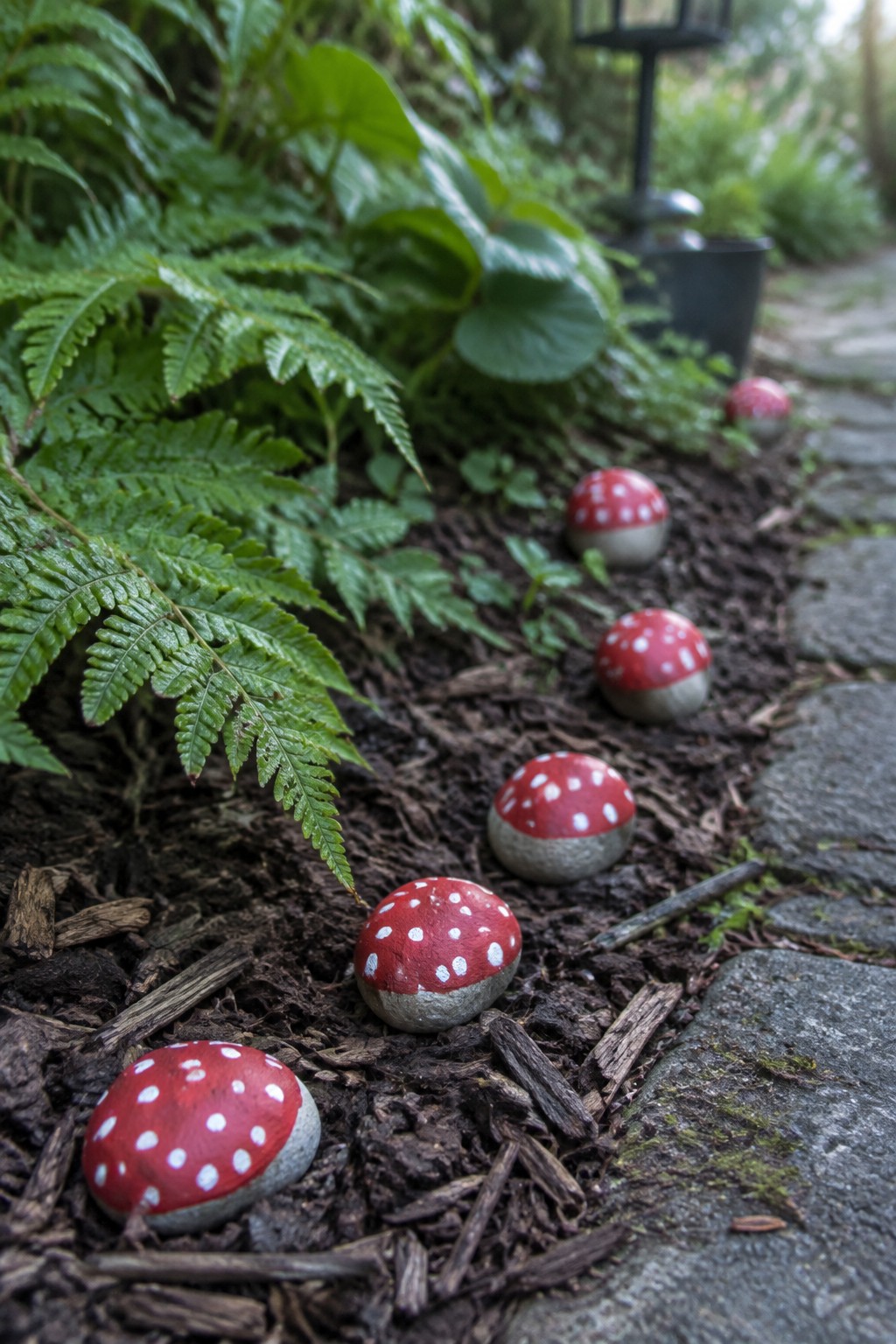
Smooth, rounded stones work well for this project because their natural curves mimic mushroom caps when painted bright red with scattered white dots. The lower portion of each stone stays lighter or unpainted to suggest the stem, and the repeated motif creates a simple border along mulch or soil. This garden decor rock idea falls into the decorative stone craft category and uses color blocking plus dots for quick visual pop without fine detail work.
What makes this idea useful is how the same mushroom design can be repeated at different sizes to follow a curved walkway or fill gaps between pavers. The small scale makes placement easy in tight spaces like fern beds or along stepping stones, and you can swap the red for orange or purple if you want seasonal variety. For garden decor, this kind of painted rock holds up outdoors when sealed and stands out in photos because the high-contrast spots read clearly against dark mulch.
Fruit Slice Rocks for Garden Path Borders
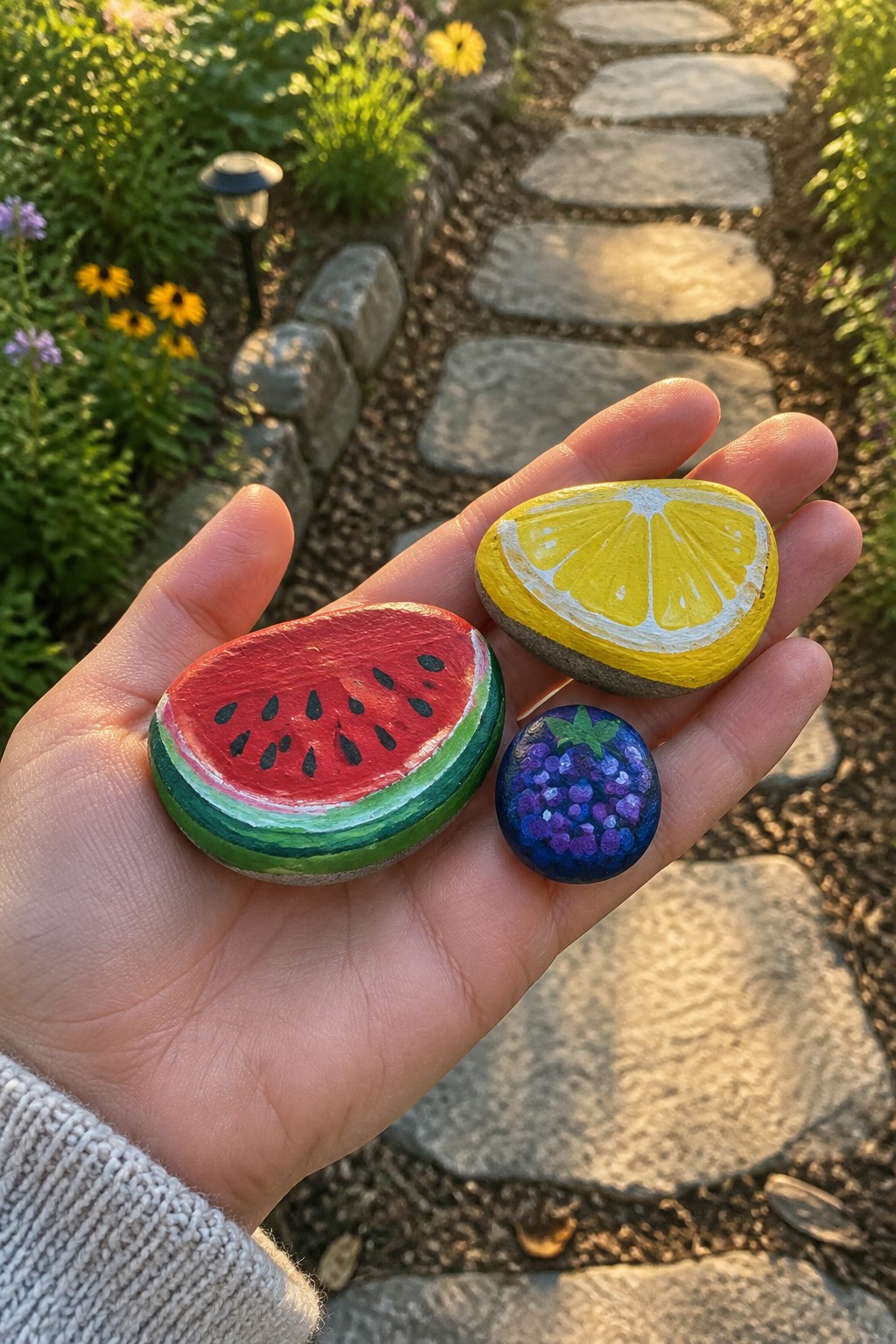
Painted rocks featuring fruit slices give garden paths a bold pop of color using simple motifs on smooth, rounded stones. The watermelon design uses layered green, red, and black paint to show rind and seeds, while the lemon rock relies on yellow sections with white lines for segments and the berry rock uses clustered dots in purple and blue with a green leaf on top. These food-inspired rocks work because the natural stone shape supports the curved fruit forms and the strong color blocking keeps the details visible from a short distance. The approach suits walkway borders where you want repeated accents without text or symbols.
What makes this idea useful is how the small scale lets you group several fruit rocks together or spread them along the edge of a path. The rounded stone shape helps the painted sections follow the surface without extra effort, and you can swap the berry cluster for other simple fruits like strawberries on the same size rocks. For garden decor, this type of painted rock stands out against gravel or mulch and stays practical because the designs need only basic color areas rather than fine details. You could adapt the same blocking technique to larger flat stones if you want fewer but bigger accents along the walkway.
Painted Bee and Honeycomb Stones for Walkway Borders

Paint rounded garden stones with yellow and black bee bodies and matching honeycomb hexagons to create repeating bug motifs that line a path edge. The striped bee designs use simple color blocking on the rock surface while the hexagon patterns wrap around the curved tops for a consistent look across multiple stones. This approach keeps the natural stone texture visible under the paint so the rocks still read as real garden elements rather than separate decor pieces.
The rounded shapes sit stably along wooden borders or mulch edges without tipping. You can repeat the same yellow and black blocking on larger or flatter stones to stretch the pattern farther down a walkway or switch the bee motif for other simple garden bugs on the same color base. The high contrast makes the design photograph clearly for inspiration boards and adapts easily if you want to vary the number of stripes or hexagons per rock.
Sunflower Painted Rocks for Path Borders

A large flat garden stone painted with a bold yellow sunflower works as a durable border marker along gravel walkways. The natural rounded edges and surface texture let the radiating petals follow the stone shape while the dark center adds contrast that reads clearly from a distance. This approach falls into the flower rock category for garden decor and uses simple color blocking to keep the design visible even when the stone sits among mulch or low plants.
What makes this idea useful is how the sunflower motif can be repeated on matching stones to line both sides of a path without looking repetitive. The scale of the rock helps it stay in place as an edging piece where smaller items might shift. You could rework the same idea by switching to other bold flowers on similar flat stones or shrinking the design for tighter spaces between pavers. For walkway borders this type of painted rock brings color directly into the path layout.
Heart Motifs on River Stones for Path Borders
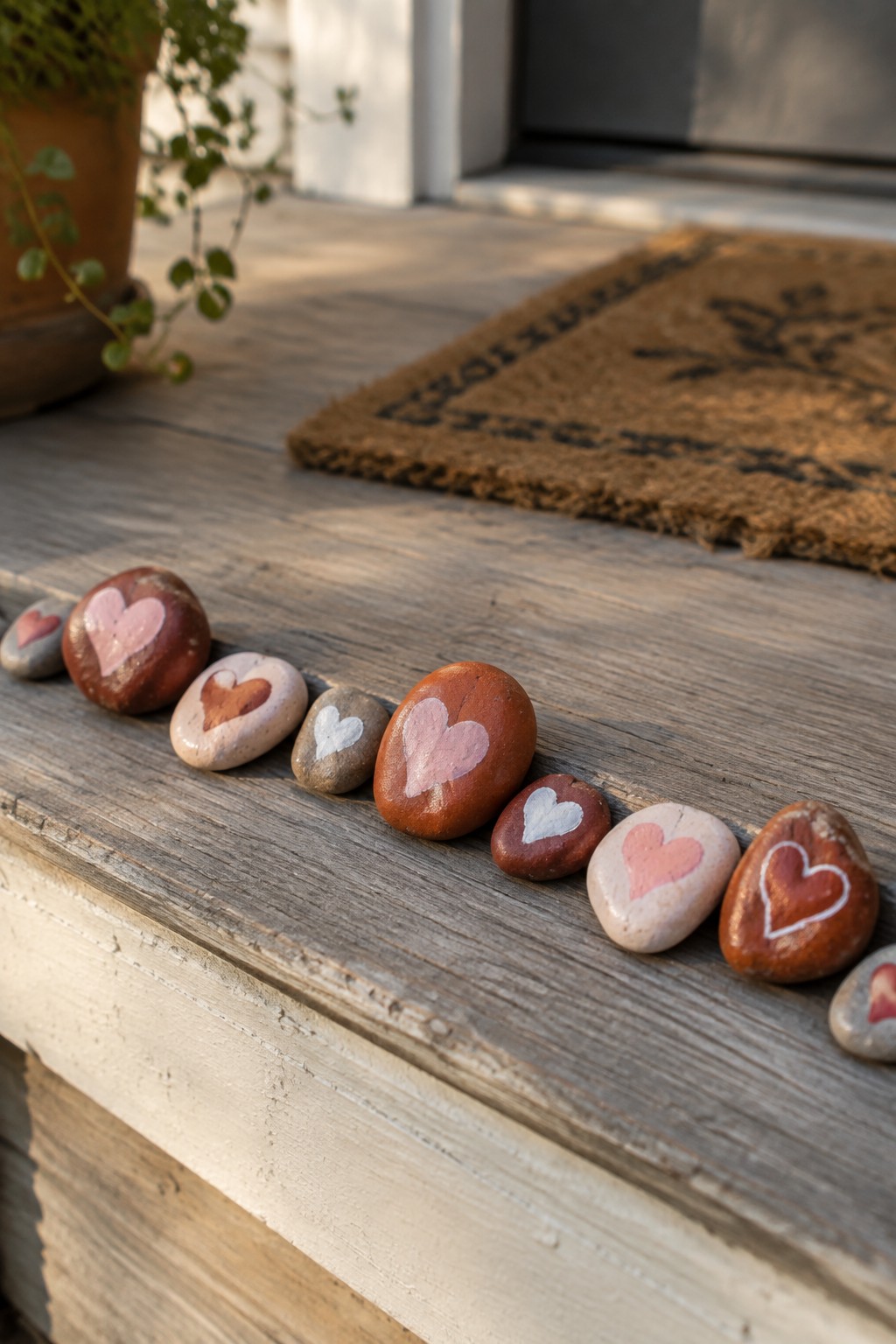
Painting smooth rounded river stones with heart shapes produces a repeating motif that works as edging for garden paths and walkway borders. The stones vary in size but share a compact oval form that lets the hearts sit centered without crowding the edges. Soft pink fills paired with white outlines or accents create clear contrast against the natural stone tones, making the design readable from a short distance. This falls under decorative stone crafts that rely on a single positive symbol repeated across multiple pieces.
What makes this idea useful is how the heart shape stays legible even when stones differ in width or curve slightly. Space them every few inches along a mulch bed or gravel path to form a low border that adds color without blocking foot traffic. The motif adapts by swapping pink for brighter reds or adding a second outline color on darker stones. For walkway use, choose stones with flatter bottoms so they sit steady and resist shifting under light rain.
Painted Pebble Mosaic Border Strip

Small rounded pebbles painted in saturated blues, pinks, turquoises, and yellows are arranged side by side to form a long, narrow strip. Flower motifs appear at intervals among solid-colored stones, creating a repeating pattern that runs the full length of the piece. The natural curves of the pebbles help the finished strip flex slightly when placed along uneven ground.
What makes this idea useful is that the completed strip can sit directly against a path edge to mark the walkway without digging or planting. The small size of each stone lets you shorten or lengthen the border as needed and work around gentle curves. For garden decor, this kind of painted rock edging works especially well because the strong color blocks remain visible even when partially covered by mulch or low plants, and the same layout can be repeated with any color palette you already have on hand.
Striped Glow Border Rocks
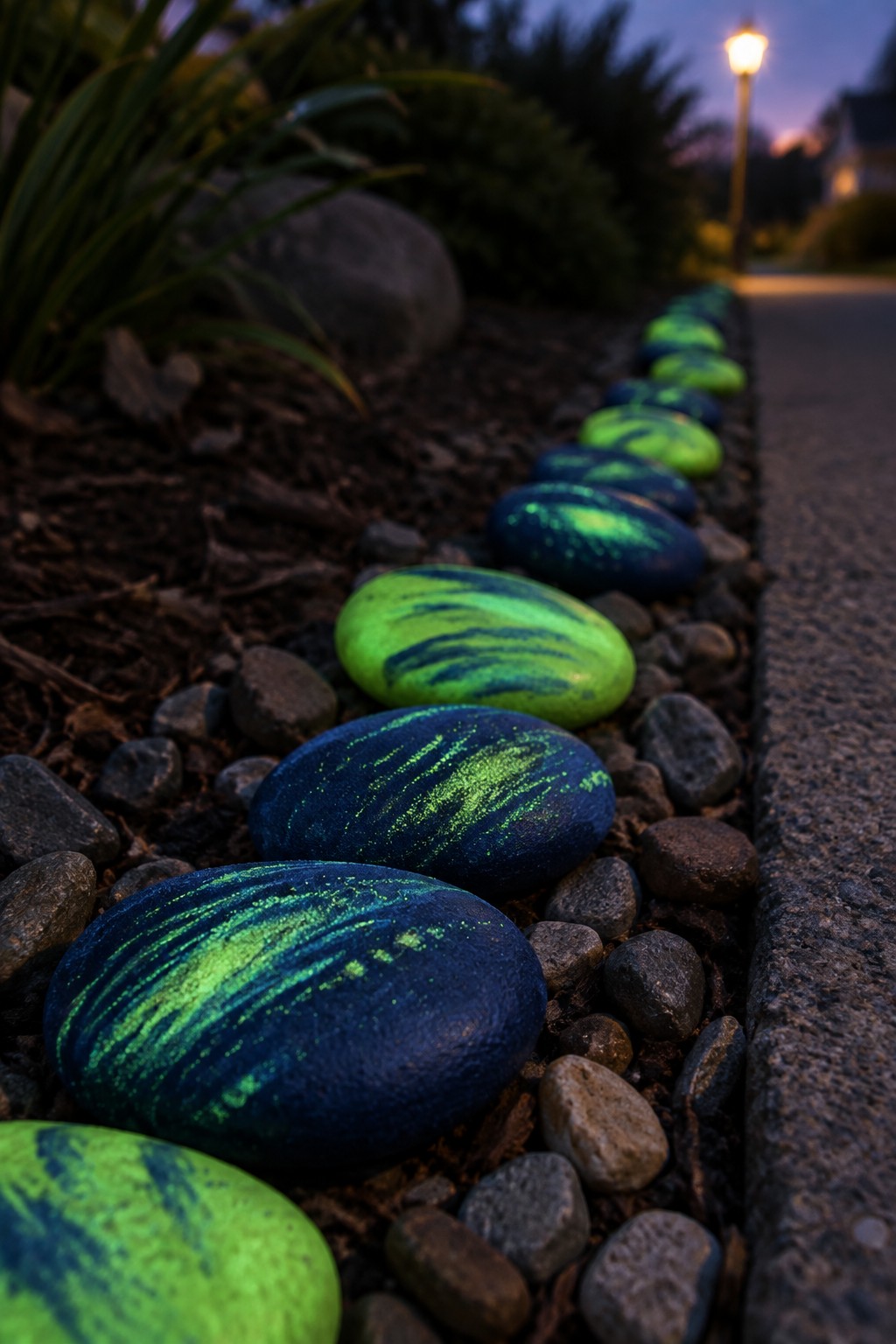
Paint smooth oval river rocks in dark blue and green bases then add bold horizontal stripes in bright lime and turquoise to create a luminous edge along a garden path. The high-contrast stripes stand out against the dark stone and catch light at dusk, turning a simple line of stones into a clear visual guide for the walkway. This decorative stone craft uses the natural rounded shape and flat surfaces of the rocks so they sit evenly in gravel or mulch without shifting.
What makes this idea useful is how the striped pattern repeats easily along any length of path using the same two or three colors. The rock shape does a lot of the work here since the ovals nestle together to form a continuous border. For garden decor this kind of painted rock works especially well as a low-cost way to define edges that stay visible after dark. You could adapt the design by swapping the colors for different seasons or using fewer stripes on smaller stones for tighter curves.
Pastel Birdhouse Stones for Walkway Borders

Smooth rounded stones are painted with distinct roof sections in solid colors, small entrance holes, and clusters of flowers along the lower edges. The color blocks and simple motifs turn each stone into a miniature birdhouse shape that sits naturally on flat surfaces. This painted rock collection works as a set of garden decor rocks rather than individual markers or signs. The designs follow the curved stone surfaces without needing extra carving or bases.
What makes this idea useful is how the rounded form already suggests a house shape once the roof line is added. Line them up along a raised bed edge or path border to create a repeating pattern that stays visible from a few feet away. Swap the roof colors or flower styles to match nearby blooms or shift the look for spring versus summer. The small size lets you add several without crowding the walkway space.
Rainbow Striped Rocks

Smooth oval stones painted with wide horizontal stripes in bright rainbow colors create a bold set of border markers. The stripes use thick bands of red, orange, yellow, green, blue, and purple that follow the curve of each rock and leave the natural gray edges exposed. This pattern turns plain garden stones into a matching collection that lines up well along path edges.
What makes this idea useful is how the repeating stripe layout lets you paint multiple rocks quickly while keeping them visually connected. The rounded shape helps each stone sit flat in mulch or along gravel without rolling. You could narrow the stripes for smaller pebbles or limit the palette to two or three colors if you need the border to match a specific flower bed scheme.
Butterfly Painted Stones for Garden Path Borders

Painting butterflies onto smooth, rounded garden stones creates a simple border that lines a walkway or flower bed edge. Each stone features one large butterfly motif with bold wing sections in bright colors like orange, blue, yellow, and pink, accented by white dots along the body and wing edges. The natural curve of the stones helps the wings follow the surface without extra shaping, and the gray stone background makes the colors stand out clearly. This fits the painted rock collection category for outdoor garden decor.
The rounded stone shape does a lot of the work here because it sits flat and stable along a path without tipping. You can adapt the idea by scaling the butterflies smaller on pebbles for tighter spaces or switching to a single color family to match existing flowers. For garden decor, this kind of painted rock works especially well when you repeat the same motif across eight to ten stones to form a visible line. The small scale makes this easy to adapt for a short section of path or to expand into a longer border later.
Striped Oval Stones for Path Borders

Painted oval stones with wide horizontal bands of turquoise, white, and tan create a clean repeating border along garden paths. These smooth rounded rocks sit directly on gravel and mulch, their natural curves allowing the stripes to wrap visibly without extra shaping. The design relies on simple color blocking plus a few dotted lines for separation, keeping the pattern bold from a distance while staying easy to paint on curved surfaces. This approach works as a decorative stone craft suited to walkway edges.
What makes this idea useful is how the oval rock shape turns basic stripes into a continuous line when multiple stones are placed together. You can swap the turquoise for any accent color that matches your siding or plantings and adjust stripe width based on the size of stones you find. For garden decor this kind of painted rock works especially well because the pattern stays visible even when partially tucked into soil or next to larger pavers. The small scale makes this easy to adapt by starting with five or six stones to test spacing before painting a longer stretch.
Sunburst Patterns on Rounded Path Border Stones
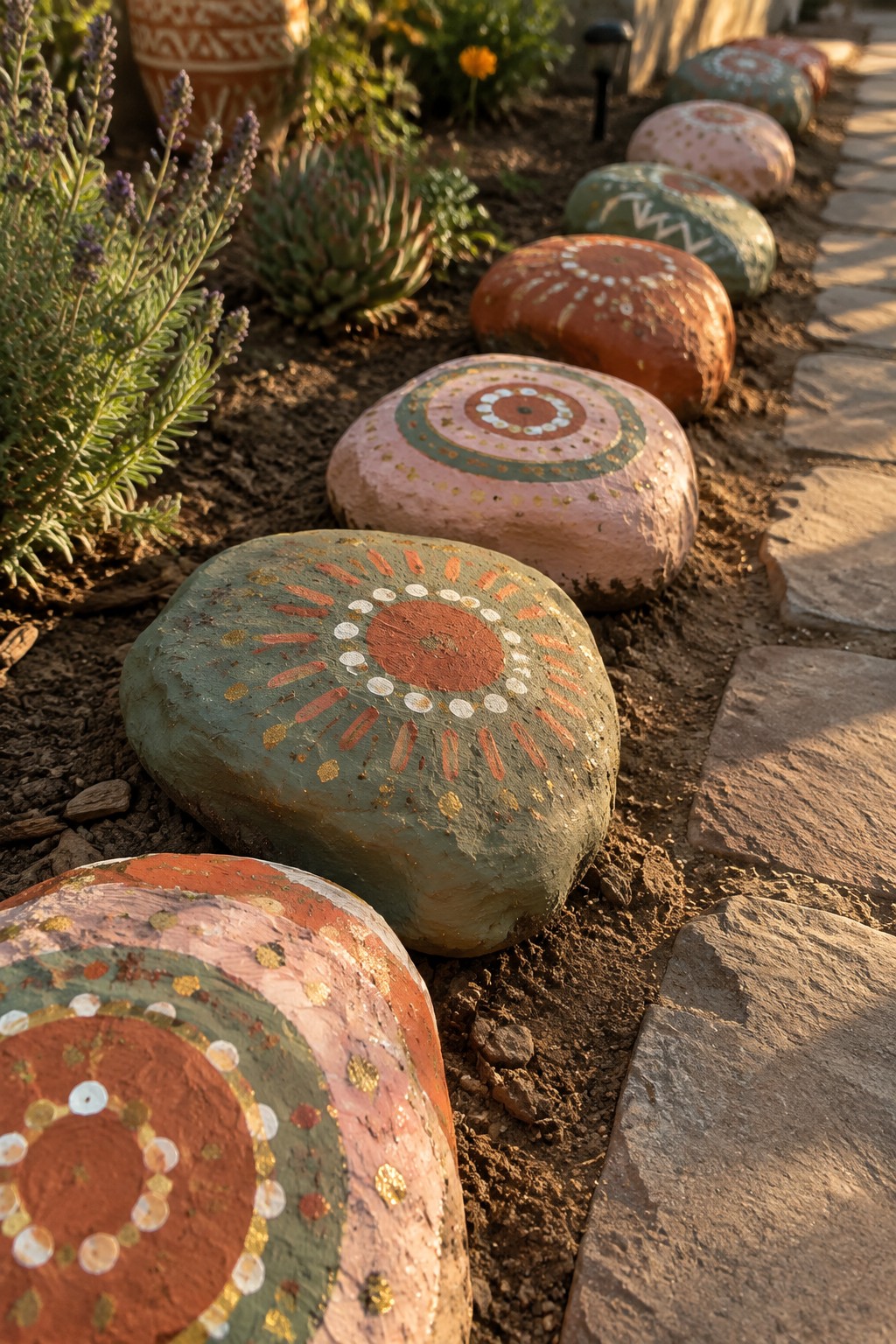
Paint rounded garden stones with concentric circles and radiating lines in earthy reds, greens, and golds to create repeating markers along a walkway edge. The design uses the stone’s natural curve to hold the central circle and outward rays without needing perfect symmetry. This approach turns ordinary path stones into a decorative border that stays visible even when partially set into soil or mulch. The result fits the painted rock collection category for garden decor.
What makes this idea useful is how the repeating circular motif works across different stone sizes without looking mismatched. You can simplify the rays to basic lines or expand them into fuller mandalas depending on the rock surface available. For garden decor this kind of painted rock lines a path effectively while still allowing foot traffic nearby. The same pattern scales down easily for smaller accent stones in planters or larger ones at path turns.
Frequently Asked Questions
What types of rocks work best for creating bold colorful borders along garden paths?
Smooth river rocks in shades of red, blue, and yellow offer vibrant contrast while staying easy to arrange in straight or curved lines. Larger cobblestones provide more stability for high traffic areas, and smaller gravel allows for tighter packing that highlights plant edges without shifting much over time.
How do I prevent rock borders from mixing into the soil or path over time?
Lay a thick landscape fabric or heavy duty weed barrier first to separate the rocks from the ground below. Edge the border with metal or plastic strips driven several inches deep, and choose rocks larger than one inch across so they stay in place even after rain or foot traffic.
What is the best way to choose rock colors that match existing garden plants?
Start with your main flower hues and pick rocks in complementary tones such as purple stones next to yellow blooms or warm terracotta shades beside green foliage. Test samples in daylight before buying in bulk, and consider mixing two or three colors in repeating patterns for added visual interest without clashing.
How much maintenance do colorful rock borders require each season?
Remove fallen leaves and debris with a leaf blower or soft rake every few weeks to keep colors bright. Every year or two, rinse the rocks with a garden hose to wash away dirt buildup, and add a fresh layer of smaller accent stones if any fade or sink into the soil.
Can these rock ideas work in small yards or with raised beds?
Yes, scale down the designs by using narrower strips of smaller rocks or placing them only on one side of the path. Raised beds pair well with low rock borders that sit flush against the wood or stone sides, creating clean lines while improving drainage around the plants.
