

I have been painting rocks for my garden for a few years now.
Grouping them in clusters seems to work better than placing them alone.
It creates a more balanced look among the plants and flowers.
I like using smaller pebbles because they are easier to handle and arrange.
These ideas came from trying different things over time.
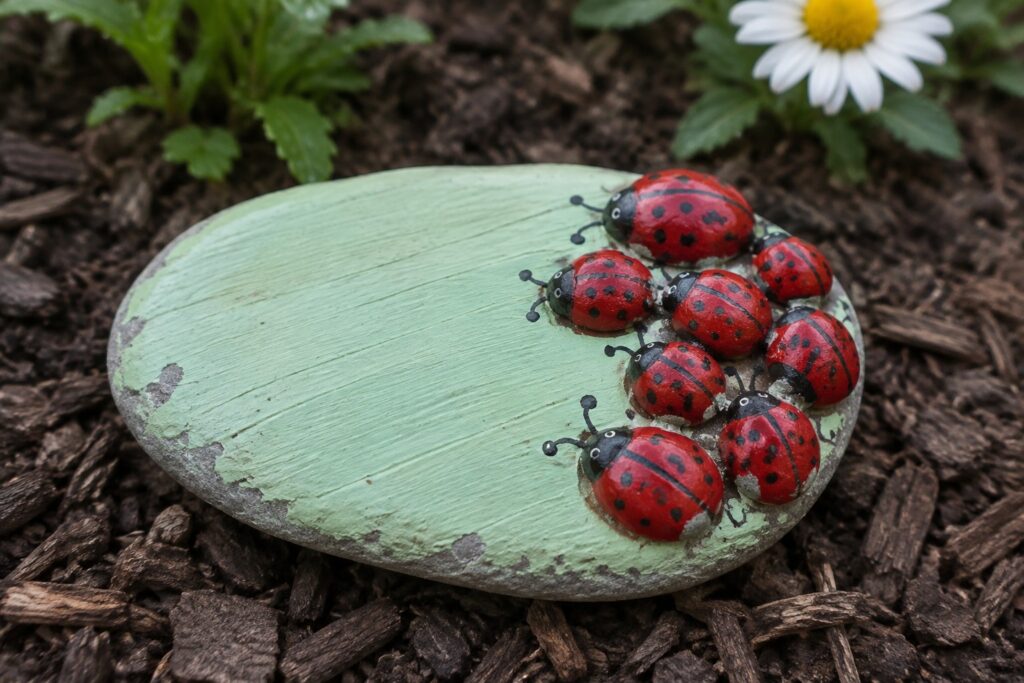
Ladybug Pebble Cluster on a Painted Base Stone
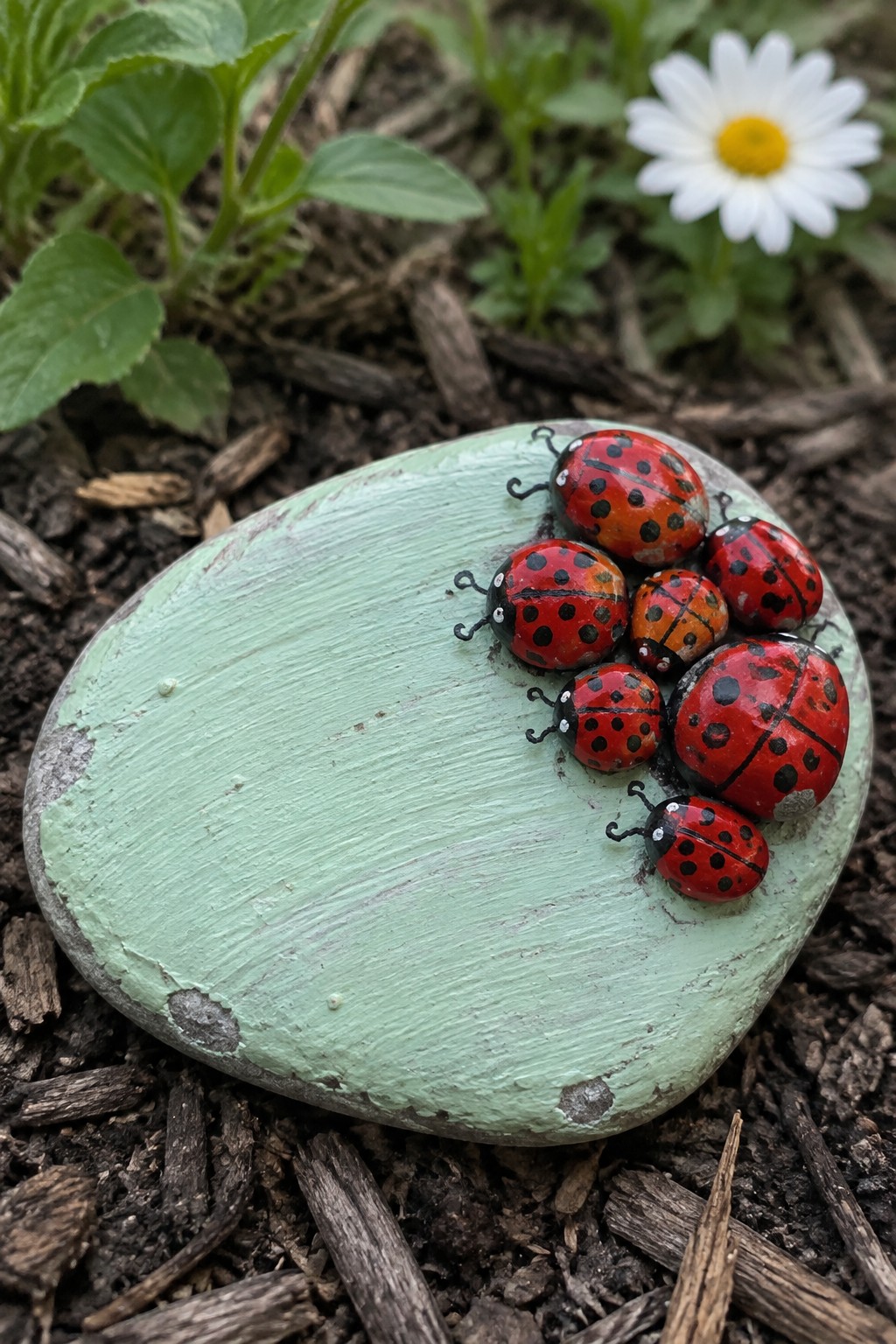
A larger flat stone painted light green holds a tight group of small rounded pebbles painted as red ladybugs with black spots and simple line details. The ladybugs vary slightly in size and sit close together along one edge of the base stone so the whole piece reads as a single garden accent. This project uses a painted pebble cluster to create a bug-themed rock that sits directly in soil or mulch without extra hardware.
This setup fits nicely in flower beds or at the edge of a planter where the green base blends with real foliage. The small pebble size lets you paint just a handful of ladybugs on any similar rounded stones and arrange them on a larger flat rock you already have. You can change the base color to brown or gray or swap the ladybugs for bees or beetles to match other plants in the same bed. The compact cluster also photographs clearly for garden project boards.
Mushroom Cluster on an Oval Garden Stone
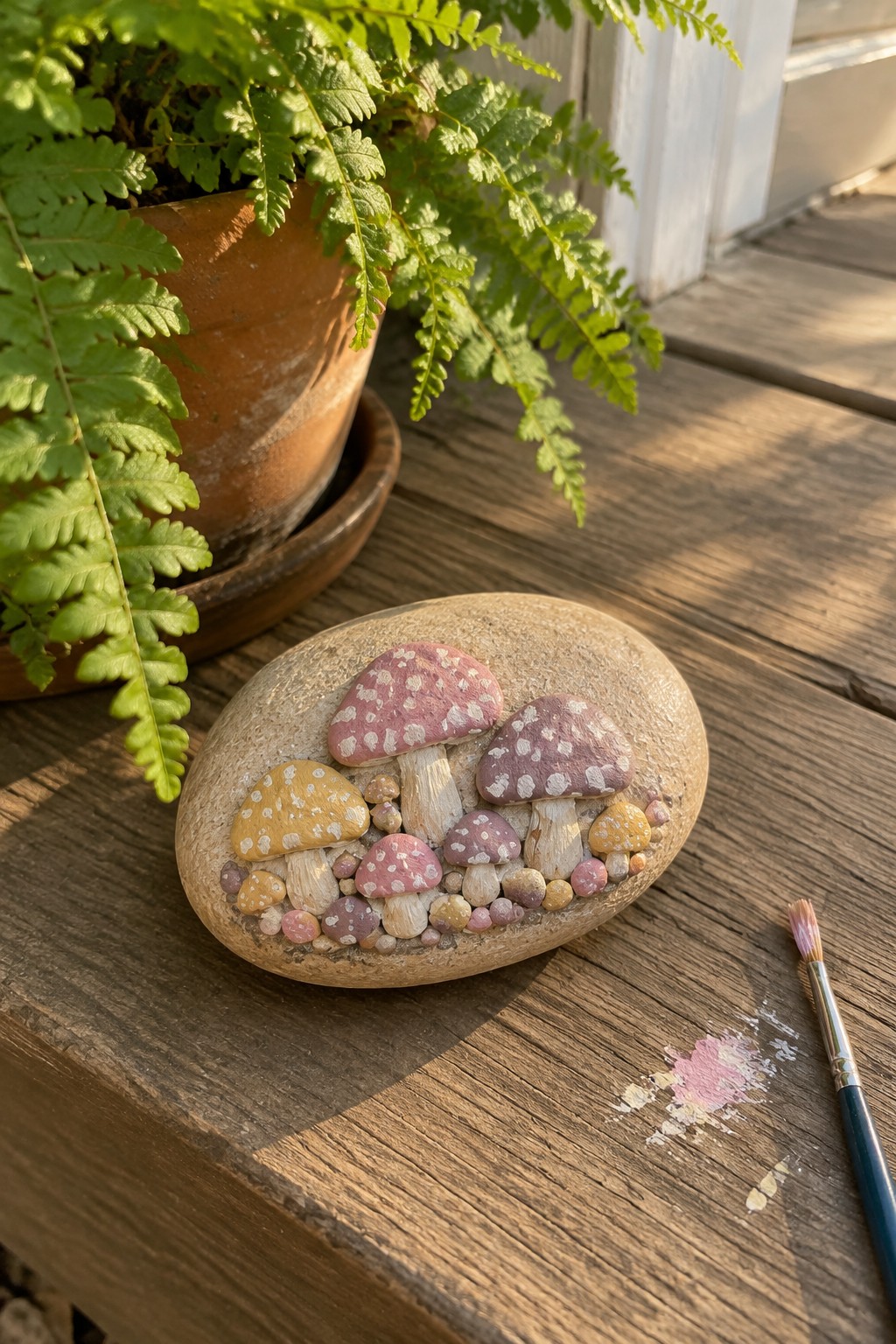
A smooth oval stone works well for this project because its curved surface lets the painted mushrooms sit at different heights like a natural cluster. Several mushroom caps in pink, purple, and yellow with white spots rise above short stems, while smaller painted pebbles in matching colors fill the base to create the look of a miniature patch. The design stays simple with solid color areas and basic dots, so the stone itself supplies most of the shape and texture.
What makes this idea useful is how the single large rock already gives you a ready-made cluster without gluing separate pieces. You can scale it down to fewer mushrooms on a smaller stone for a windowsill or expand the pebble base on a flatter rock for a wider planter accent. For garden decor, this type of painted rock tucks easily into mulch or sits inside a pot where the colors stand out against green foliage. The motif could easily be changed into different fungi or even small flowers while keeping the same base layout.
Citrus Slice Pebble Cluster on a Painted Base Rock

A large oval garden stone painted solid yellow acts as the base for this project, while smaller rounded pebbles are painted as lemon, lime, and orange slices and grouped together on one side. The smaller stones show simple segment lines, white pith details, and seed dots that stand out against the yellow and green backgrounds. This creates a fruit-inspired garden accent that uses the natural curves of the pebbles to suggest real citrus halves. The design fits the painted pebble cluster category, where multiple small stones combine on a larger one to form a single motif.
The rounded base stone gives the cluster a stable platform that sits well in mulch or among potted plants without tipping. You can adapt the idea by swapping the citrus colors for other fruits like strawberries or blueberries on a different base color, or by spreading the same small painted pebbles across several larger stones for a scattered look. This approach works especially well for patio pots or flower bed borders where a single bright accent is needed. The small scale of the cluster also makes it simple to recreate with whatever pebbles you already have on hand.
Bee and Daisy Pebble Cluster

This rock painting project uses one large flat stone painted blue as a base and several smaller rounded pebbles turned into bees and daisies. The bees feature yellow bodies with black stripes and wing shapes while the daisies show white petals around yellow centers with simple faces. The arrangement forms a complete garden scene made from actual painted rocks that rests directly in soil or a planter.
The rock shape does a lot of the work here since the flat base keeps the smaller pebbles grouped together like a miniature patch. You can adapt the same stripes and petal shapes onto any smooth stones you find and place the cluster in a pot, along a path, or tucked into mulch. For a different look, swap the bees for more flowers or change the base color to match other garden accents. This kind of painted pebble cluster works especially well for quick seasonal updates in outdoor pots.
Cluster of Colorful Bird Pebbles on a Garden Stone
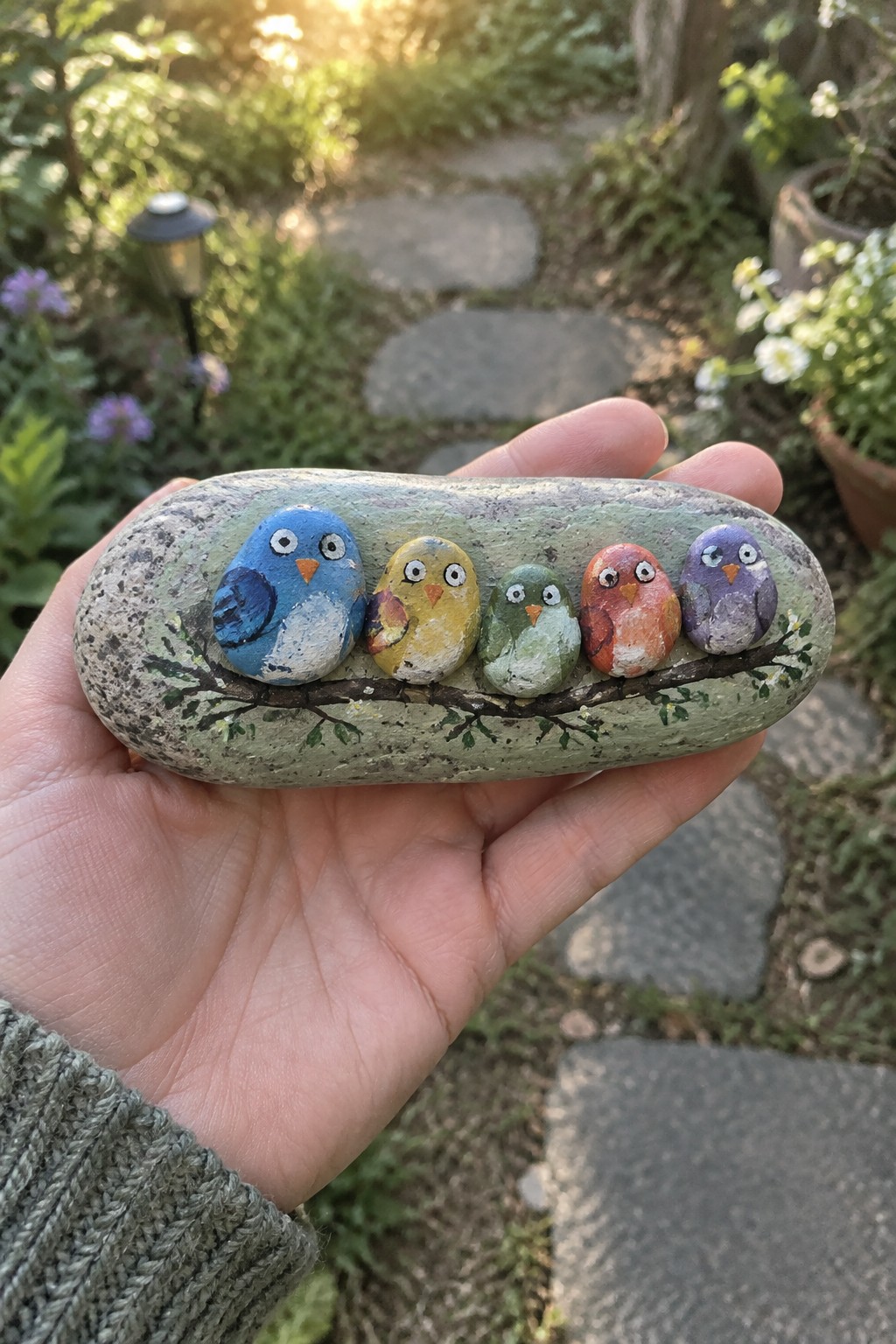
A large oval garden stone works well as the base for a row of five smaller oval shapes painted as birds in solid bright colors. Each bird is given simple white eye circles, black pupils, and small orange beaks, with the whole group arranged along a painted brown branch that includes basic green leaves and white dots. The design uses the length of the stone to keep the birds lined up naturally while the muted stone surface lets the colors stand out. This approach fits the painted pebble set category for garden decor because the birds are grouped as one finished piece rather than scattered singles.
What makes this idea useful is how the long stone shape already gives the birds a ready-made perch without extra construction. For garden decor, this kind of painted rock sits nicely along a path edge, in a planter, or near steps where the row of colors catches the eye from a short distance. The individual bird shapes are simple enough to rework onto separate small pebbles that can then be clustered on any flat base rock or tucked into mulch. The clear color blocks and limited details also make the design easy to repeat or change to different bird colors for new displays.
Strawberry Pebble Cluster Border
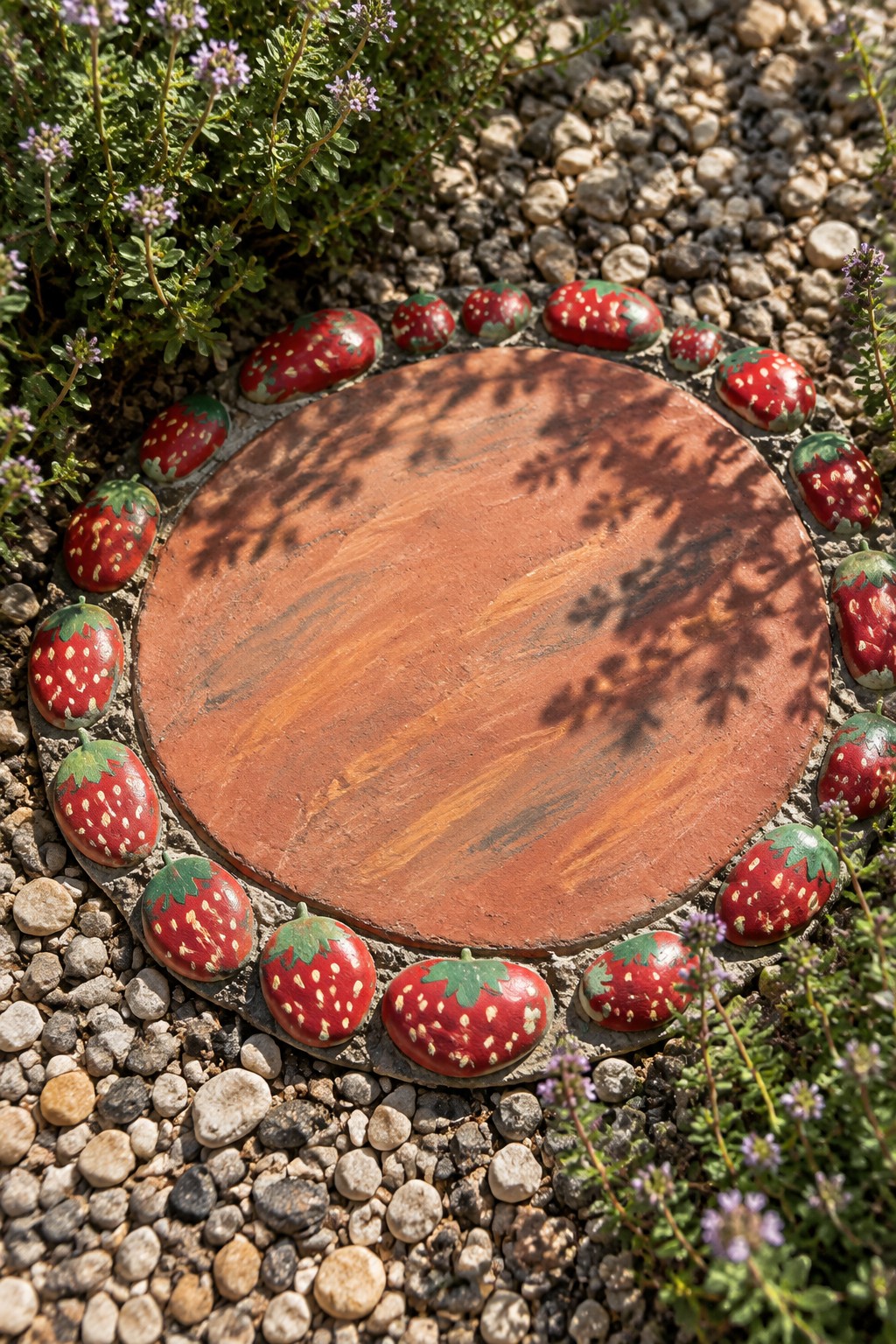
Small oval pebbles painted as strawberries form a tight ring around a larger flat central stone. Each pebble receives a red body, green hull at one end, and yellow dots for seeds, with the natural rounded shape helping the fruit form read clearly. The cluster sits directly on gravel or soil as a single garden accent rather than scattered individual pieces. This approach belongs to the painted pebble set category for garden decor rocks.
What makes this idea useful is the way the ring format turns a plain flat stone into a finished accent without extra carving or lettering. You can adapt the same cluster by painting the pebbles as cherries or ladybugs and placing the group inside a planter or along a path edge. The small scale keeps the project quick since only a dozen stones are needed for a complete border. In mulch beds the bright red shows up well against the ground, and the same layout works on a porch step or inside a large pot for a contained version.
Clustered Hearts on a Painted Base Stone
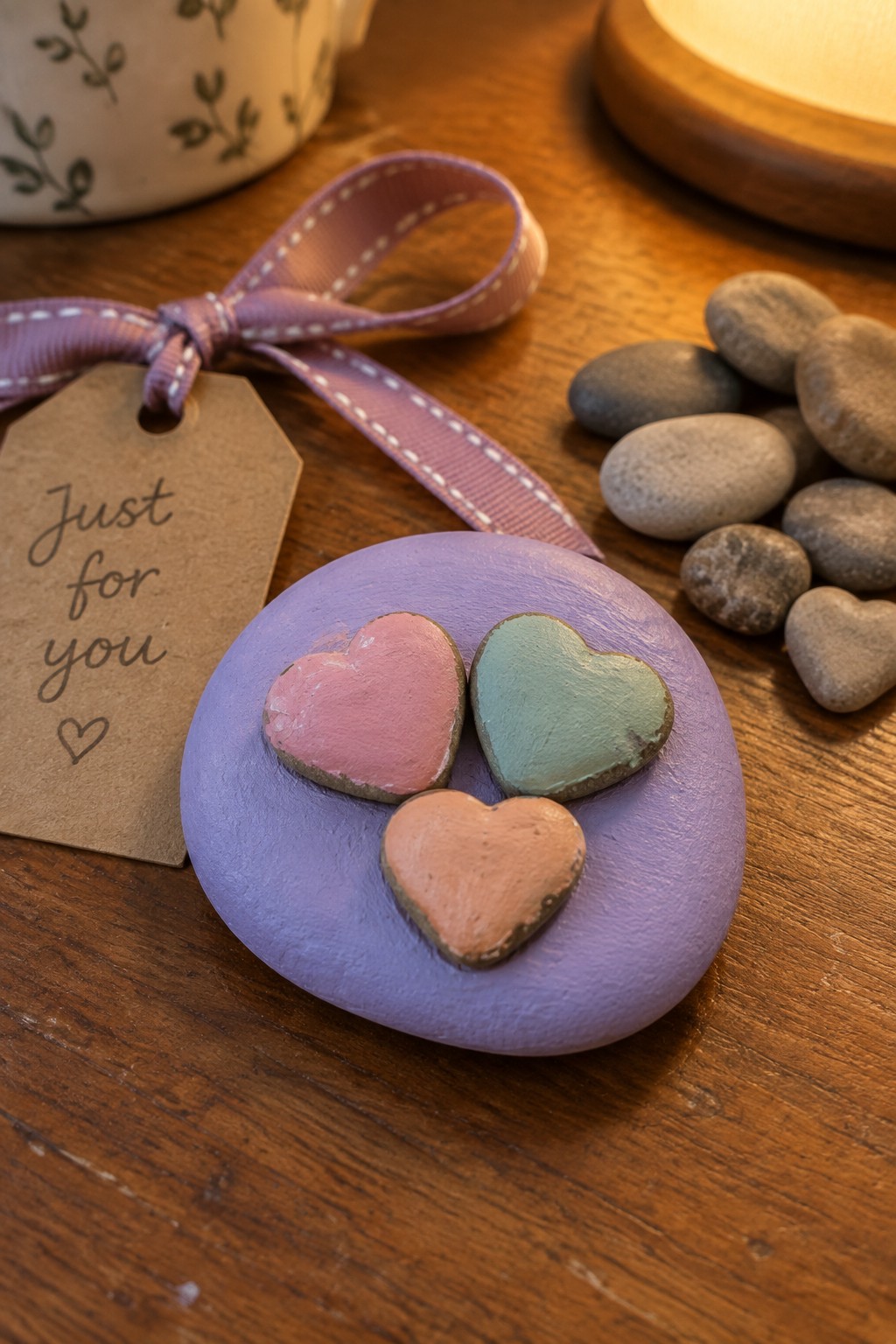
A large flat stone painted in muted purple serves as the base for three smaller heart-shaped pebbles in soft pink, mint, and peach. Each small heart follows the natural contours of its stone, and the group sits together in the center to form a compact cluster. This approach keeps the painting simple by using the larger rock as a platform instead of trying to fit multiple motifs onto one surface.
What makes this idea useful is the way the base rock holds the smaller hearts in place for display. The cluster works especially well in a planter, on a garden shelf, or along a path edge where the pastel tones stand out against soil or mulch. You can swap the heart shapes for leaves or stars and adjust the base color to match other stones you already have. The small size of the hearts also makes it simple to paint several sets at once and rearrange them later.
Butterfly Pebble Cluster on a Painted Base Stone

A set of small pebbles painted as butterflies in red, yellow, and teal with dot patterns and black bodies sits grouped on a larger flat stone coated in blue paint. The butterflies vary slightly in size and are arranged to look like they landed together on the stone surface. This approach turns a painted rock collection into garden decor by using the base stone as a display area for the smaller pebble pieces.
What makes this idea useful is the way the small butterfly pebbles can be repositioned or swapped out on any large flat rock to change the look. The cluster format adapts well to flower beds or the edges of planters where the colors stand out against green foliage and blooms. For garden decor this kind of painted rock works especially well because the whole piece stays compact and can be moved easily between spots. The same pebble cluster idea could be reworked with different bug shapes or color schemes to match other plants in the yard.
Snail Pebble Cluster on a Flat Base Stone
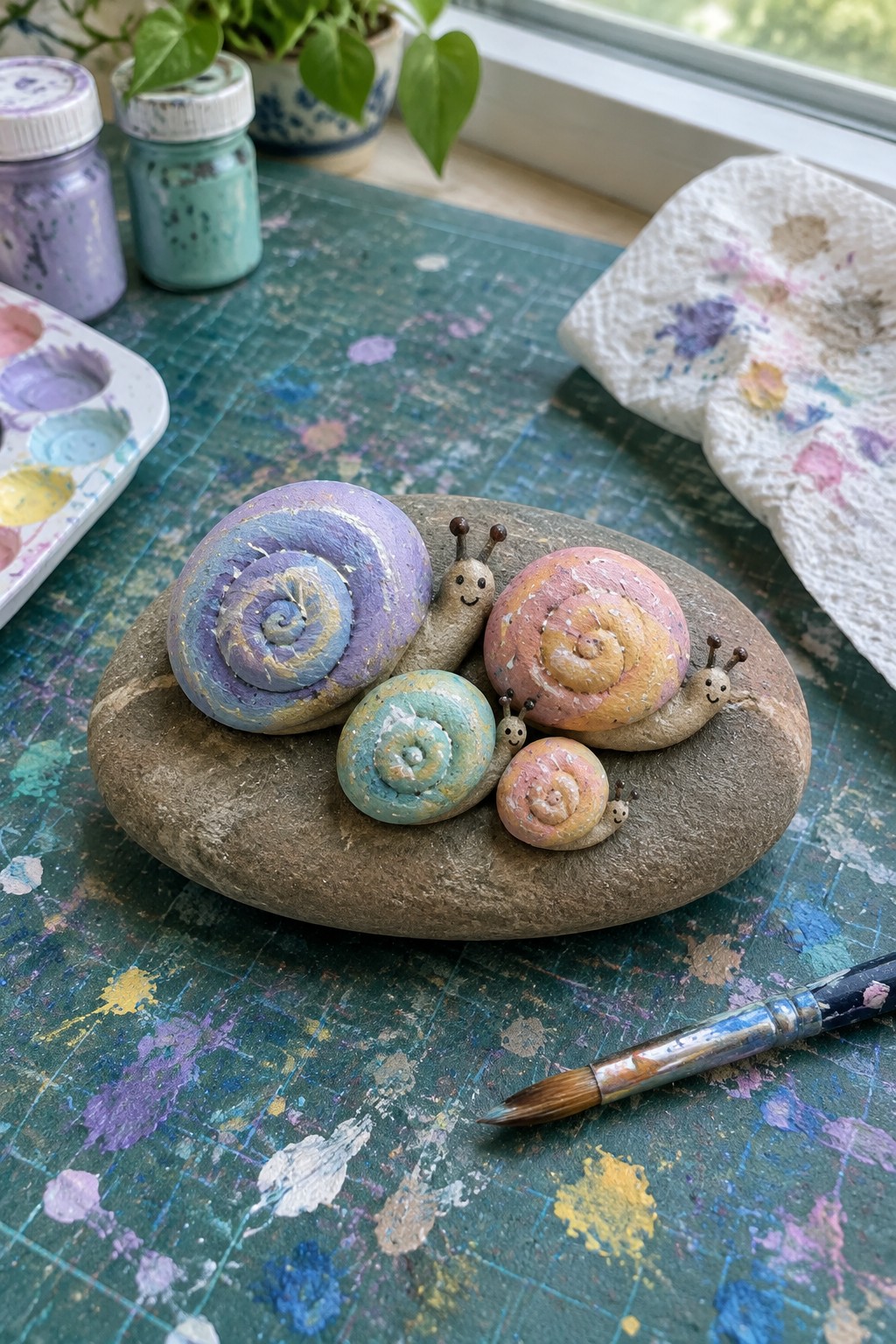
A group of small rounded pebbles painted as snails creates a simple cluster project when placed together on one larger flat stone. Each pebble gets a loose spiral shell in blended pastel colors plus short antennae and a basic face to read as a snail. The natural pebble shapes support the curved shell designs without extra shaping or carving.
What makes this idea useful is how the cluster fits into garden beds or along path edges where the group stays visible from above. The small scale lets you adapt it to just two or three pebbles on any flat river rock if you want a quicker version. You could change the shell colors to match nearby flowers or swap the base stone for a darker one to make the pastels stand out more in mulch.
Fox Family Cluster Painted on a Garden Stone
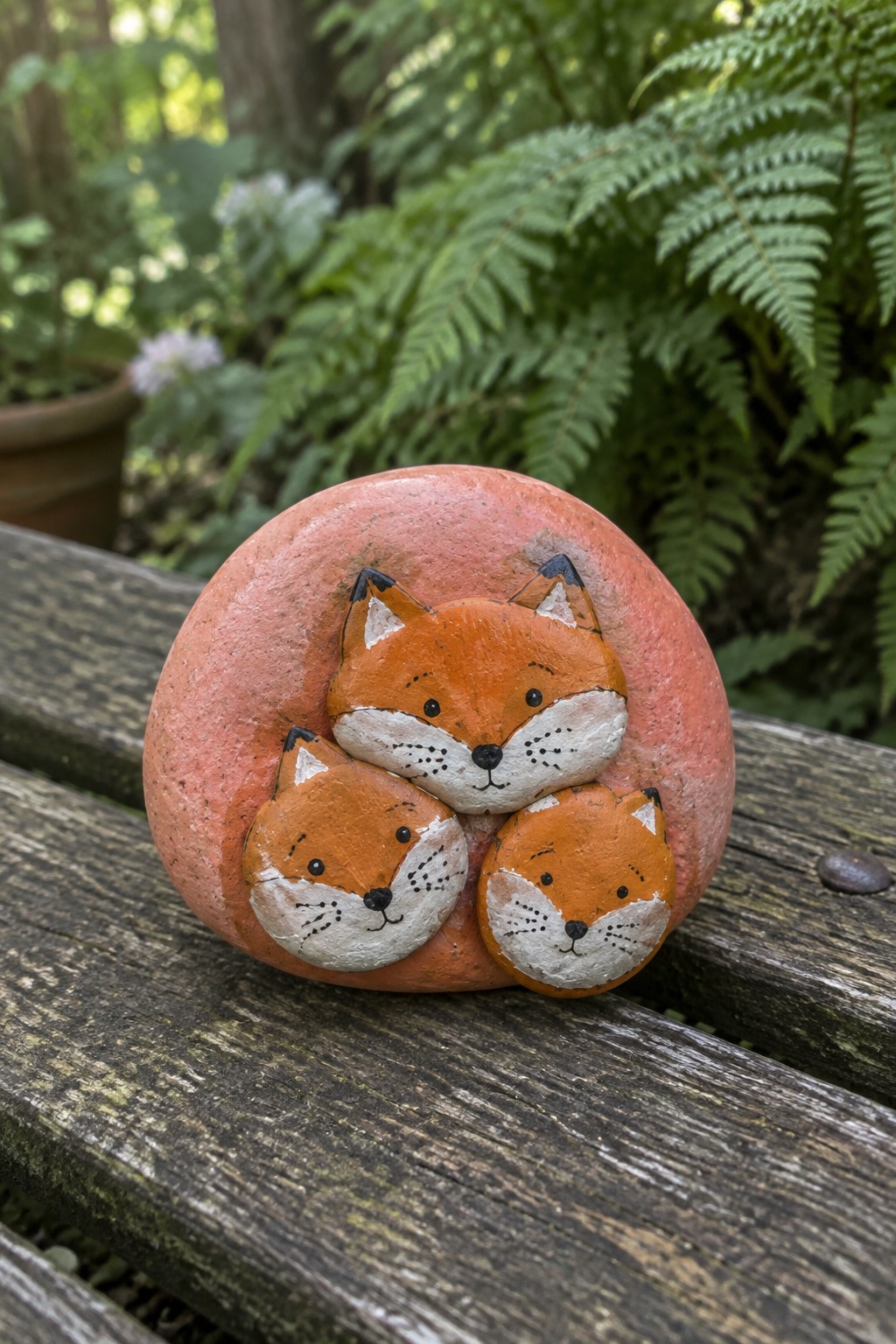
A rounded garden stone serves as the base for three fox faces painted in a tight cluster. One larger fox sits in the center with two smaller ones positioned below on either side, using orange for the main color, white for the muzzles, and black for the ears, noses, and whisker dots. The natural curve of the stone helps the faces sit close together without extra outlining or borders.
What makes this idea useful is that the single stone can rest in a flower bed, along a path, or inside a large planter without needing separate pieces. The same layout works for other animal groups by adjusting ear shapes and muzzle colors on a similar rounded form. The design stays simple because the faces rely on basic color blocks and dots rather than fine detail, so it adapts easily to different stone sizes.
Succulent Pebble Clusters for Garden Accents
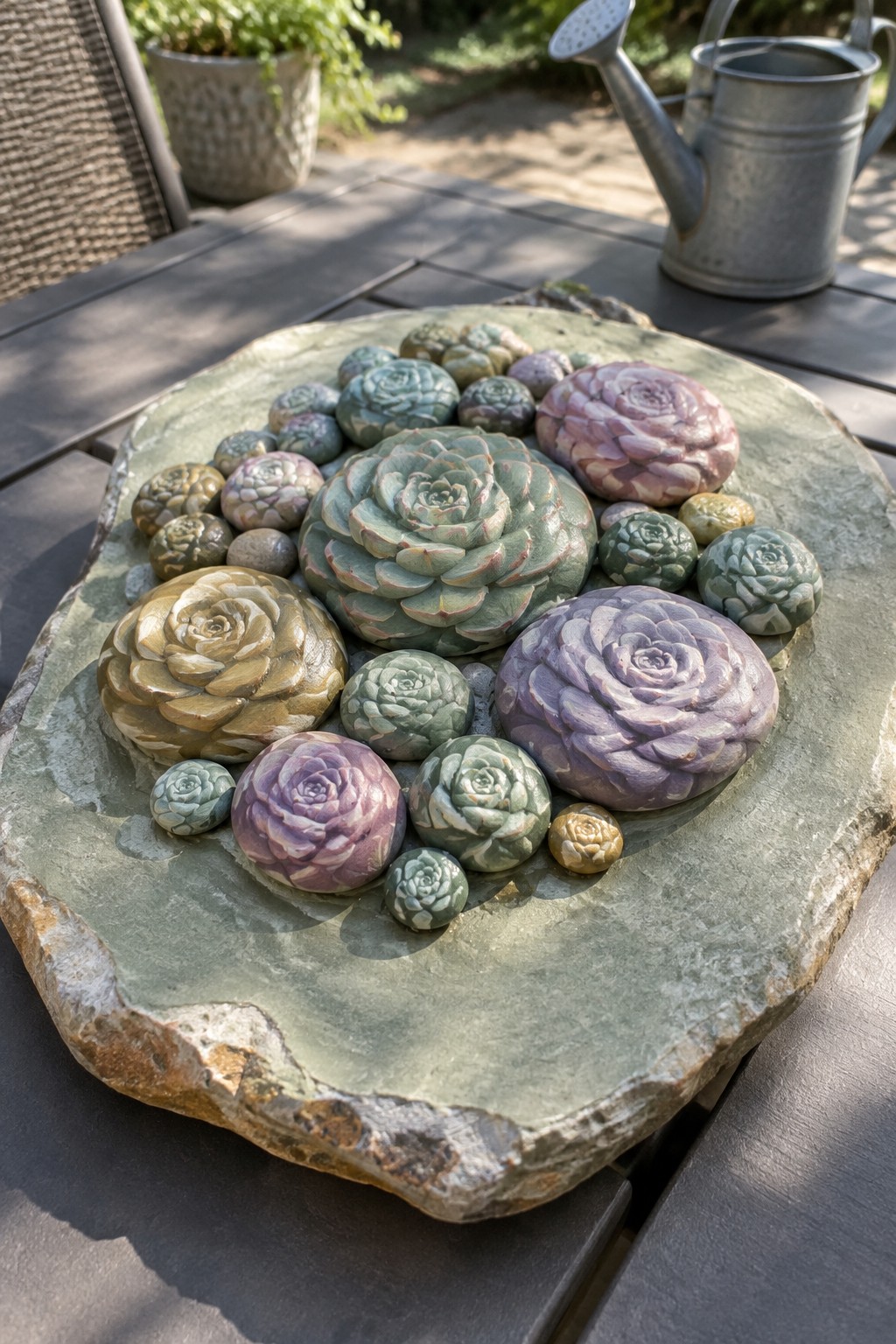
This project uses a mix of small and medium rounded pebbles painted with layered rosette patterns to mimic succulents. The stones sit close together on a larger flat slab, with soft greens, muted purples, and earth tones applied in overlapping petal shapes that follow each pebble’s curve. The result is a compact cluster that reads as a living succulent patch when placed outdoors.
What makes this idea useful is how the natural pebble shapes already suggest the rounded form of succulents, so the painting stays simple with basic color blocking and short brush lines. A painted rock cluster like this works especially well tucked into a planter, along a patio edge, or in a shallow dish on a garden table. The same approach can be scaled down to fewer stones for a windowsill or expanded with more pebbles for a larger bed accent. The small size and neutral palette also make the design easy to repeat or tweak with different succulent colors for seasonal displays.
Hedgehog Pebble Cluster for Garden Displays
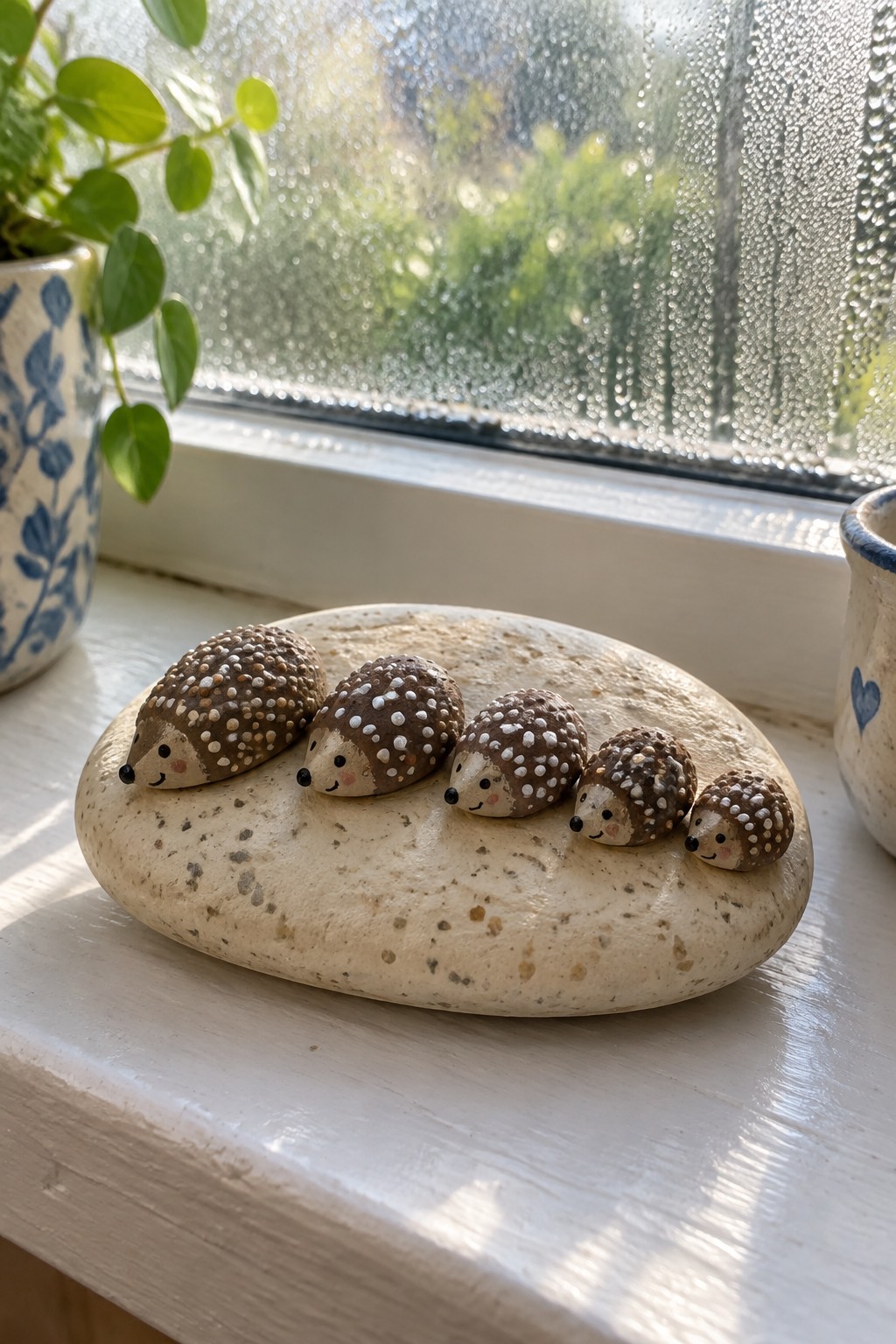
A set of small rounded pebbles painted as hedgehogs creates a compact cluster for garden use. Each pebble receives a brown base with scattered white dots to stand in for spines and a simple face using black for the nose and eyes plus a touch of pink on the cheeks. The natural pebble curves keep the bodies looking rounded without added shaping. This approach falls into the animal rock and painted pebble set category for outdoor accents.
What makes this idea useful is how the small size lets you arrange several pebbles together on a larger flat stone or directly among plants. You can vary the number of pebbles or the density of dots to match the stones you already have. For garden decor this kind of painted rock works well along a path edge, inside a planter, or at the base of a pot where the group forms a quick scene. The same hedgehog design can be reduced to fewer dots and a basic face on individual pebbles when you want faster versions.
Sunflower Cluster on a Yellow Garden Pebble
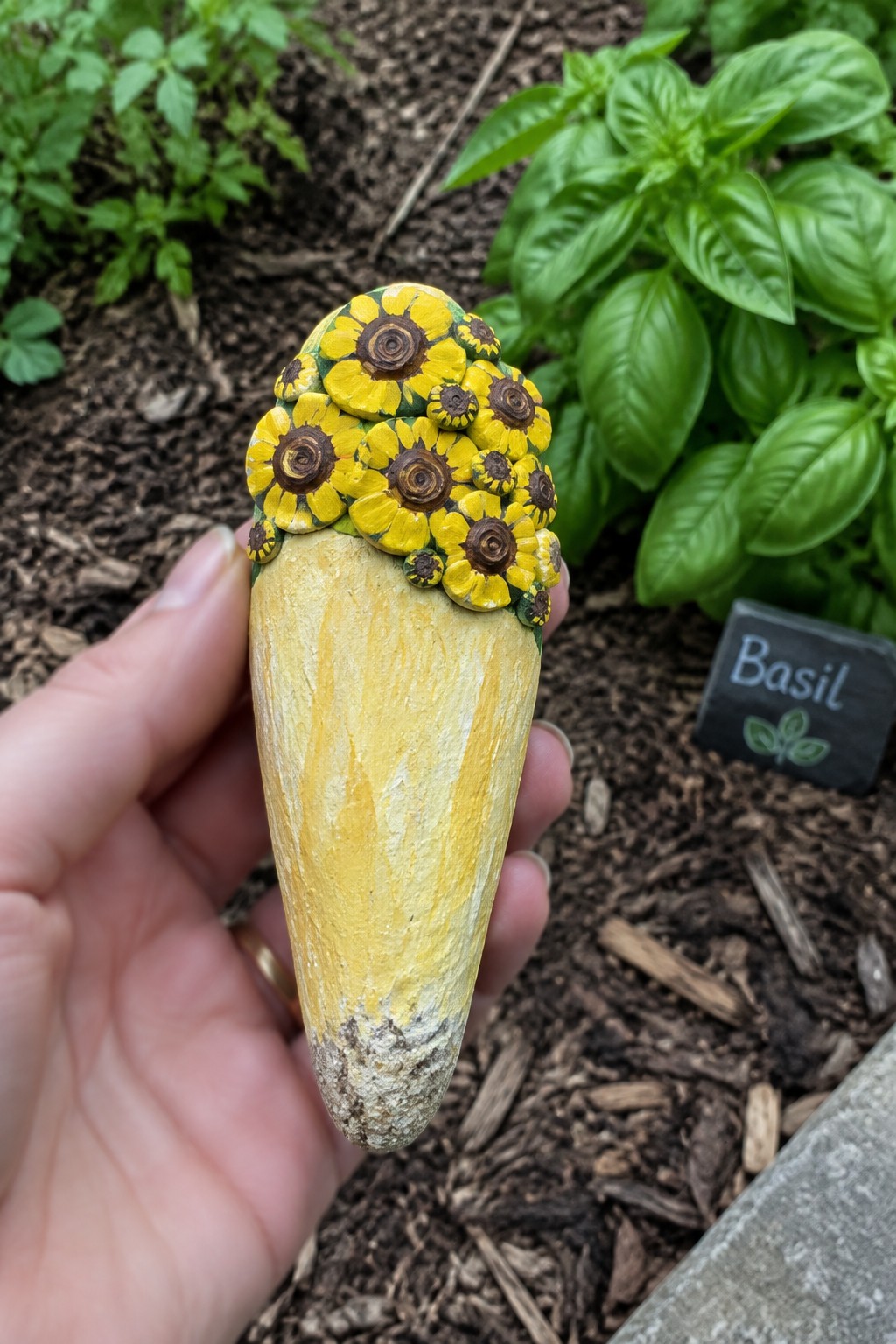
An elongated stone painted yellow along its tapered length creates a stem-like base while the rounded upper section holds a packed group of sunflowers. Each flower uses yellow petals around a brown center, with smaller buds filling spaces to form a full cluster that follows the rock’s curve. This turns a single physical pebble into a flower rock that blends with garden soil and plants.
What makes this idea useful is how the cluster sits upright in mulch or near herb beds without tipping. The same elongated shape can be reworked with different flower colors or reduced to fewer blooms for smaller stones. For garden decor, this type of painted rock adds a bright focal point that photographs well for Pinterest boards while staying simple enough to repeat on spare pebbles.
Bee Cluster on a Garden Stone
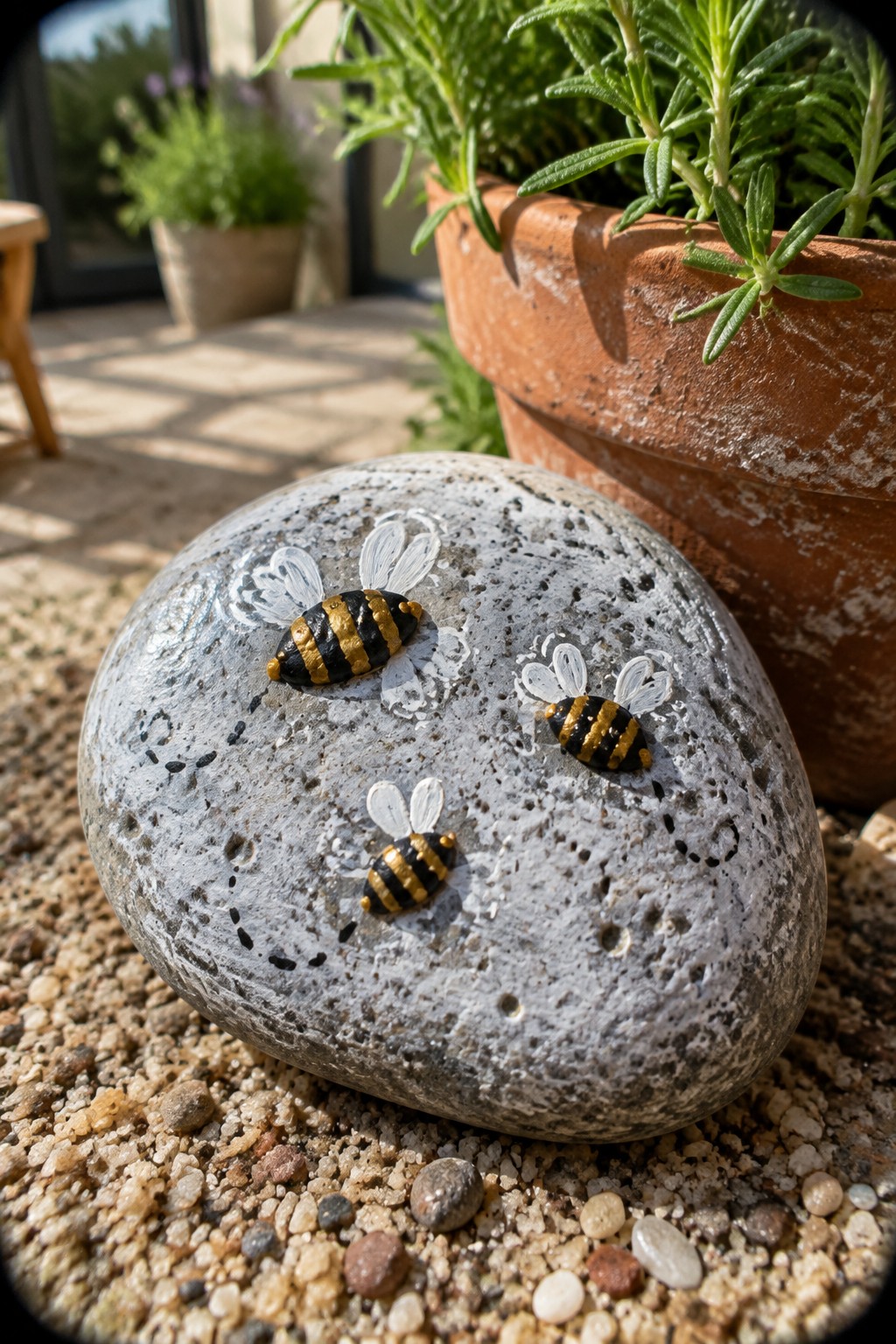
A large rounded stone works well for painting a group of three bees using black and yellow stripes with white wings and simple dashed lines to connect them. The bees sit directly on the textured surface so the natural gray shows around the painted areas and the design follows the curve of the rock. This creates a single garden accent that reads as a small cluster rather than separate pieces.
The rock shape does a lot of the work here since the flat top area gives room for the bees while the rounded edges keep the whole piece looking natural outdoors. You can reuse the same layout on a smaller stone by dropping to two bees or change the stripe colors for different bug types. For garden decor this kind of painted rock sits nicely in gravel or beside pots without needing extra stands or bases.
Painted Pebble House Cluster on a Flat Stone Base
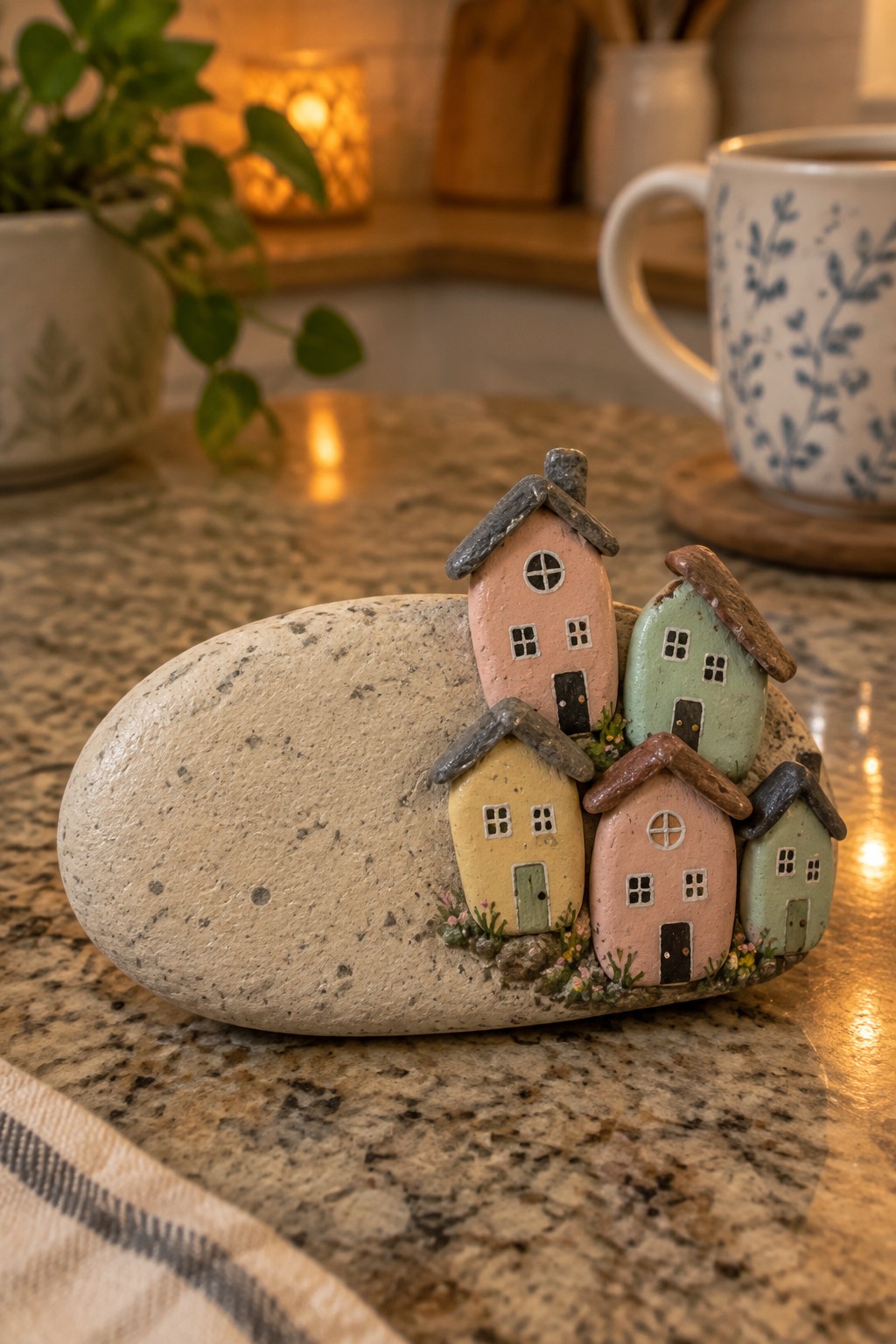
A large smooth oval stone serves as the base for a cluster of smaller painted pebbles shaped and colored like tiny houses. Each small pebble is painted in soft pastel shades with simple roof lines, windows, and doors to form a compact village scene. The arrangement uses the natural curve of the large stone to hold the group together while the varied house heights and colors create visual interest without overcrowding the surface. This approach falls under the painted pebble set category for garden decor rocks.
The rounded shape of the base stone keeps the cluster stable when placed among plants or along a path edge. You can adapt the idea by swapping the pastel colors for earth tones on a similar flat stone or adding a few extra house pebbles to cover a larger surface. The small overall size makes it simple to move between a planter, porch step, or flower bed without needing extra hardware. A version like this stands out on Pinterest because the pebble cluster reads clearly even in a thumbnail photo.
Ladybug Pebbles Clustered on a Painted Stone
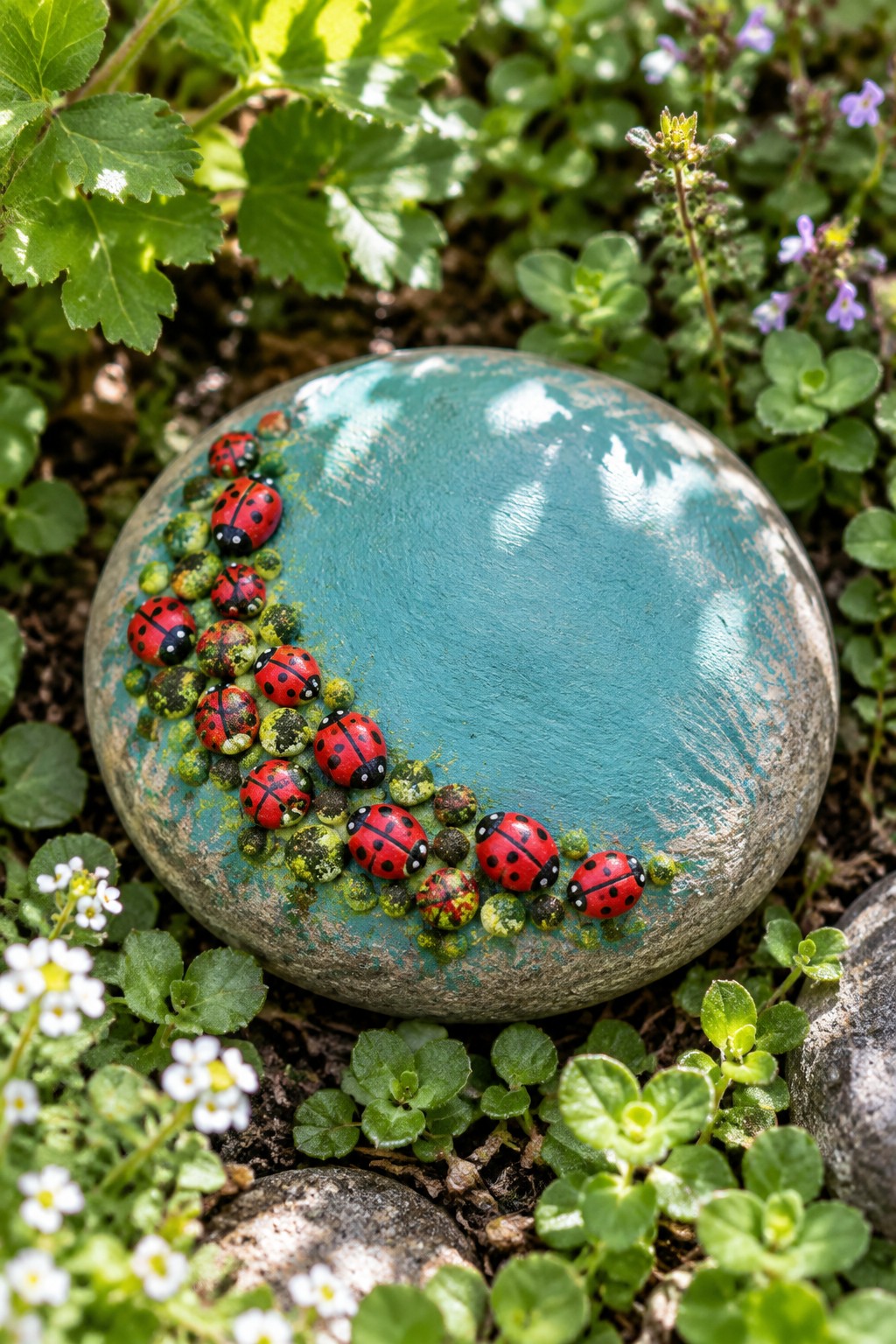
A larger garden stone painted in a solid teal base color serves as the foundation for a group of small pebbles painted as red ladybugs with black spots and simple white markings. The ladybug pebbles sit together in a loose arc along one side of the main stone, with a few mottled green pebbles mixed in to add texture to the cluster. This creates a bug-themed garden accent made entirely from painted physical rocks rather than a single flat design.
What makes this idea useful is how the small pebble scale lets you adjust the number of ladybugs to match whatever stone size you have on hand. The rounded main stone helps the cluster sit naturally in mulch or soil without tipping. You could rework the same layout with different bug colors or swap the teal base for a neutral tone to fit other planters or path edges. For garden decor this stands out on Pinterest because the bright spots read clearly from a short distance while still looking like part of the planting.
Teal Stone with Attached Painted Pebble Cluster
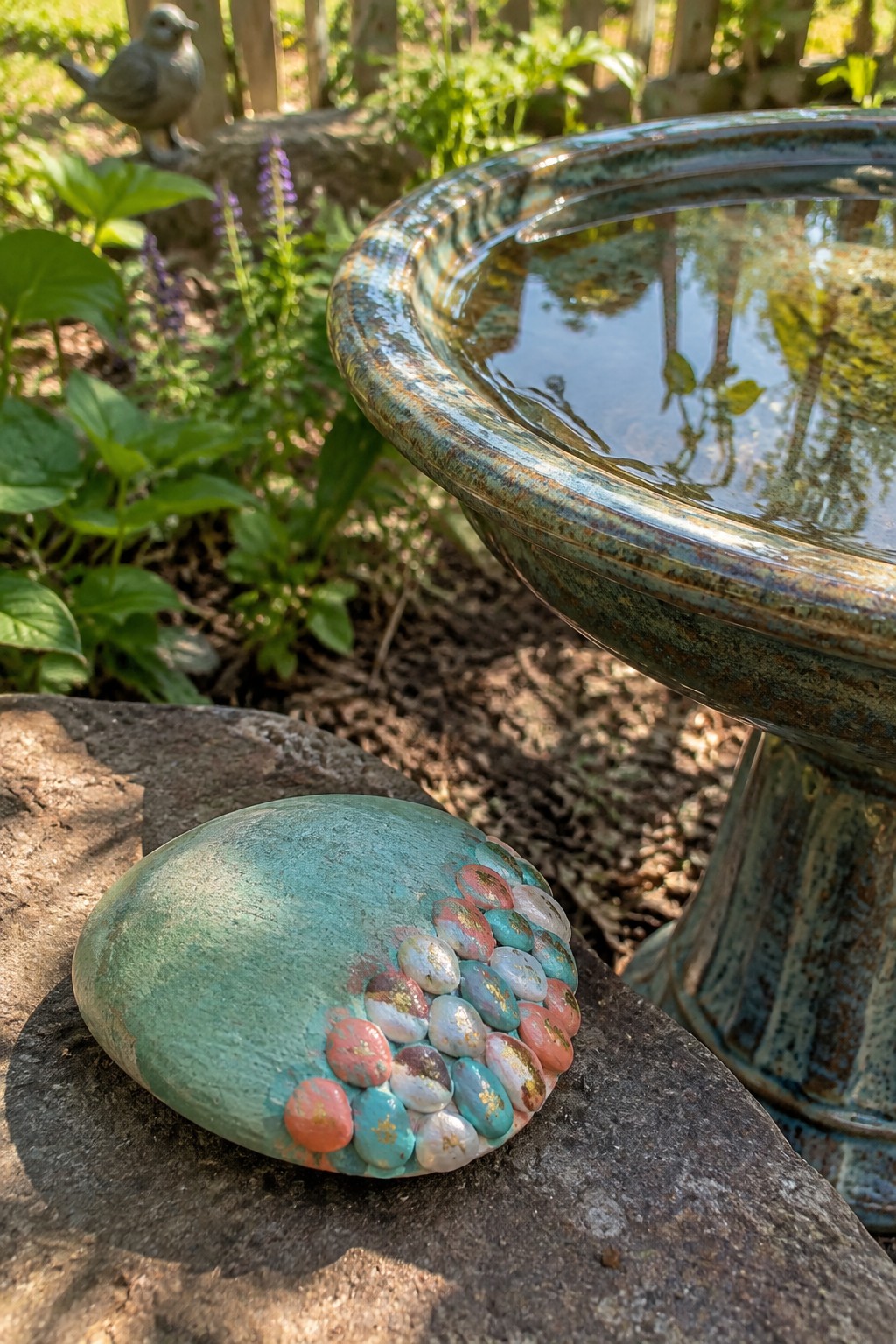
A smooth rounded stone painted in teal serves as the base for this project. Smaller pebbles painted in coral, turquoise, white, and soft gold are grouped tightly together and fixed along one edge to form a raised cluster. The contrast between the single solid color on the larger rock and the varied smaller pieces creates a simple layered effect that reads clearly from a short distance. This approach belongs in the garden decor category of hand-painted pebble clusters.
What makes this idea useful is how the cluster adds texture while keeping the main rock easy to paint. It works well tucked beside a birdbath, in a planter, or along a garden path where the small color variations show up against mulch or soil. You can change the palette of the attached pebbles to match other garden colors or spread the cluster across a flatter stone for a different look. The same attachment style also scales down for smaller accents on shelves or tabletops.
Rainbow Arc from Clustered Painted Pebbles
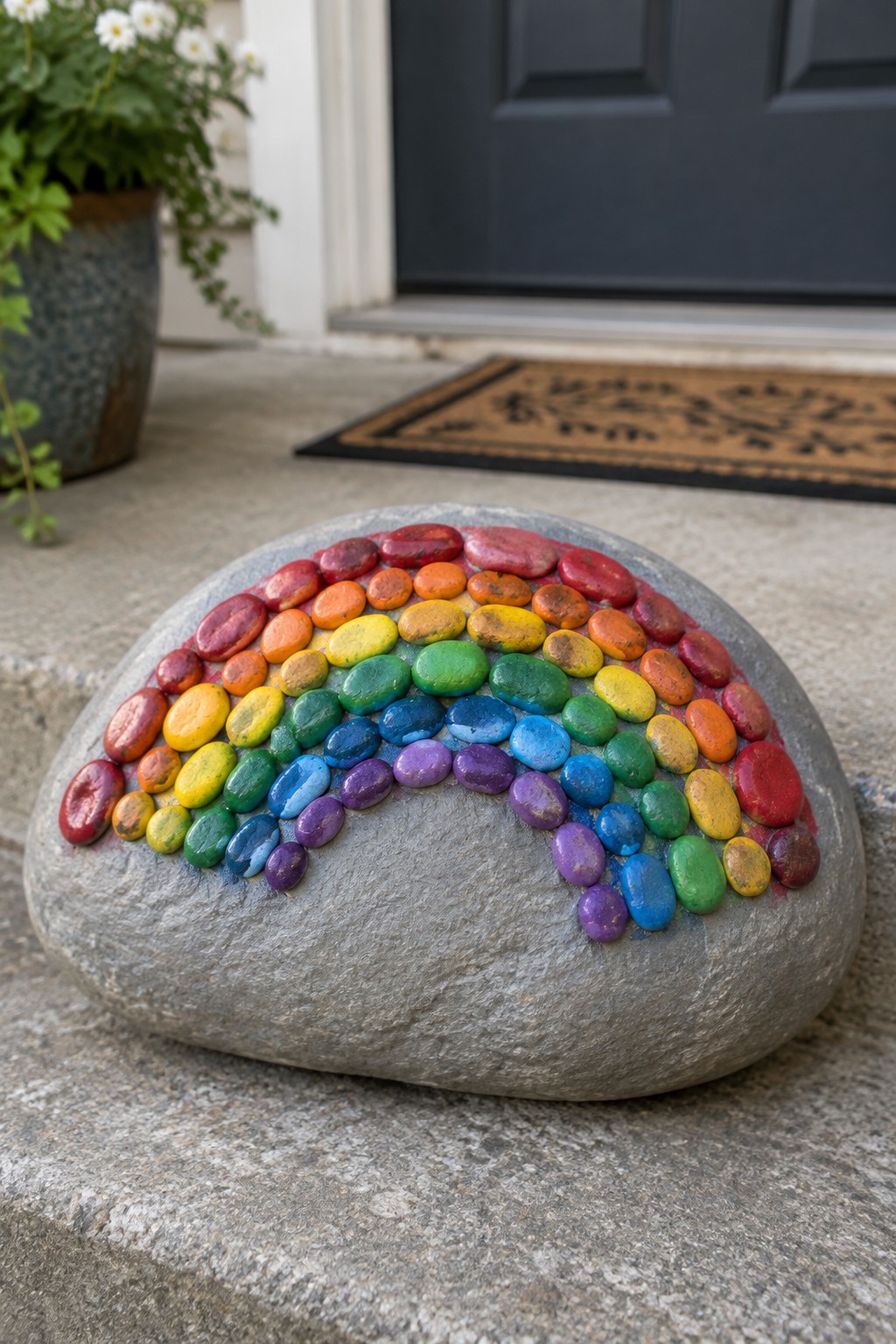
A large rounded garden stone works as the base for this project when smaller pebbles are painted in red, orange, yellow, green, blue, and purple, then arranged in a curved arc across the surface. The individual stones sit close together to form the rainbow shape, letting the natural gray texture of the larger rock show through around the edges. This method creates a garden decor rock that stays clearly three-dimensional because the painted elements are real pebbles attached to the stone rather than flat designs.
What makes this idea useful is how the curved layout follows the rock’s own shape, so the design stays balanced even on an uneven surface. The same pebble cluster approach could be scaled down to a smaller stone for a planter or changed to a shorter arc using only three or four colors. For garden decor, this kind of painted rock sits well on steps, near door mats, or along a path where the color sequence catches attention from a distance.
Flower Cluster Painted Rock for Stacked Garden Displays
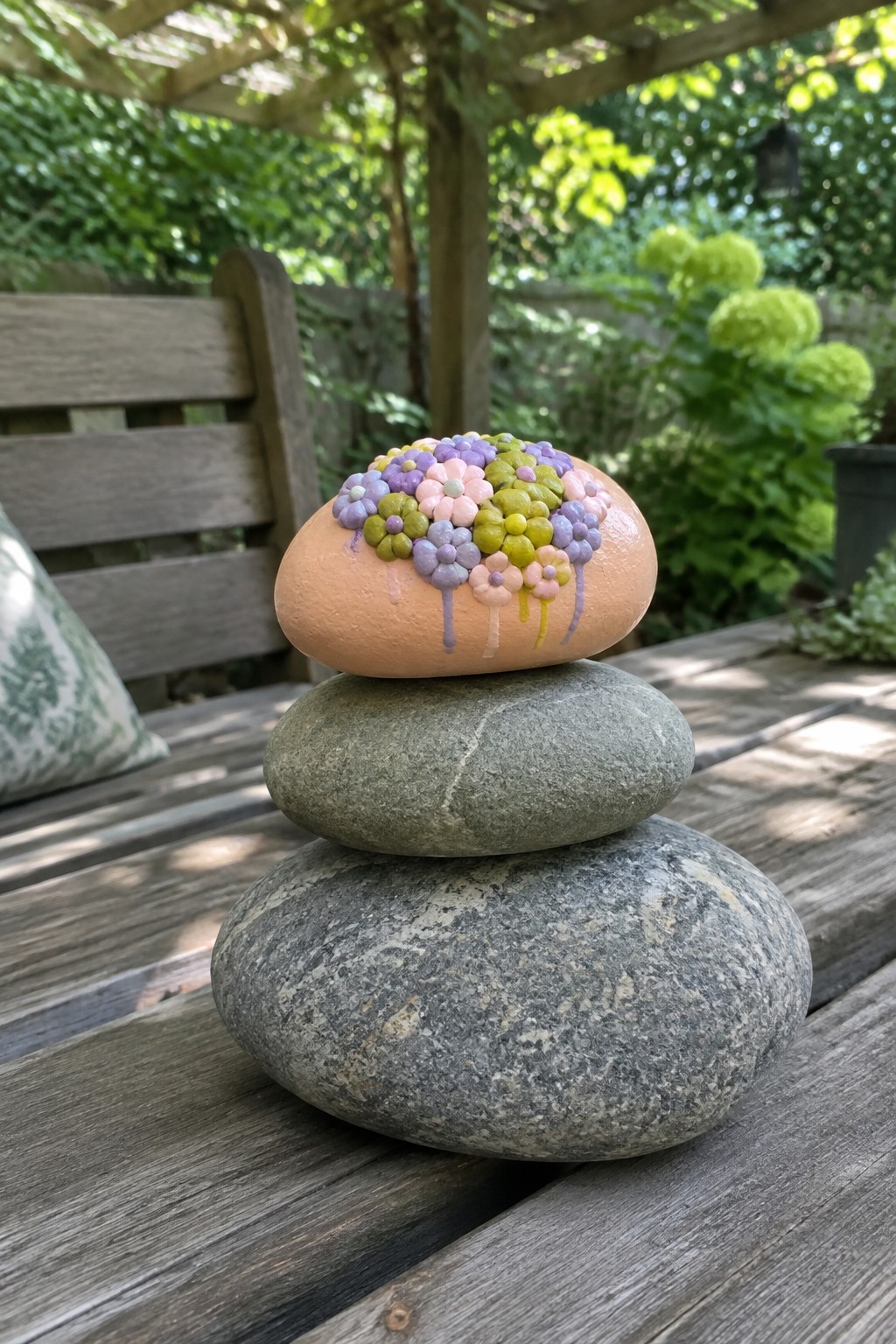
A smooth oval stone painted peach serves as the top piece in this project. Clusters of small flowers in purple, pink, green, and yellow cover the upper surface, with matching paint drips running down the sides. The design turns the rock into a garden decor piece that can sit on a stack of natural stones.
The rounded shape helps the rock balance well when stacked in a planter or along a garden path. You can change the flower colors to match nearby plants or reduce the number of clusters for a simpler look on a smaller stone. For garden decor this type of painted rock works as a quick focal point that fits among mulch or on a patio table. The cluster pattern translates easily to other oval stones without needing extra tools.
Painted Caterpillar Pebble Cluster for Garden Paths

A row of small rounded pebbles painted in bright solid colors creates a caterpillar shape that works as a garden accent. The head pebble is painted green with two black antennae and a simple face, while the body pebbles follow in pink, light blue, yellow, and rose tones, each given eyes and a curved smile before being lined up end to end. This bug rock idea relies on the natural pebble shapes and the way the stones sit flat against a larger base stone or soil surface.
What makes this idea useful is how the cluster can sit directly in mulch, a planter, or along a stepping stone without extra hardware. The repeating face pattern on each pebble makes it simple to adapt by changing the color order or adding extra body segments if you have more stones. For garden decor, this type of painted rock cluster photographs well for sharing because the line of faces creates a clear trail that reads from a short distance.
Night Sky Moon Cluster Rocks for Garden Paths

A smooth oval stone painted deep navy blue forms the base for a scattered group of gold and silver crescent moons and stars in varying sizes. Several moons include simple closed-eye faces while the rest stay plain, all arranged to suggest a compact night sky scene. The design uses the rock’s rounded surface so the metallic shapes catch light from different angles when placed outdoors.
What makes this idea useful is how the dark base color keeps the metallic details visible even in shaded garden spots. The oval shape sits stably in mulch, along a path edge, or inside a large planter without rolling. You could rework the same layout onto several smaller stones and group them together or change the star sizes to fit a flatter rock. For garden decor this kind of painted rock adds a clear focal point in a flower bed while taking up little space.
Painted Pebble Path on a Garden Rock
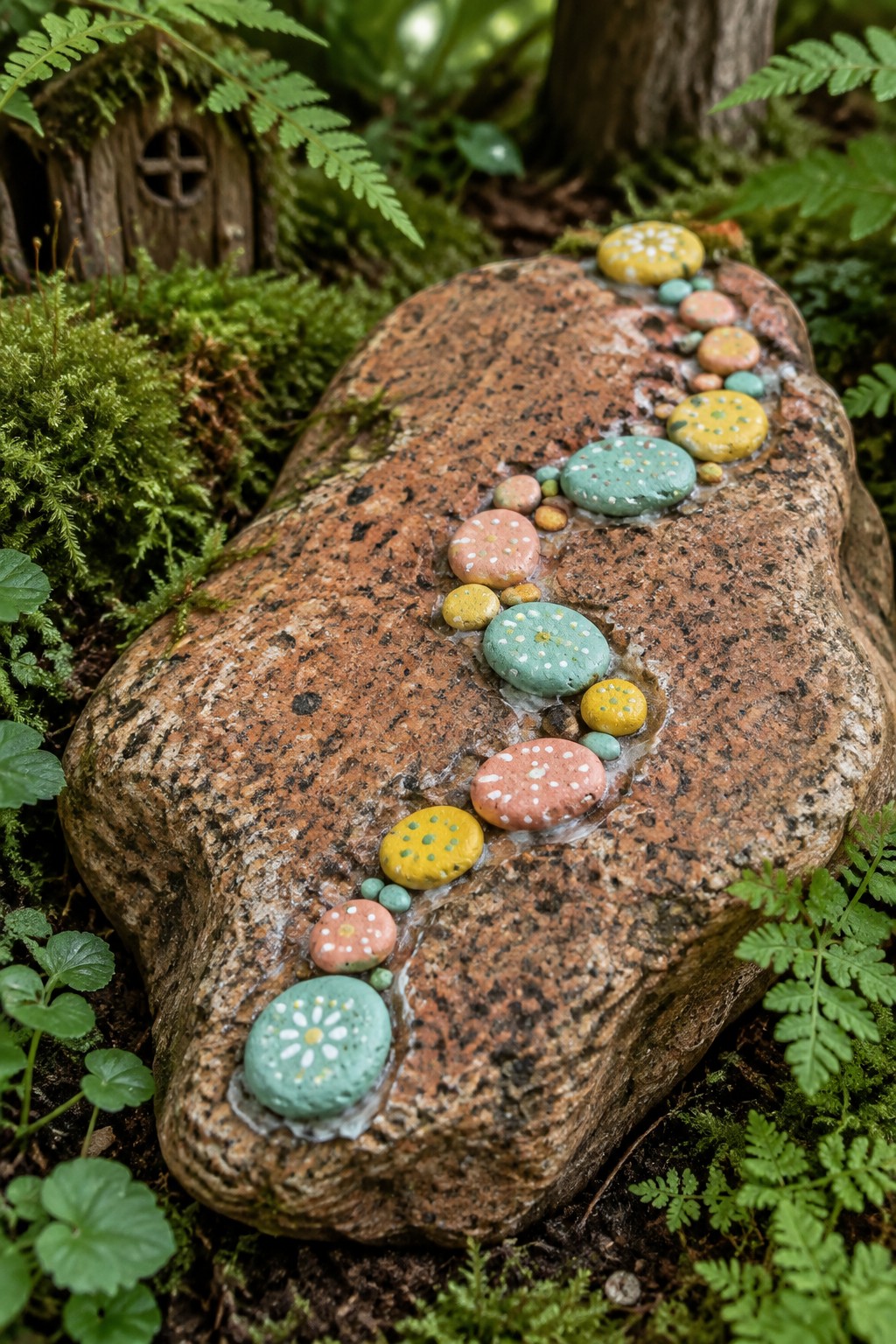
A large flat garden rock serves as the base for a winding path made from clusters of smaller painted pebbles. The pebbles feature simple dot patterns in yellow, teal, coral, and mint, arranged in a curving line that follows the rock’s surface. This creates a miniature stepping-stone effect that works well as garden decor. The project relies on actual painted stones clustered together rather than paint applied directly across one surface.
What makes this idea useful is how the pebble clusters add dimension and interest to any rock shape without complex drawing. Set the finished piece in a planter, along a mulch bed, or near ferns for a path-like accent in outdoor displays. The layout adapts easily by changing the dot colors or spacing to fit smaller stones or different garden themes. For garden decor, this kind of painted rock stands out on Pinterest because the raised pebbles catch light and create a clear focal point in photos.
Frequently Asked Questions
What types of paint and supplies work best for creating durable hand painted pebble clusters? Acrylic paints designed for outdoor use provide the most vibrant colors and adhesion on smooth pebbles. Pair them with a primer for better coverage on porous stones and finish with multiple layers of waterproof sealant. Gather supplies like fine detail brushes, a palette for mixing colors, and a variety of pebble sizes from craft stores or garden centers to match the 22 cluster designs.
How do I ensure the painted rocks withstand rain, sun, and freezing temperatures? Apply two to three coats of exterior grade varnish or resin based sealer after the paint dries fully. Place the clusters in partially shaded garden spots to reduce direct UV exposure and test a small batch first by leaving them outside for a week. Reapply sealant every six months during routine garden maintenance to keep colors bright.
Where should I position the pebble clusters for maximum visual impact in my garden? Group them along pathways, around flower beds, or near water features to create focal points that guide the eye. Mix cluster sizes and themes such as floral patterns or animal shapes to add layers of interest without overwhelming the space. Consider viewing angles from windows or seating areas when planning the layout.
Are painted pebble clusters safe for gardens with pets or children? Use non toxic paints and sealers labeled as pet and child safe to avoid any chemical leaching. Avoid small loose pebbles in high traffic play zones and opt for larger clusters that stay in place. Rinse finished pieces thoroughly before installation and monitor for any chipping over time.
How can beginners scale up from one or two clusters to completing all 22 designs efficiently? Start with simple patterns like solid colors or basic shapes to build confidence before tackling detailed scenes. Set up a dedicated workspace with good lighting and organize pebbles by size in advance. Work in batches of five designs per session while allowing drying time between steps to avoid rushing and maintain quality across the full set.
