

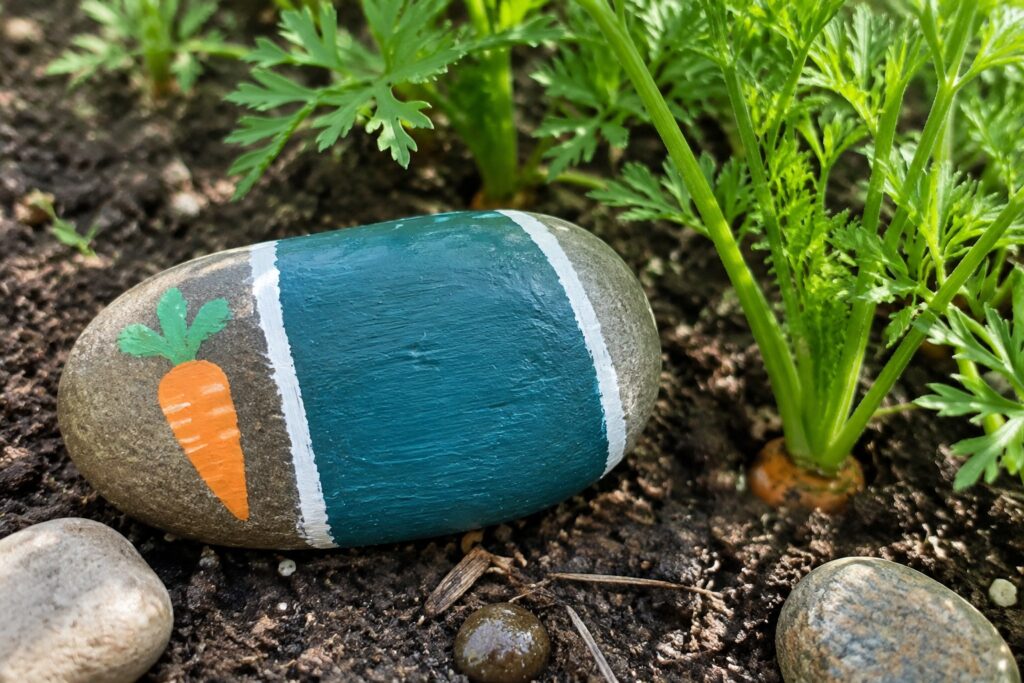
I like using painted rocks as markers in my vegetable garden because they are simple and cheap.
They help me remember what is growing in each spot without needing fancy signs.
I have learned that bold lettering works best so the names stay readable after a season outside.
My favorite approach is to choose paints that resist fading from the weather.
These examples show some practical ways to make them look good and last.
Carrot Symbol Stone for Vegetable Row Markers
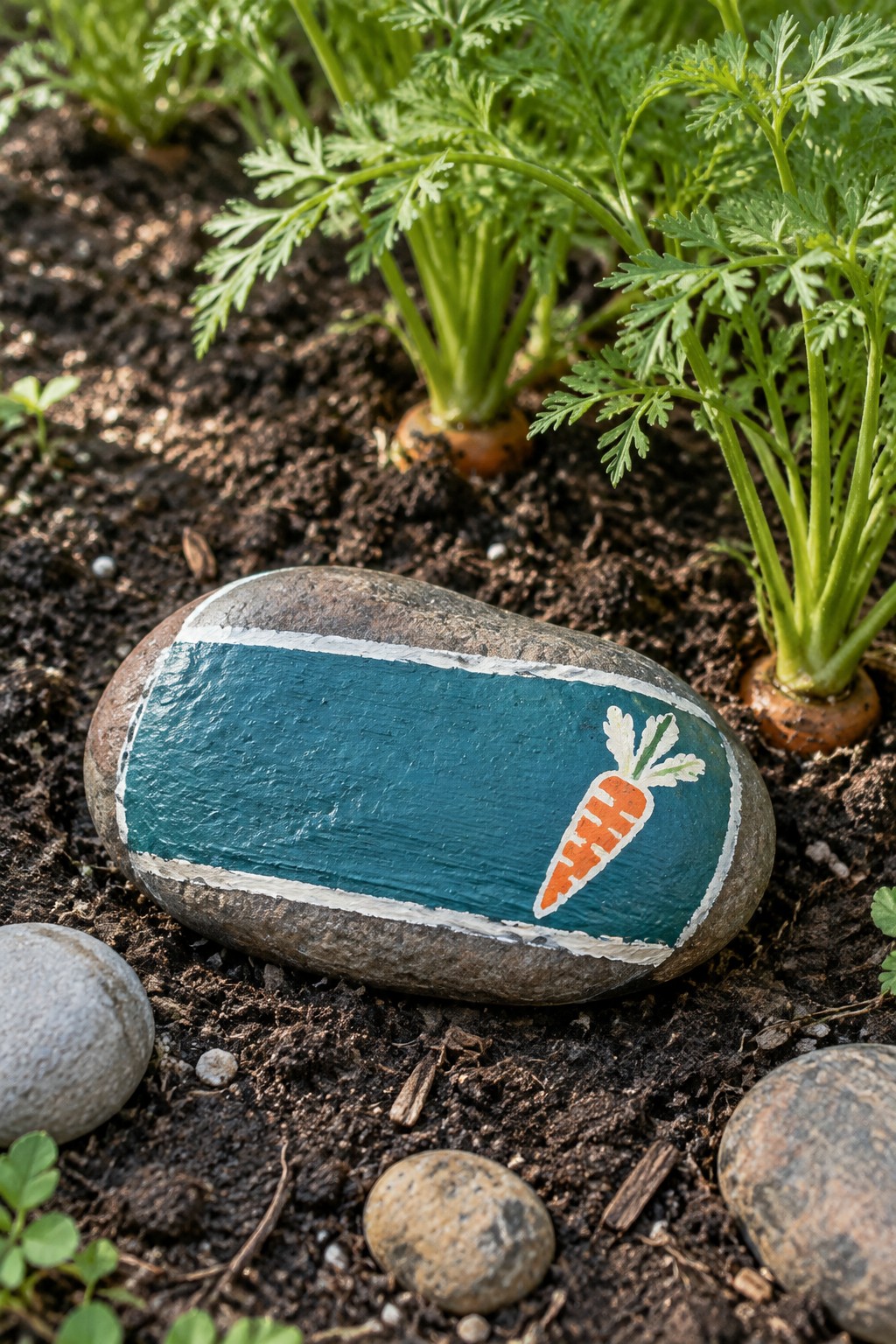
A smooth oval garden stone painted with a wide teal band and crisp white border creates a clear, weather-resistant marker for root vegetables. The right edge holds a simple orange carrot with green leafy tops, leaving the rest of the painted area open for lettering if needed. The rounded shape and flat top surface let the rock sit stably in soil without rolling, and the bold color block stays visible among foliage and mulch.
What makes this idea useful is the vegetable symbol that works on its own or with added lettering for extra clarity. The same color-block layout can be reused for beets, radishes, or onions by changing only the motif on the right side. In a raised bed or in-ground row, this size and shape stays put through watering and seasons better than thin stakes or tags. The design also photographs clearly for garden planning boards or shared ideas online.
Striped Yellow Marker for Herb Pots
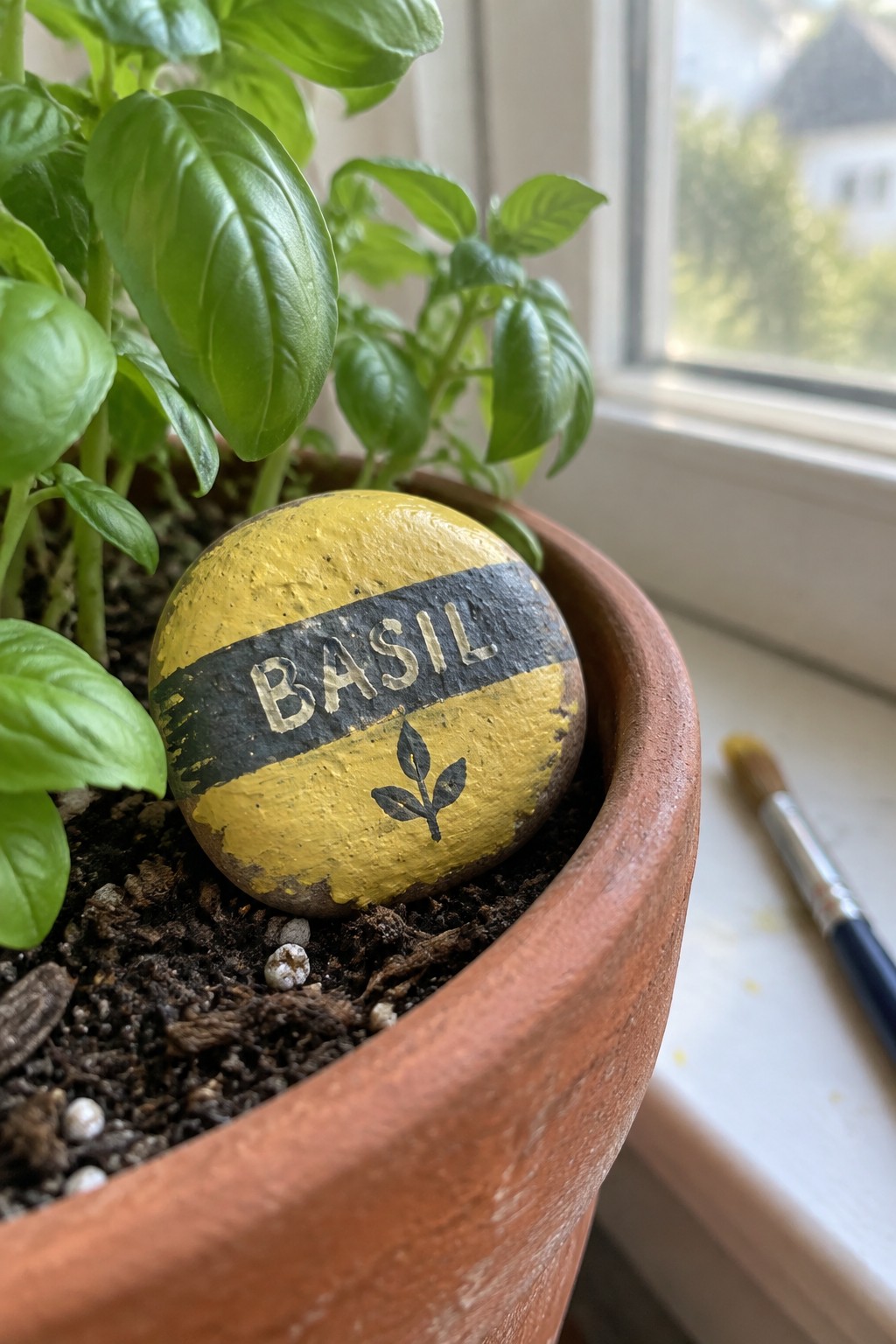
A smooth rounded stone painted bright yellow with a wide black band across the center gives the lettering plenty of contrast and keeps the plant name easy to read from a distance. The small leaf symbol painted below the text adds a quick visual cue that this marker belongs with an herb without crowding the design. This style of color blocking turns a basic garden stone into a functional label that sits right in the soil or a pot.
What makes this idea useful is how the bold stripe protects the lettering from blending into dirt or foliage once the rock is placed outdoors. You could reuse the same yellow and black layout on a flatter stone for a row of vegetables or swap the leaf for a different simple shape if you want markers for mint or parsley instead. In a planter this type of painted rock stays visible among the leaves and works as a quick way to tell similar-looking herbs apart.
Tomato Motif Rock Marker
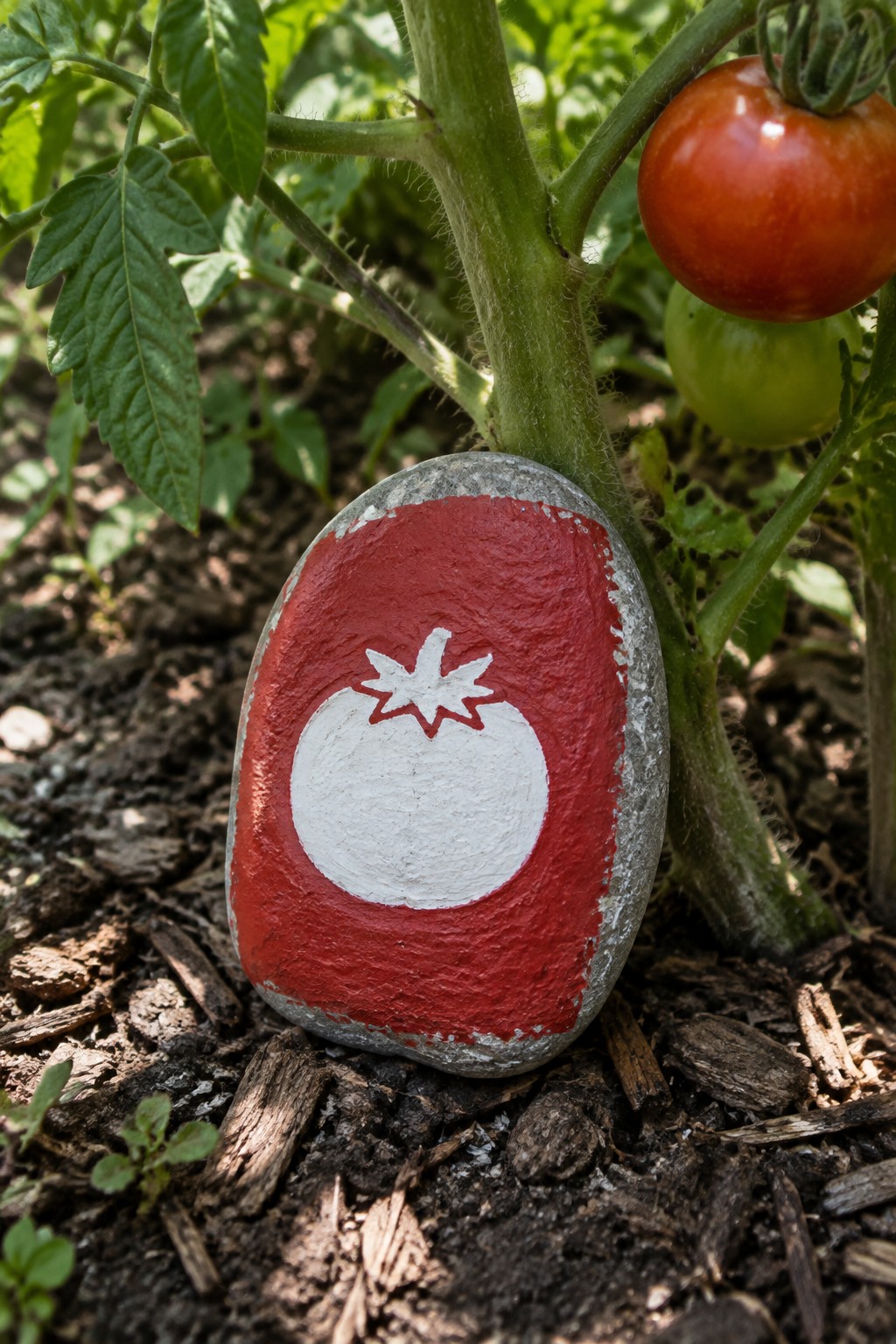
A smooth oval rock painted solid red serves as the base for this garden marker, with a large white tomato shape and stem added in the center using bold color blocking. The white motif stands out sharply against the red field, and the rounded stone edges keep the design contained without extra borders. This approach turns an ordinary garden stone into a clear visual label for tomato plants by relying on the fruit shape rather than words.
The rock shape does a lot of the work here because the oval form matches the natural curve of a tomato and sits stably in soil or mulch. A painted rock like this works especially well tucked at the base of a plant where text might get hidden by leaves. The same motif could be swapped for other vegetables by changing the outline color and silhouette on a matching rock size. For garden decor, this kind of painted rock holds up outdoors when sealed and gives an instant way to spot different crops without needing small print.
Striped Icon Rocks for Garden Borders
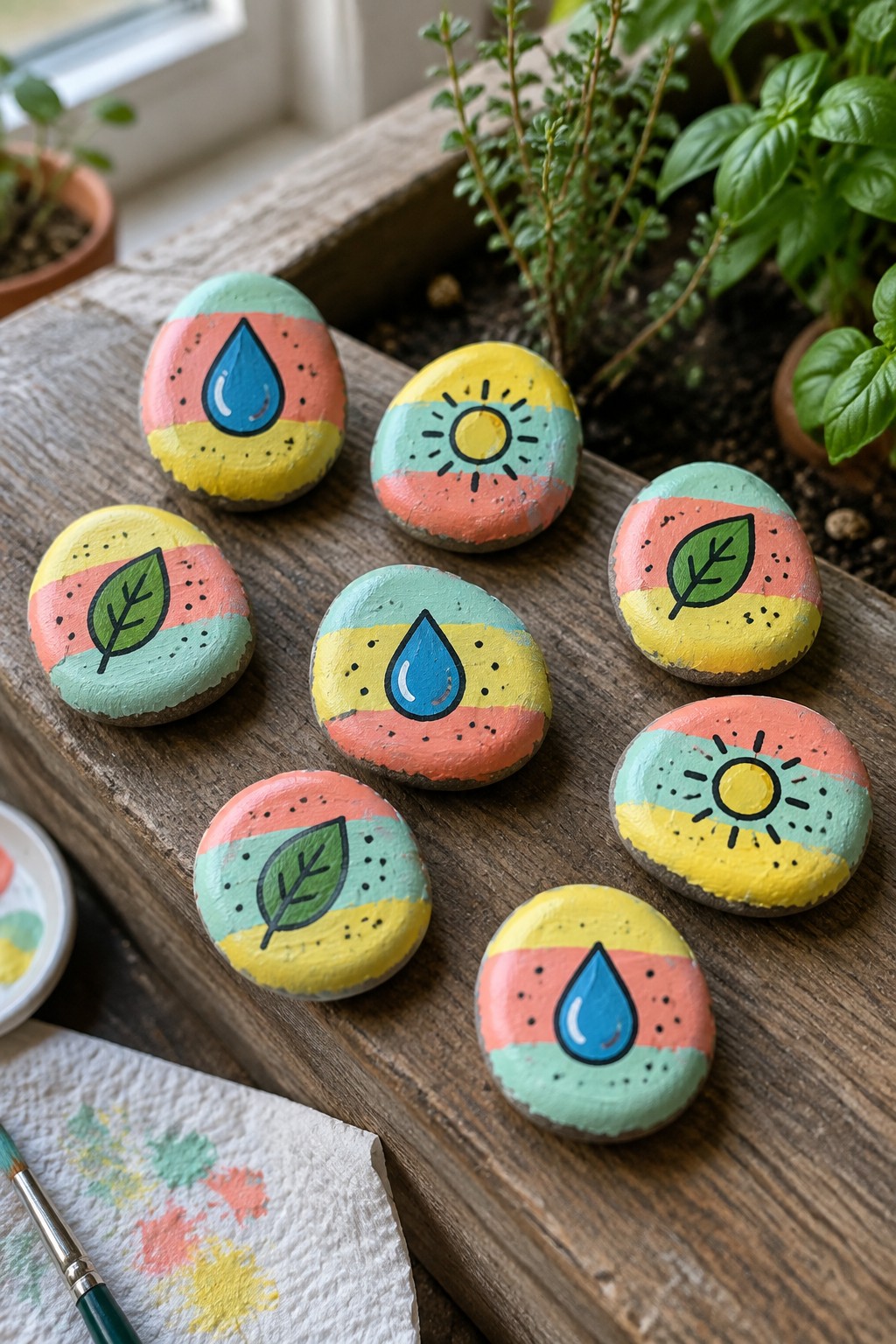
Smooth oval stones receive three horizontal bands of coral, yellow, and mint paint, with a single bold motif centered on each one. The motifs include a blue water drop, a yellow sun with short rays, and a green leaf, all outlined in black for contrast. The straight color blocks follow the curve of the stone while the simple symbols keep the design readable from a short distance.
What makes this idea useful is how the compact rounded shape lets the rocks sit flat in mulch or along a planter rim without rolling. The repeating stripe pattern works on stones of different sizes, so you can scale the same layout down for smaller pots or up for larger bed edges. You could replace the leaf with a different garden symbol or add a short word in weather-resistant paint if you want these to function as basic markers.
Sprout Symbol Rock for Garden Bed Markers

A flat, irregular stone gets a solid black painted rectangle that creates high contrast for a simple white sprout motif. The design shows a basic seedling with two leaves and a stem, painted directly onto the rock surface to serve as a visual plant marker. This turns an ordinary garden stone into a weather-resistant label that blends into soil and mulch while clearly signaling what is growing nearby.
What makes this idea useful is how the dark background keeps the white sprout visible even in shaded garden spots or after rain. The same approach works well for marking rows of vegetables or herbs, and the motif could easily be swapped for other basic plant shapes like a leaf or flower outline on a similar flat stone. A painted rock like this stands out in photos for garden boards because the bold color blocking reads cleanly from a few feet away.
Navy Striped Basil Garden Marker
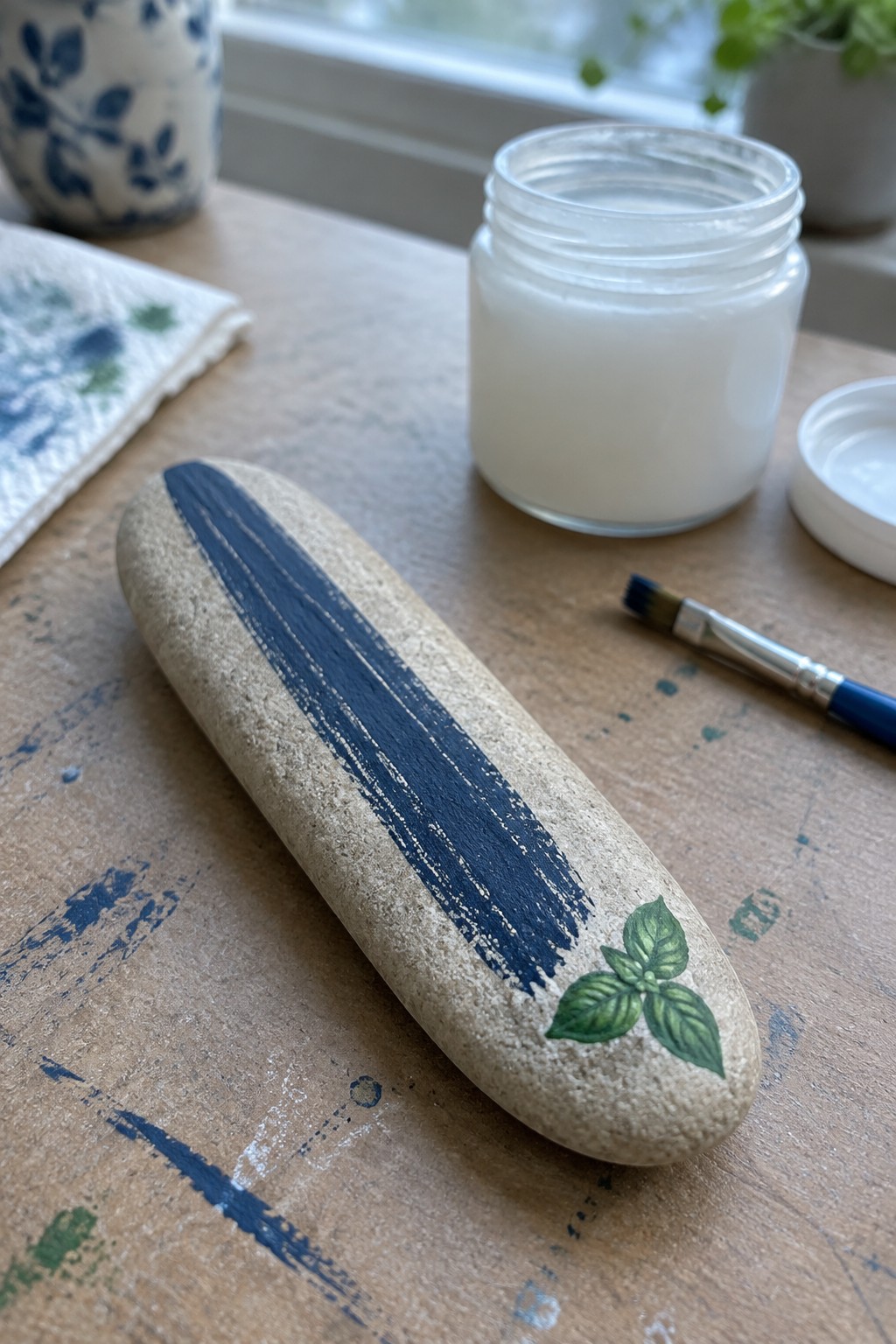
A smooth, elongated river rock works well as a garden marker when painted with a wide navy stripe down the center to create a bold, weather-resistant lettering area. A small cluster of green basil leaves painted at one end gives an instant visual cue for the herb without relying on text alone. The natural stone texture shows through around the edges, keeping the design simple and grounded for outdoor use.
What makes this idea useful is the clear space the stripe provides for adding plant names in white paint that will hold up in rain and sun. The rock shape fits nicely along the edge of a raised bed or inside a large planter. You could swap the basil leaves for rosemary, thyme, or mint by adjusting the leaf outlines while keeping the same stripe layout. The same approach scales easily to other long stones if you need markers for multiple herbs in one garden.
Mushroom Symbol Rock for Shade Garden Markers
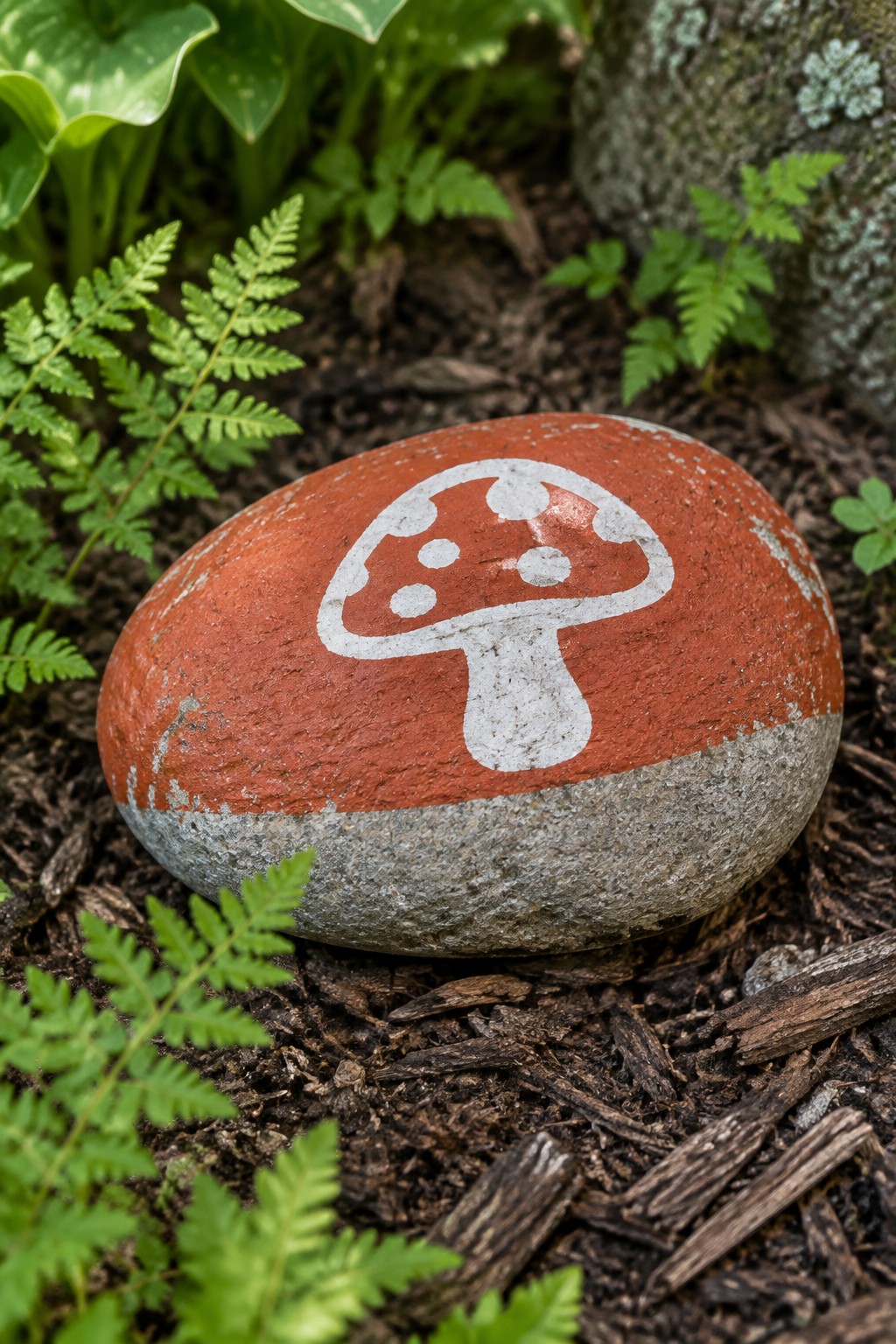
A smooth rounded stone works well as a garden marker when painted with a bold two-tone design. The upper portion is coated in red with a crisp white mushroom outline featuring dots across the cap, while the lower half stays the natural gray of the stone. This approach uses simple color blocking and a clear motif to indicate areas for shade plants or fungi without any lettering.
What makes this idea useful is how the mushroom shape can signal specific garden zones like a mushroom bed or fern patch. The rounded form settles easily into soil or mulch and the high-contrast red stays visible after weather exposure. You could swap the mushroom for other simple outlines such as a leaf or berry on a similar stone to mark different plant groups.
Striped Vegetable Markers for Raised Beds
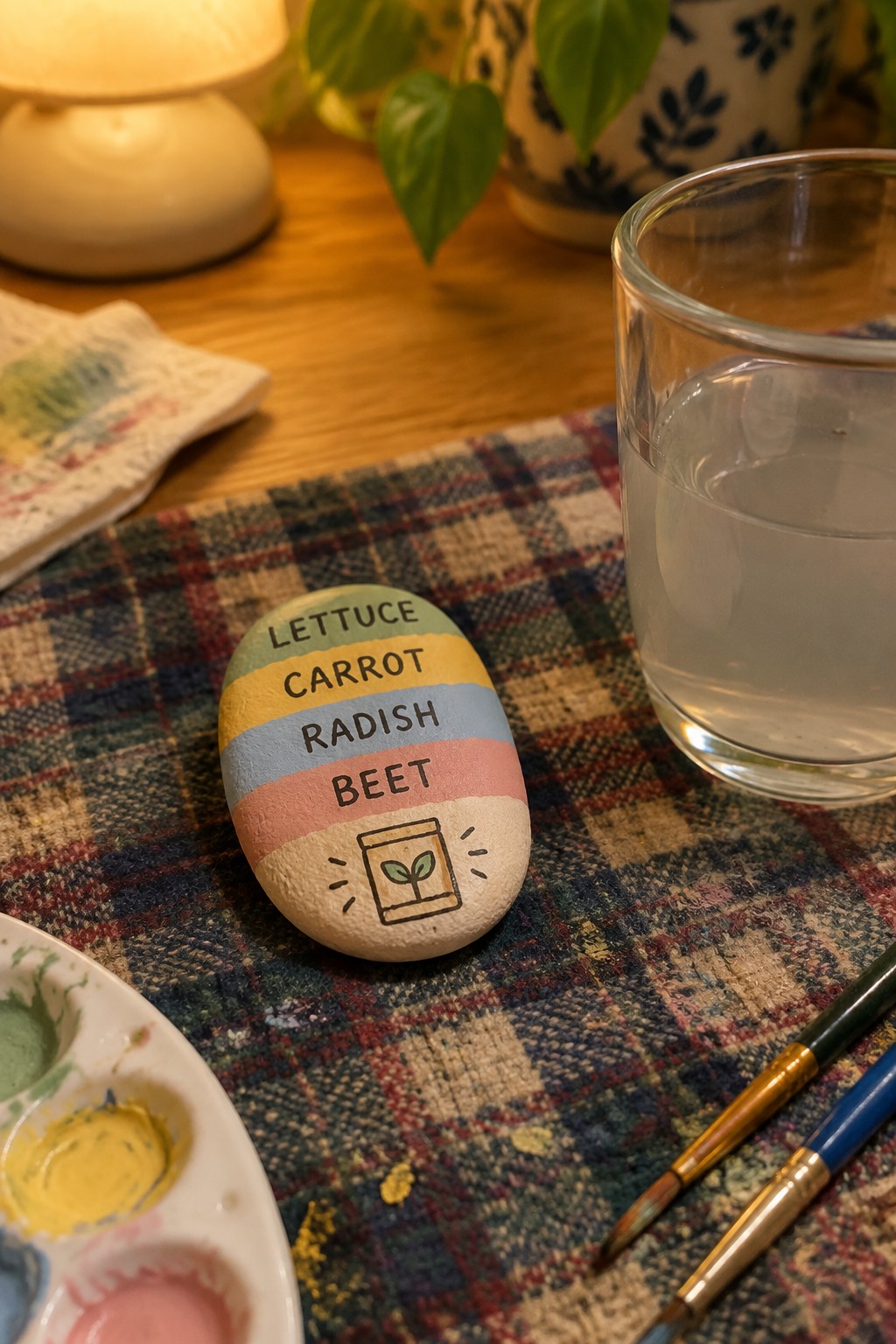
A smooth oval stone painted with four horizontal color bands creates a compact multi-plant garden marker. Green tops the list for lettuce, followed by yellow for carrot, blue for radish, and pink for beet, with each name painted in bold black lettering across its stripe. A small framed sprout icon sits at the bottom to reinforce the garden theme. The rounded shape and flat painted surface let the lettering stay readable while the stone sits directly in soil or mulch.
What makes this idea useful is the color blocking that pairs each name with its matching hue so the marker stays clear even after rain or sun fades the paint. The single stone format works well along the front of a raised bed or inside a large planter where space is tight. You could adapt the layout onto a wider flat rock for more stability or split the same stripe pattern across four smaller stones for individual plant labels. The bold lettering and simple color blocks make the design easy to repeat with weather-resistant paint for outdoor use.
Eggplant Motif Rock Marker for Vegetable Beds
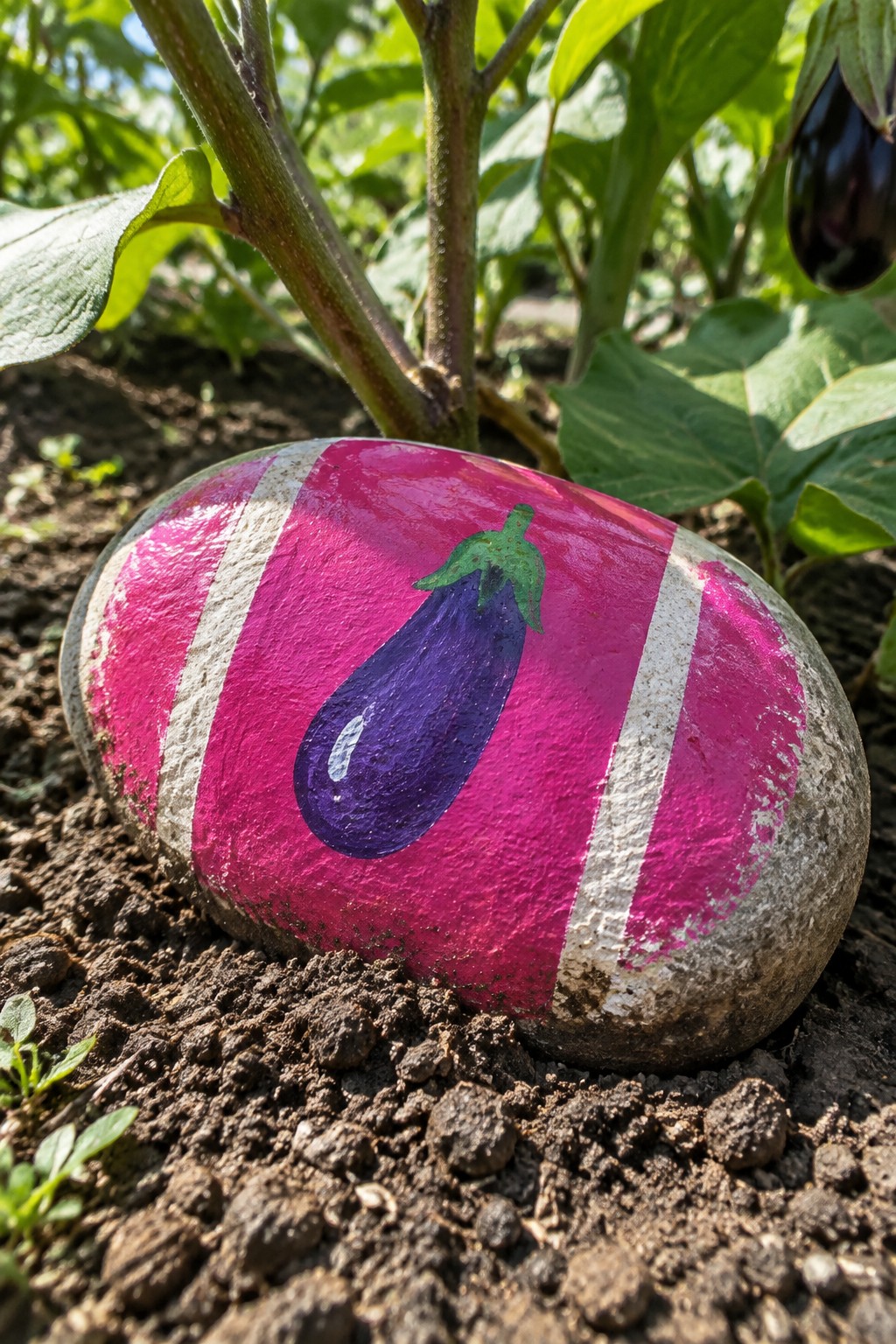
A rounded garden stone becomes a clear plant marker when painted with bold magenta stripes and a central eggplant illustration. The design uses simple color blocks and a recognizable vegetable shape to label the spot directly in the soil. This approach keeps the marker visible among leaves and mulch while matching the actual plant growing nearby.
What makes this idea useful is how the striped border can stay the same while the middle motif changes to match other crops like peppers or tomatoes. The rock shape sits steady in dirt or mulch without extra stakes. For a full set of markers, repeat the same stripe pattern on several stones and swap only the center vegetable each time.
Watering Can Symbol Garden Marker on Painted Stone

A smooth oval river rock painted solid black creates a strong base for a lime green watering can motif placed above a bold chevron shape. The design uses simple color blocking and scattered dots to form a clear visual cue for watering zones or vegetable sections in a garden bed. This approach keeps the marker readable from a short distance while staying fully weather-resistant once sealed.
What makes this idea useful is how the rounded stone shape nestles easily into mulch or soil without tipping. The high-contrast green on black stands out in bright sunlight and the motif could be swapped for a shovel or sun symbol on a similar rock to mark different garden tasks. For garden decor this type of painted rock works especially well along paths or in large planters where lettering might fade faster than bold shapes.
Botanical Silhouette Markers
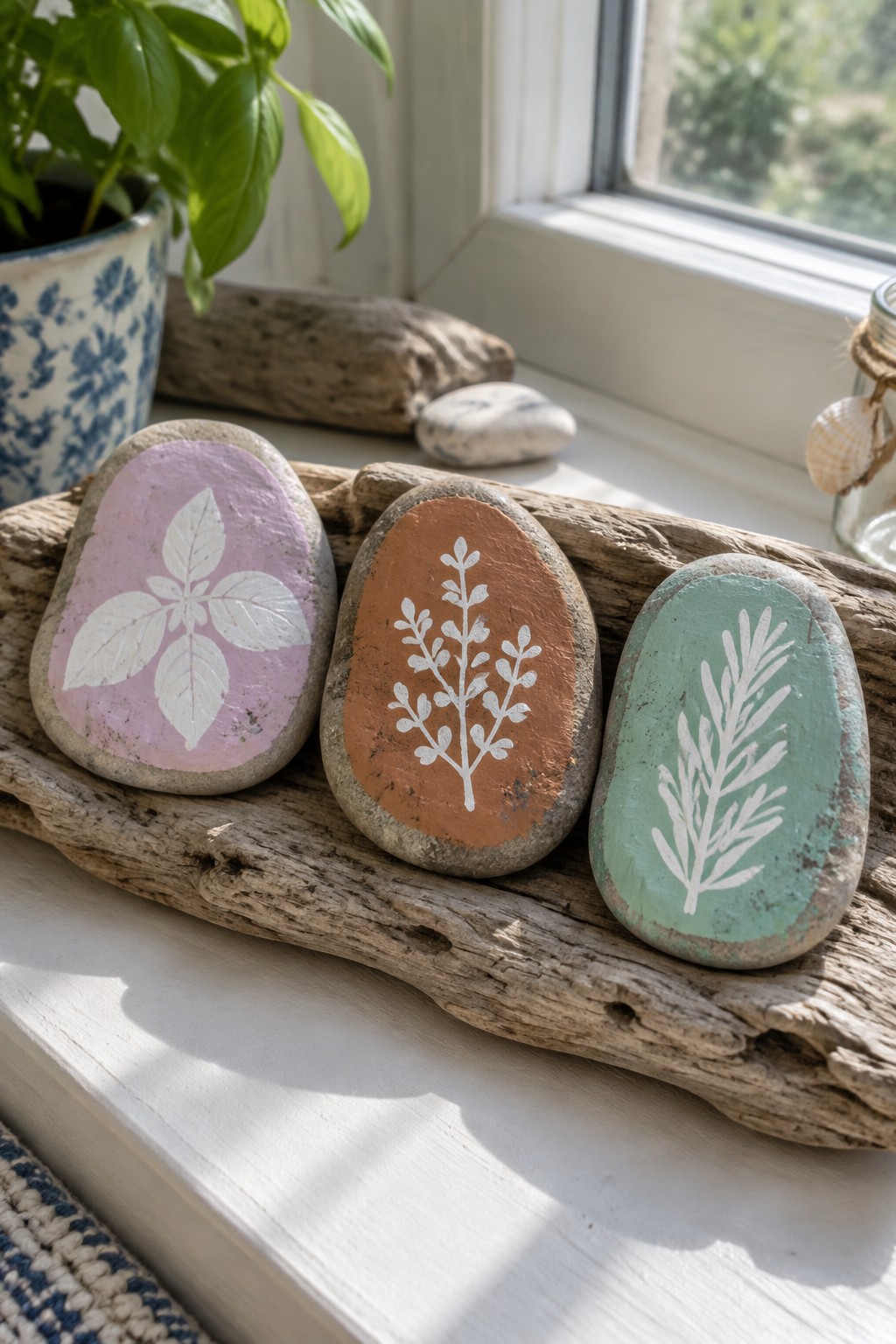
Smooth, oval river rocks painted in soft background colors work as garden markers when decorated with crisp white botanical outlines. One stone shows a basil leaf cluster on pink, another carries a branching herb on terracotta, and the third features a feathery frond on mint green. The white linework stands out clearly against the painted areas while the natural stone edges and texture keep the markers grounded in an outdoor setting.
What makes this idea useful is how the color blocking and simple leaf shapes let you assign each rock to a different herb or vegetable without needing words. You can trace similar outlines for rosemary or lavender on new stones and place them directly in soil or mulch where they stay visible. The rounded shape helps the rocks settle evenly in pots or along bed edges, and the same approach works on smaller pebbles for container gardens. This style shows up well in photos because the contrast between painted sections and raw stone makes the markers easy to spot.
Beet Silhouette Stone for Vegetable Beds
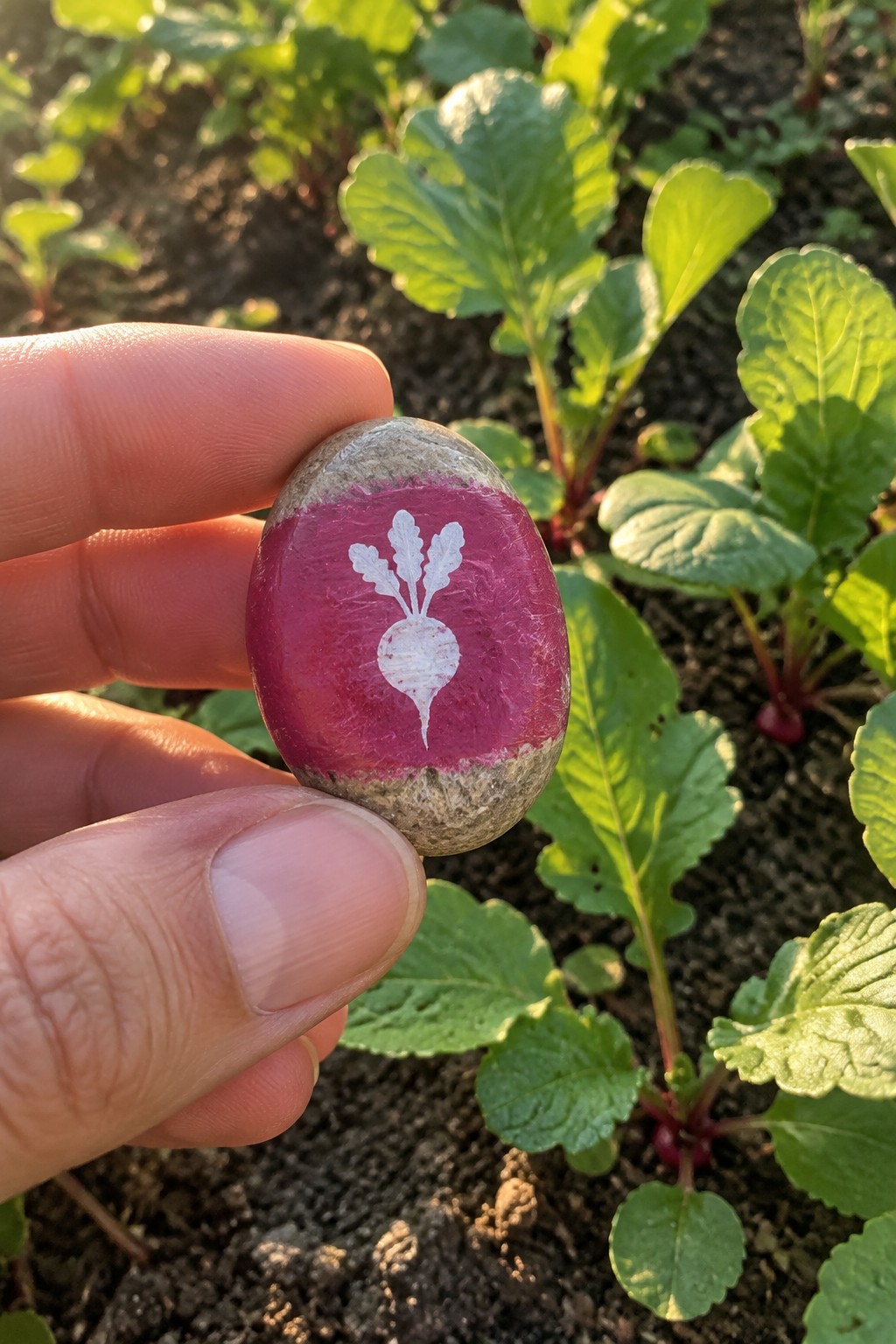
A smooth oval river rock serves as the base for this beet design. The painter covered part of the surface in solid magenta paint and added a clean white outline of a beet with its leafy greens on top. This creates a simple, recognizable vegetable marker that sits directly in the soil among real plants.
What makes this idea useful is how the strong color contrast makes the shape readable from a short distance in a garden bed. The same color blocking approach could switch to other root vegetables by changing just the outline and base hue. For garden decor, this type of painted rock works well tucked into rows or planters to help identify crops without fading quickly outdoors. The rounded form keeps it stable on uneven ground and easy to move when needed.
Framed Seedling Marker on a Smooth Black Stone
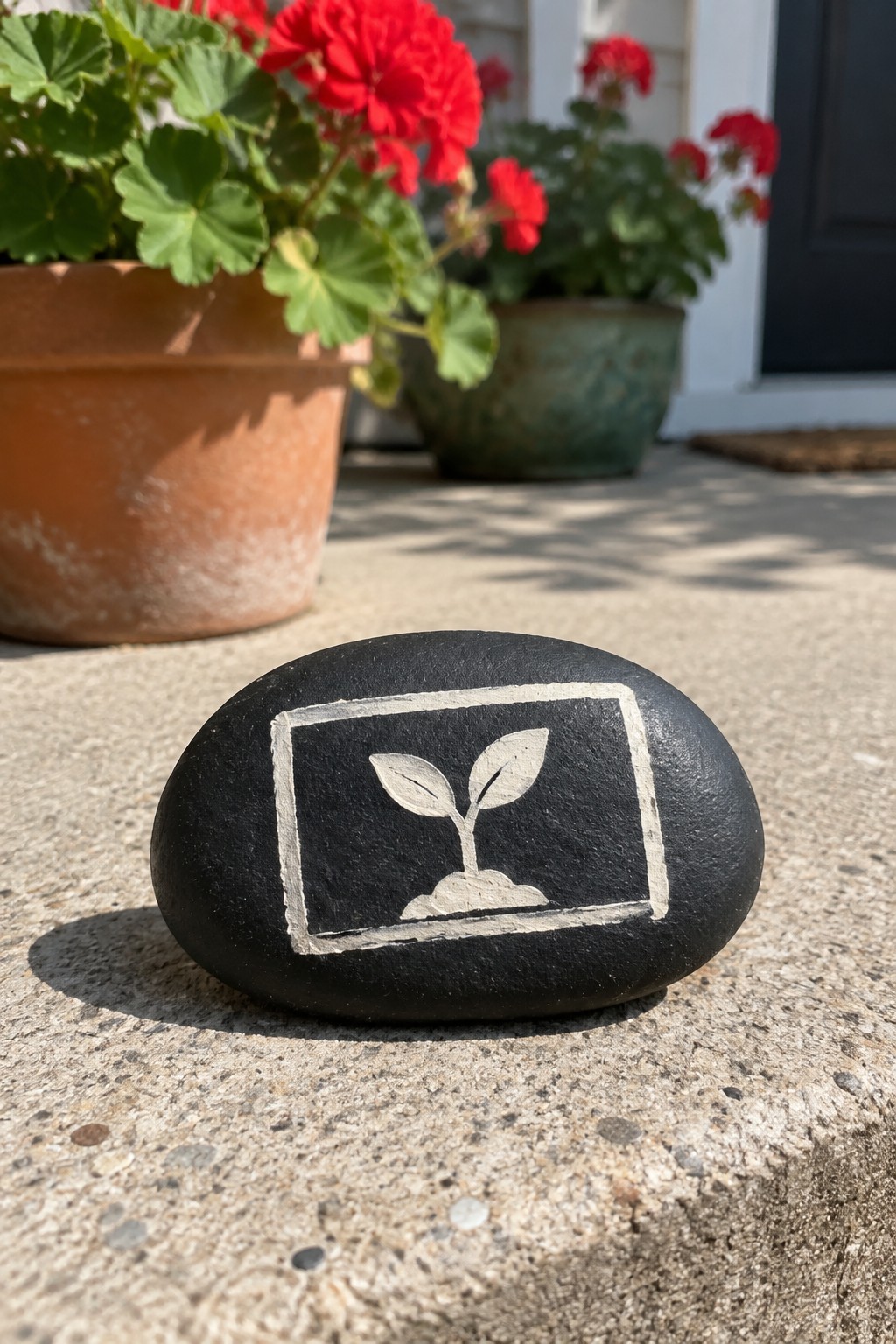
A smooth oval black stone makes a durable garden marker when painted with a simple white seedling inside a rectangular border. The design uses clean outlines for the two leaves, stem, and soil mound so the symbol reads clearly from a short distance. This style turns the rock into a functional label for pots or beds using only a visual cue instead of lettering.
What makes this idea useful is how the dark stone background lets the white lines stay visible even in bright sunlight or after rain. You could swap the seedling for other simple plant outlines like a tomato or herb leaf while keeping the same border to mark different sections of a garden. The rounded stone shape helps it sit flat in mulch or along a planter edge without tipping. For weather resistance a clear outdoor sealer finishes the surface so the paint holds up through seasons.
Vegetable Silhouette Garden Markers
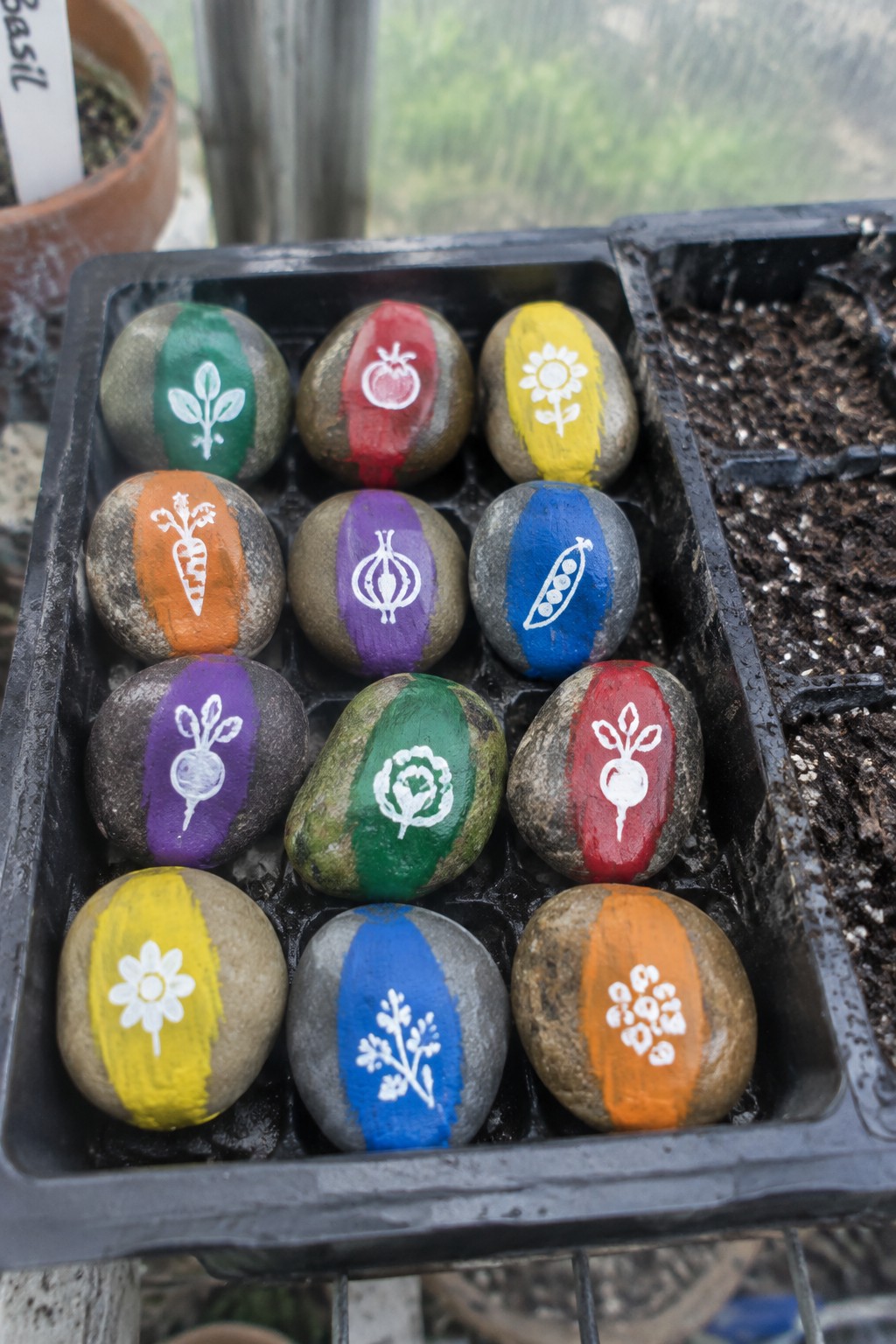
Smooth rounded stones work well for this project because their curved surfaces hold a single bold paint stripe without needing perfect edges. Each rock gets a bright color block matched to a vegetable or herb, then a crisp white outline drawing of the plant such as a carrot, tomato, or cabbage. The high contrast between the solid background color and the simple linework makes the markers easy to read at a glance once they sit in soil or mulch.
What makes this idea useful is that the color blocking replaces lettering while still giving clear plant identification in a garden bed or planter row. The rounded stone shape stays put in loose soil and can be sealed for weather resistance. You could swap the motifs for different crops or scale the same color-and-outline method onto smaller pebbles for windowsill herb pots.
Sunflower Section Marker with Bold Lettering
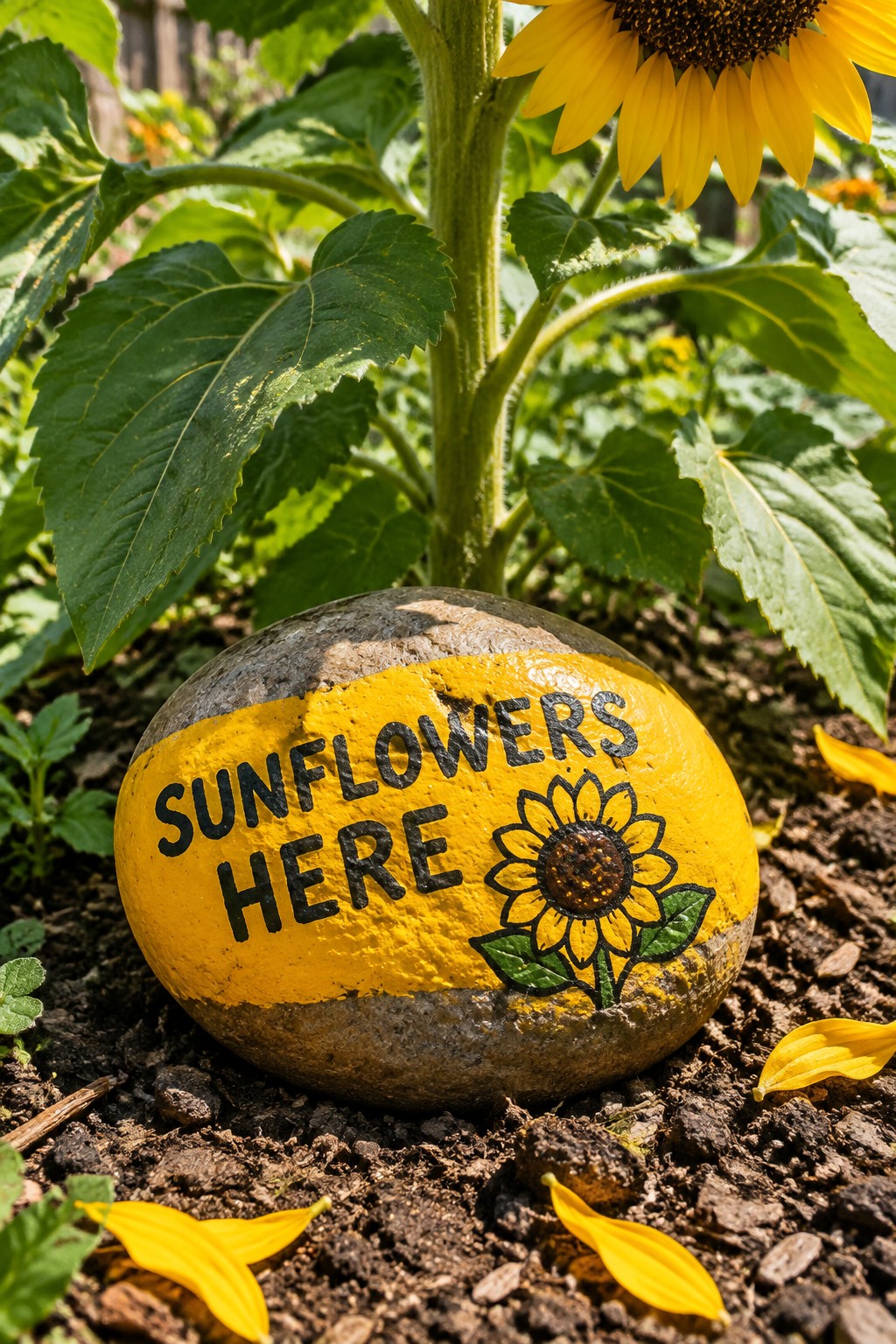
A rounded garden stone receives a wide yellow painted band across its center to hold black lettering that labels the planting area along with a matching sunflower motif. The simple color block keeps the text highly visible while the illustration adds a quick visual cue that matches the flowers growing nearby. This approach turns an ordinary stone into a durable garden marker that can sit directly in soil or mulch without fading quickly.
A painted rock like this works especially well as a section divider in larger beds or raised planters where multiple flower types grow together. The flat curved surface makes lettering easy to apply with stencils or freehand, and the same yellow-and-black layout can be swapped for other plant names by changing only the text and motif. For smaller spaces the design scales down to a pebble while keeping the same color blocking so it still reads clearly from a few feet away.
Watering Can Silhouette Garden Marker
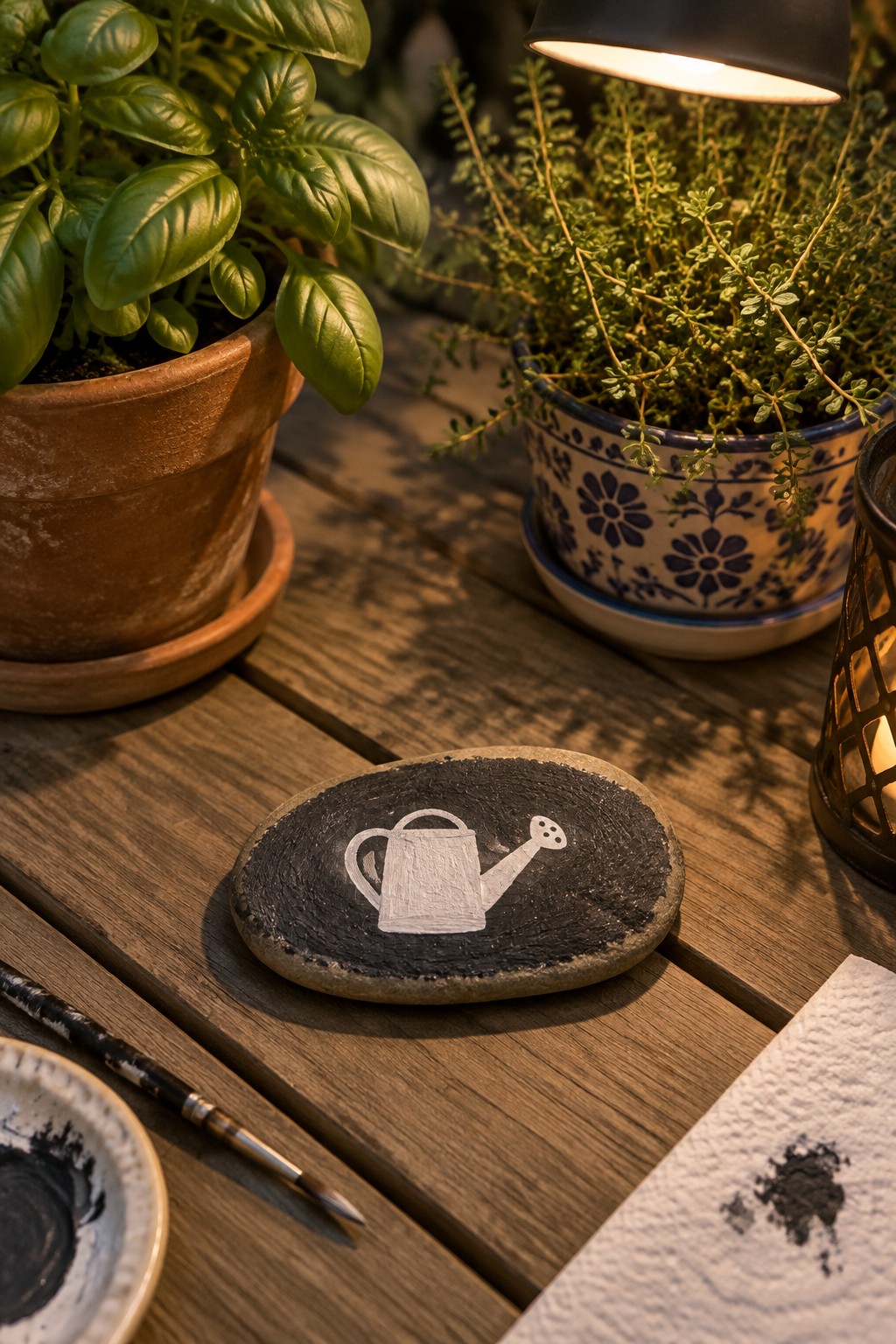
A flat oval stone with a dark painted background and a crisp white watering can silhouette creates a clear garden marker that signals watering needs or herb beds. The rounded edges and stable shape let the rock sit evenly in soil or on a patio surface without tipping. This approach uses a simple motif on a physical stone so the design reads quickly from a short distance among plants. What makes this idea useful is how the watering can symbol works as a visual cue without any lettering, so it stays effective even after weather exposure. The small size makes it easy to paint a set and place one near each pot or row. You could swap the motif for a trowel or sun shape on the same dark base to mark different garden zones while keeping the bold contrast that stands out in photos.
Bee Design on a Rounded Stone with Text Band

A smooth rounded stone serves as the base for this garden marker project. The bee motif sits above a solid black band that runs across the middle of the rock, creating a clear area for white lettering. The yellow and black insect uses simple outlines and color blocks that follow the stone’s curve without crowding the surface. This approach falls into the garden decor rock category as a functional marker for pollinator plantings.
What makes this idea useful is the black band that keeps the lettering bold and weather resistant even after months outside. A painted rock like this works especially well placed along garden paths or inside raised beds to signal bee-friendly zones. The small scale makes this easy to adapt by changing the insect to a butterfly or adjusting the message for other plant groups. For garden decor, this kind of painted rock stays visible in mulch without needing extra hardware.
Elemental Symbols in Color-Blocked Sections
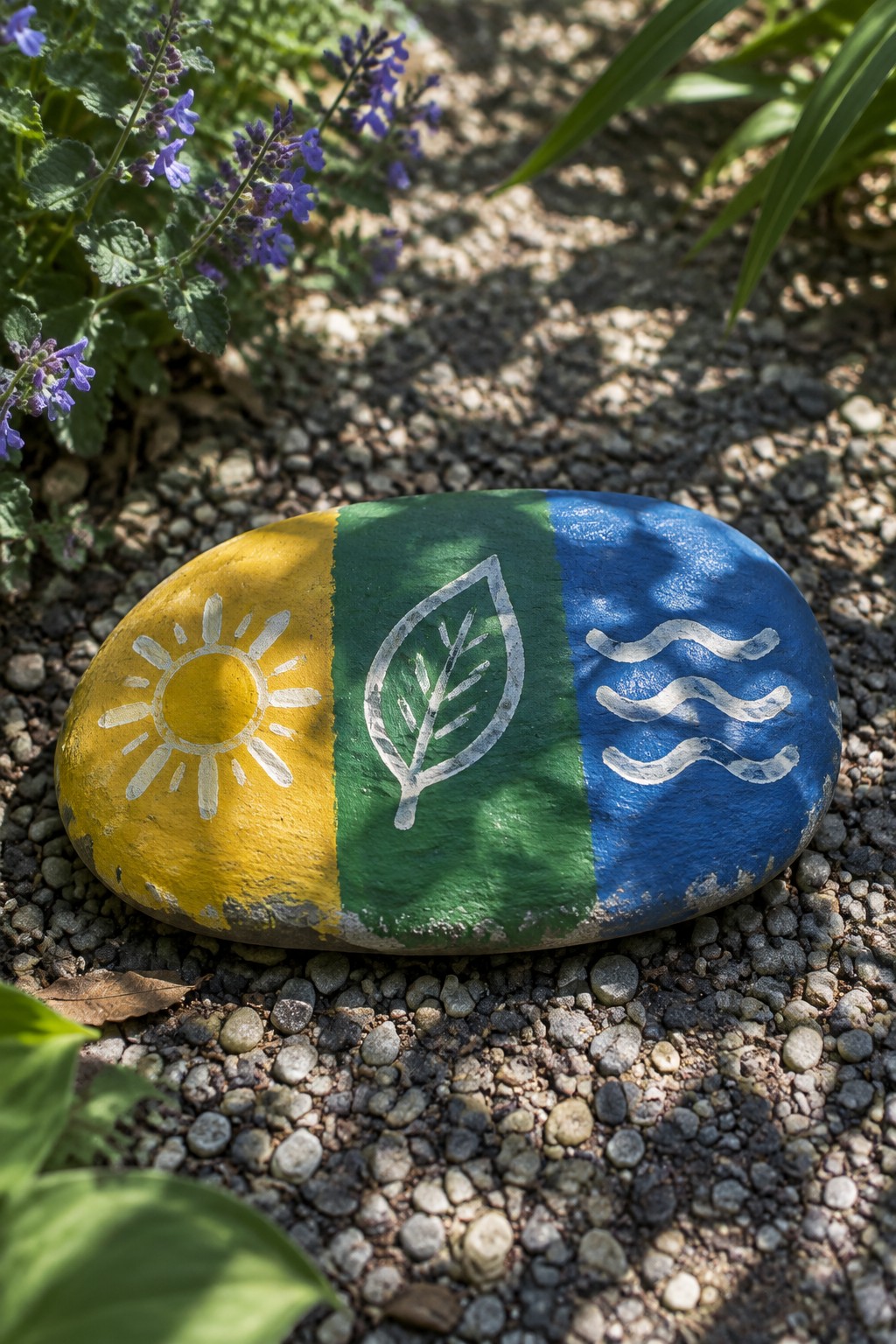
A smooth oval stone works well for this garden decor project because its rounded surface supports large color areas without crowding. The design splits the rock into three vertical sections using yellow for a sun motif, green for a leaf, and blue for wave lines, all painted with simple white outlines that stay visible outdoors. This approach turns a basic river rock into a weather-resistant accent that fits among gravel or mulch without needing text.
What makes this idea useful is how the color blocking keeps the motifs readable from a distance in flower beds or planter groupings. The oval shape sits flat and stable on paths or soil, and the same layout could swap the sun or waves for other simple icons like a bird or raindrop. For garden decor this type of painted rock adapts easily to different sizes while the bold sections help it photograph clearly for sharing.
Frequently Asked Questions
What materials work best for creating weather resistant lettering on rocks? Outdoor acrylic paints or permanent markers formulated for exterior use provide strong adhesion and fade resistance. After applying the lettering allow it to dry fully then add two coats of clear waterproof sealant to protect against rain sun and frost.
How should I select and prepare rocks for long lasting garden markers? Pick smooth flat rocks at least four inches wide so the lettering stays visible. Scrub them with mild soap and water to remove dirt then rinse and dry completely before painting. This step helps the lettering bond securely and prevents peeling.
Can these rock markers be used for vegetable gardens or herb beds? Yes they suit both ornamental and edible plantings. Choose non toxic paints and sealants labeled safe for outdoor use near food crops. Place the rocks near the base of each plant to avoid accidental contact with leaves or soil.
How long do weather resistant rock markers typically last outdoors? With proper preparation and sealant these markers often remain legible for two to five years. In areas with harsh winters or intense sunlight touch up the lettering annually and reapply sealant as needed to extend their lifespan.
Where can I source rocks and supplies if my garden lacks suitable stones? Check local landscaping suppliers or river rock retailers for bulk options. Craft stores carry outdoor paints markers and sealants while online marketplaces offer pre cleaned rocks in various sizes. Start with a small batch to test colors and techniques before making a full set.
