

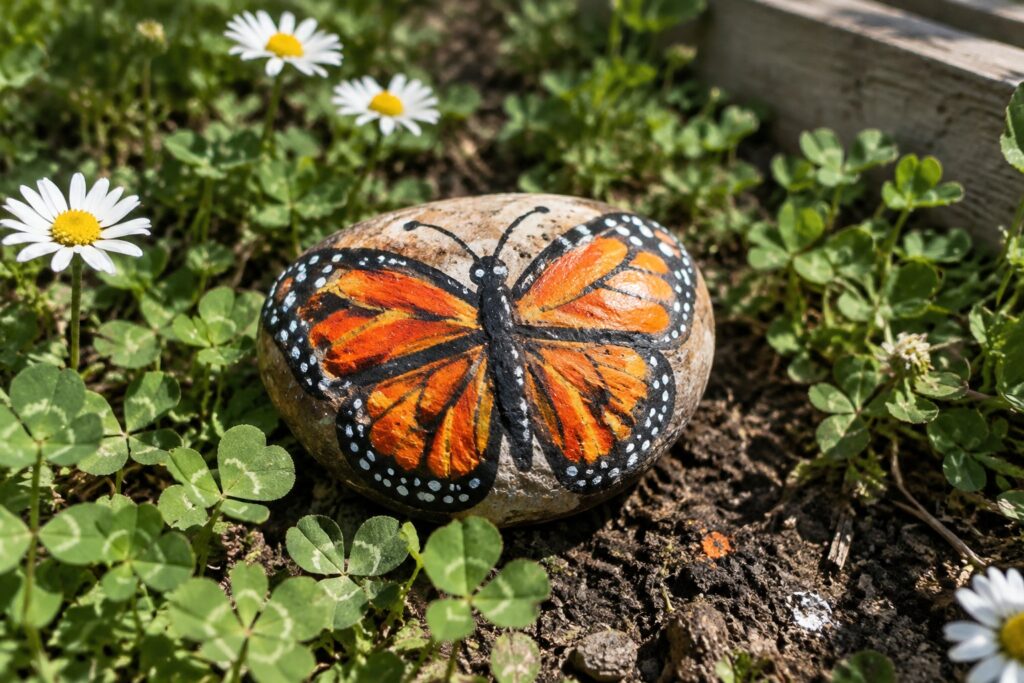
I have been painting rocks for a few years now and butterfly designs are one of the things I come back to because they suit my garden.
My cottage style setup has plenty of flowers and these rocks just sit among them without standing out too much.
I pick up flat stones when I walk near the creek and bring them home to clean before I start painting.
Some of the patterns I have used are simple and others have a bit more detail depending on how much time I have.
I have put together 25 ideas that might work if you want to try something similar in your own space.
Monarch Butterfly Painted Rock for Flower Beds

A monarch butterfly painted rock starts with an oval stone that naturally matches the insect’s wing shape. The design uses bold orange sections divided by black lines, plus rows of white dots along the edges to create clear wing patterns that follow the stone’s curve. This bug rock idea fits garden decor because the rounded form lets the full butterfly sit flat against soil or mulch while the centered body keeps the motif balanced. The visible stone texture around the edges gives the finished piece an outdoor look that blends with real plants.
What makes this idea useful is how the strong color blocking and border dots can be adjusted to fit smaller or larger stones for different garden spots. The same monarch layout works in cottage flower beds, along path edges, or inside large planters without needing extra stands or frames. You can rework the wing details into other butterfly species by changing the orange to softer tones or adding extra dots for variety. The rounded stone shape also makes the design easy to repeat across a small set for consistent placement throughout a garden.
Paired Butterflies with a Dotted Heart on an Oval Stone

A smooth oval rock serves as the base for two butterflies painted facing each other. The wings use blended pastel shades of blue, pink, and purple with simple black outlines and dots along the edges. A border of small dots creates a loose heart shape around the pair with a few tiny hearts added in the middle. This approach keeps the design centered on the rock surface and works as a garden accent.
The rounded stone shape lets the butterflies sit evenly without extra framing. You can adjust the wing colors to match nearby flowers or scale the same dotted heart onto smaller stones for a matching set. For garden decor this kind of painted rock fits well in planters or along path edges where the size stays compact. The idea translates easily to other butterfly styles while keeping the paired layout.
Butterfly Painted Rocks Scattered in Mulch
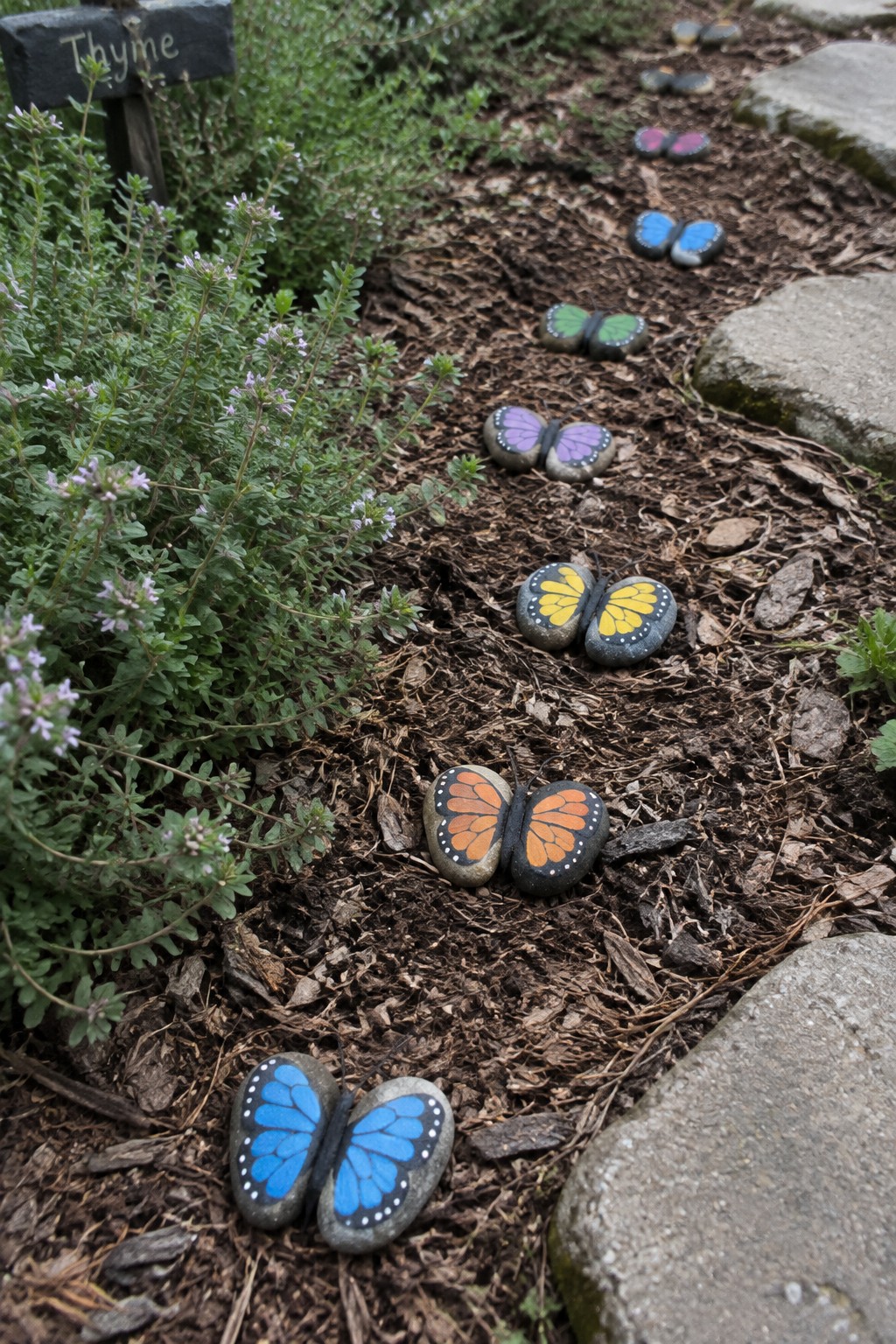
Smooth, rounded stones work well for this project because their natural shape already suggests butterfly wings when split into two halves. Each rock gets painted with bright wing sections in colors like blue, orange, yellow, or purple, then joined by a black body strip with thin antennae added at the top. White dots along the wing edges give the design clear definition without needing fine detail work. This approach fits the bug rock category and turns ordinary garden stones into path markers or bed accents.
What makes this idea useful is how the rocks sit directly in mulch or along stepping stones without any extra hardware. The same wing layout scales down to smaller pebbles for tighter spaces or spreads across larger stones for bigger beds. You can swap the color blocks to match nearby plants or repeat just one color for a simpler row. For cottage gardens, the design stays visible from a short distance while blending into the ground when viewed from farther away.
Segmented Rainbow Butterfly on a Flat Garden Stone
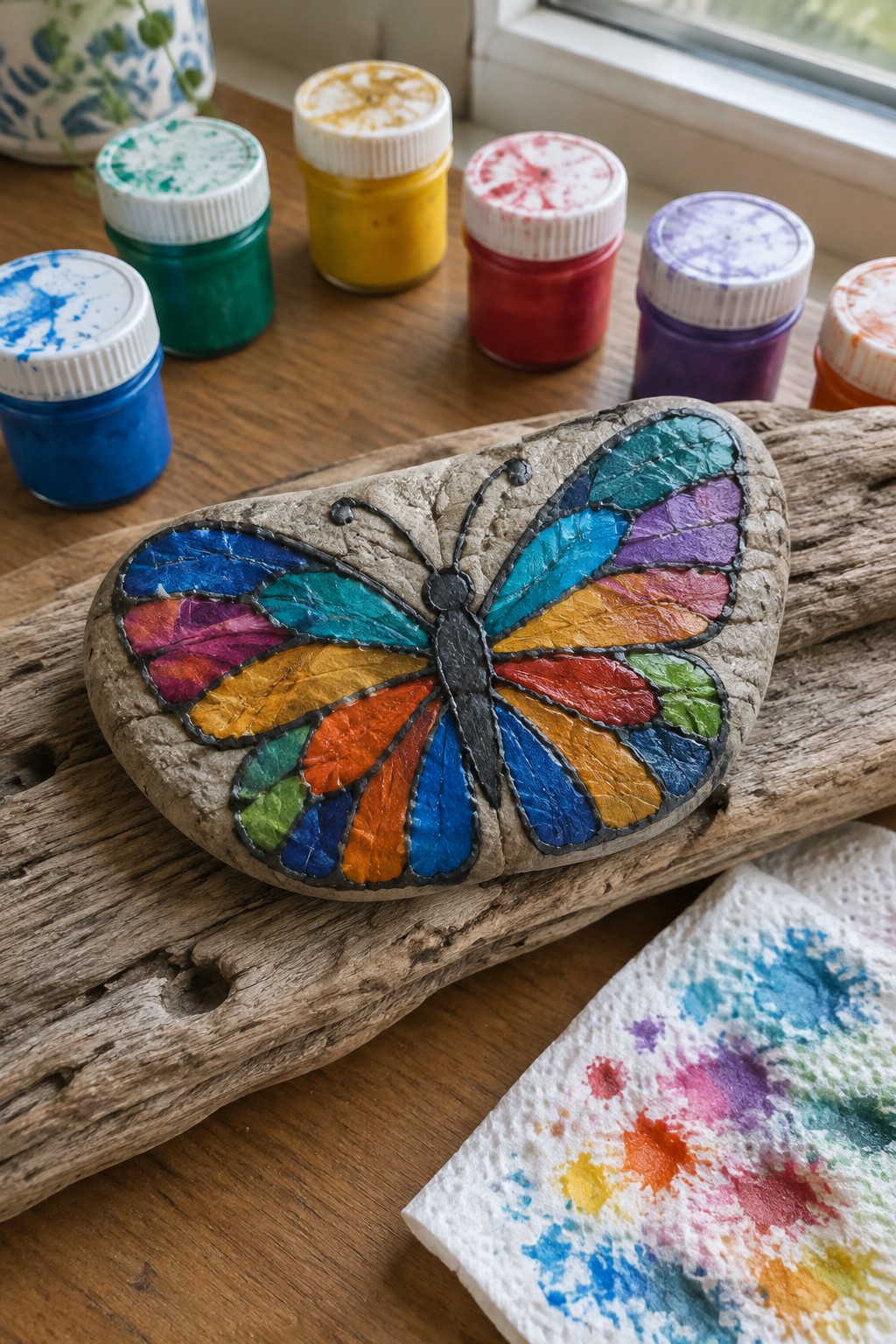
A butterfly painted rock starts with a broad, oval stone that already has a slightly curved shape to suggest wings. The design splits the wings into separate sections and fills each one with a different bright color, using black lines to keep the sections distinct and to outline the body and antennae. The natural gray texture of the stone shows through around the edges, which helps the colors stand out without extra background work.
What makes this idea useful is how the flat surface lets the color blocks stay bold even when the rock sits outdoors. The same segmented layout can be scaled down to a smaller pebble or simplified to four or five colors if you want a quicker version. For garden decor, this type of painted rock sits nicely in mulch or among low plants where the bright sections contrast with green foliage.
Butterfly and Snail Painted Rock for Cottage Gardens

A smooth rounded stone works well for this butterfly project because its curved surface lets the wings spread evenly without crowding. The design uses four distinct wing sections in pink, teal, purple and orange with simple flower motifs, dots, hearts and stripes on the body plus a small snail tucked beside one wing. Green paint along the bottom edge creates a grass border that grounds the whole motif. This approach falls into the bug rock category and stays clearly recognizable as a painted physical stone rather than a manufactured figurine.
What makes this idea useful is how the rounded shape supports the wing layout without needing extra space or flat edges. Drop the finished stone into a planter, along a path or among potted flowers to add color at ground level. You can swap the wing patterns for different dots or small blooms and reuse the same layout on any similar sized river rock. The snail detail gives a quick way to personalize the design while keeping the overall size compact for shelf or garden displays.
Oval Stone with White Butterfly on Dark Blue Center
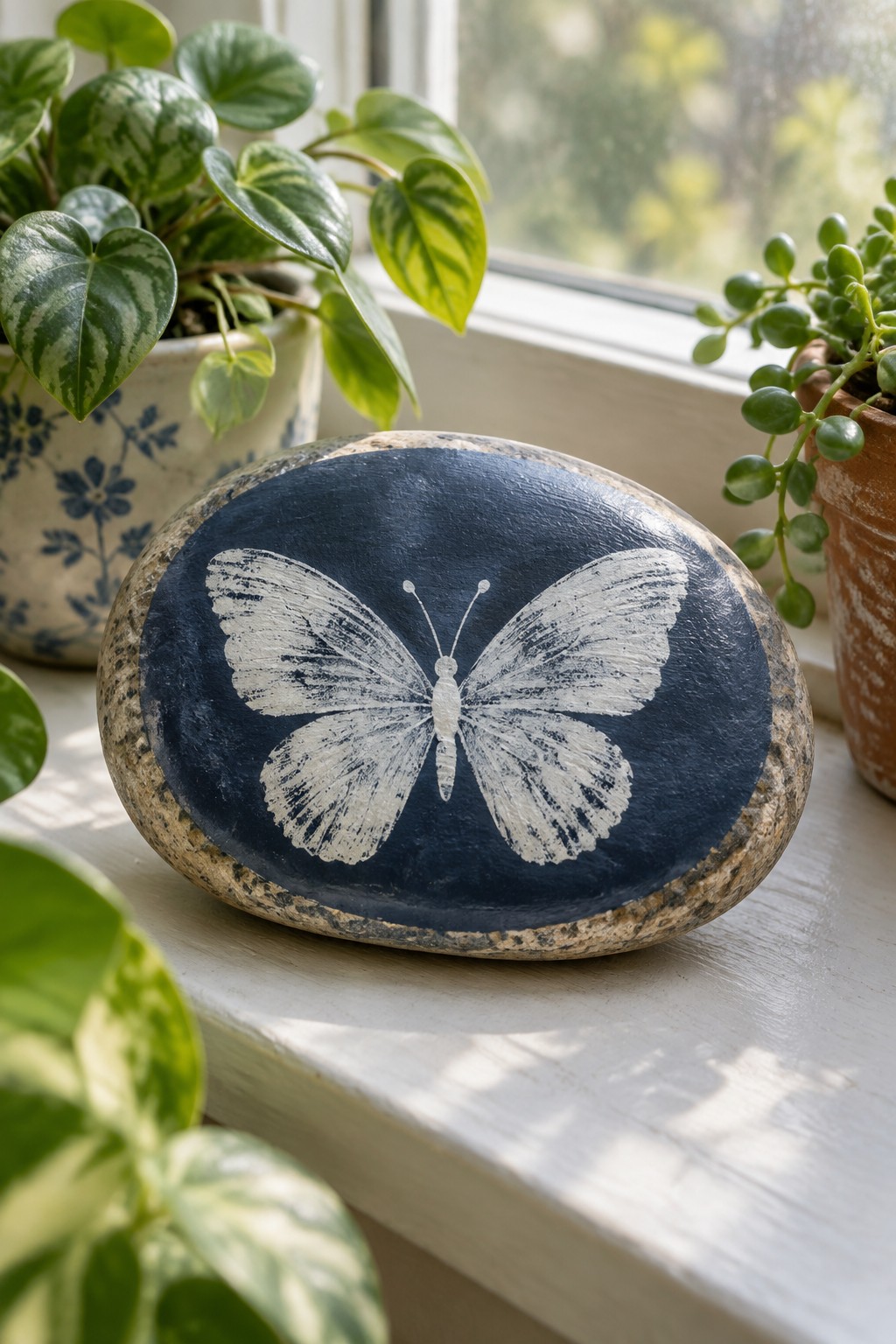
A smooth oval river rock makes a strong base for this butterfly project because its rounded form naturally frames the insect shape. Cover the flat center area with a solid dark blue painted oval, then use white paint to create the butterfly with broad wing shapes, visible brush strokes, and thin antennae lines. The unpainted stone border around the edges keeps the design contained while showing the rock’s natural texture and shape. This approach falls into the bug rock category for garden accents.
The rock shape does a lot of the work here by giving the butterfly plenty of surface area without needing extra borders or details. Place one in a cottage garden planter or along a stone path where the dark blue stands out against soil and greenery. You could adapt the idea by changing the background color to match other garden pots or repeating the same butterfly outline on smaller stones for a set. For Pinterest, the clean contrast between the white wings and dark oval makes the finished rock photograph clearly even in a quick phone shot.
Bright Butterfly Wing Stones for Cottage Paths
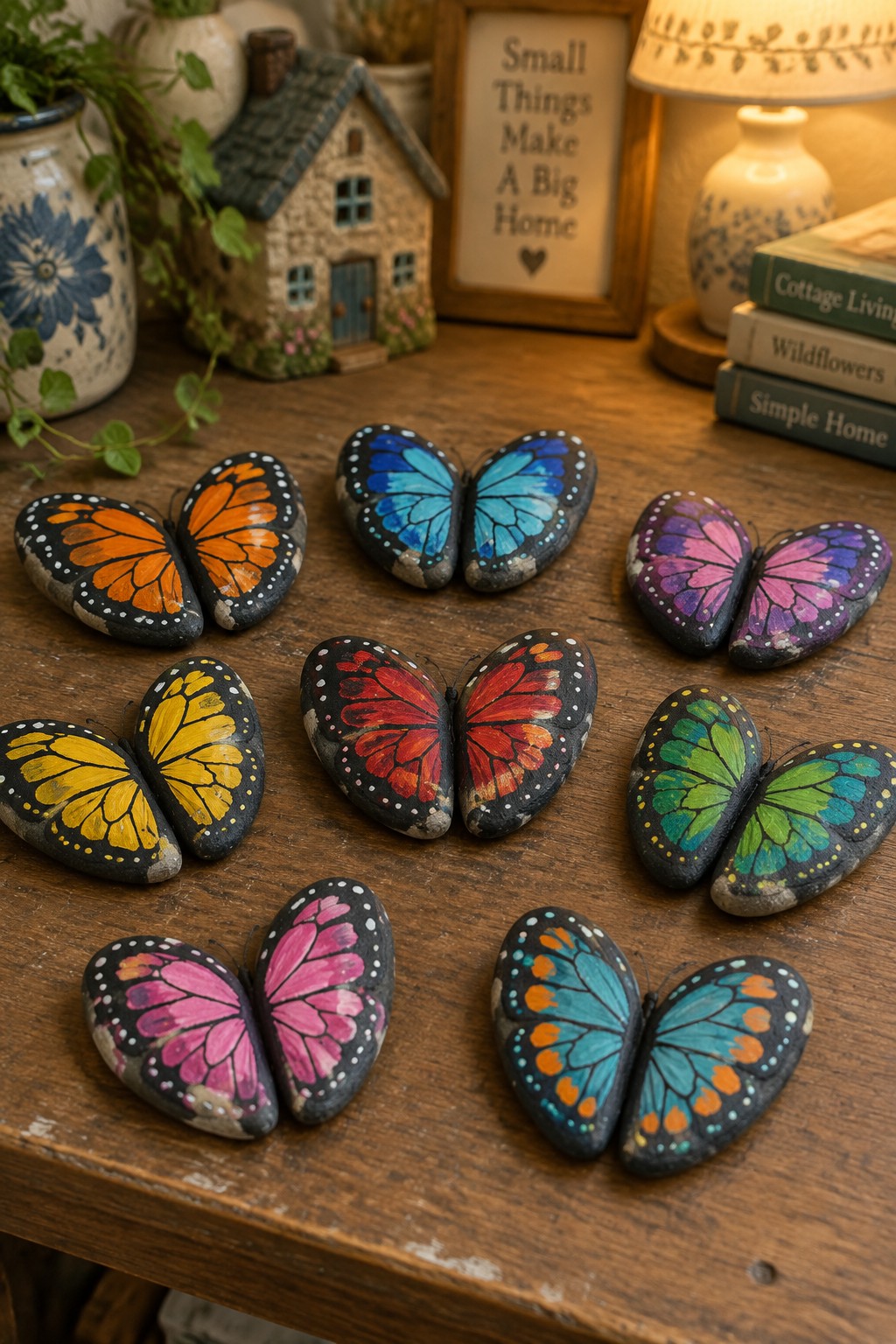
Flat oval stones painted with bold wing sections create realistic butterfly shapes when arranged in pairs. The dark rock surface serves as a natural background that makes the orange, blue, red, and green color blocks pop while white dots along the edges mimic real wing markings. This style works as a bug rock project that turns simple garden stones into decorative accents.
What makes this idea useful is how the natural stone shape already suggests open wings without needing extra carving. These painted rocks tuck easily into flower beds, mulch, or along stepping stones in a cottage garden. The color blocking can be simplified to fewer shades or scaled down to smaller pebbles for scattered accents. For a gift or seasonal display, the same wing layout adapts well to different rock sizes while keeping the focus on garden placement.
Round Stone Butterfly with Edge Flowers
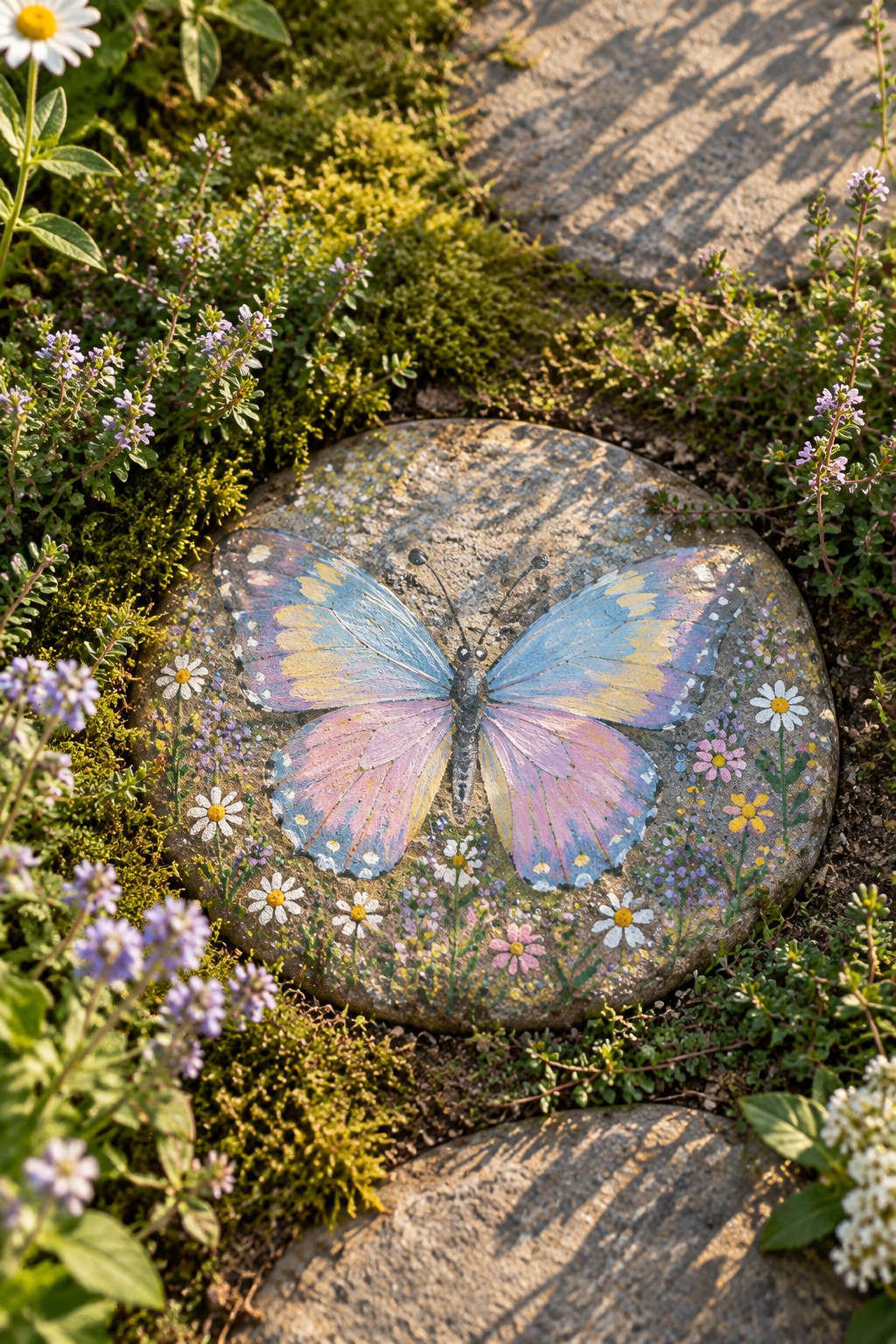
A flat round garden stone works well for this butterfly rock painting idea because its broad surface lets the wings spread fully without crowding. The design centers on a single butterfly motif painted in soft blue, pink, and yellow across the stone, with small daisy and wildflower details added around the lower edges to fill the remaining space. The natural texture of the stone shows through in places, giving the finished piece an outdoor-friendly look that blends with mulch or moss. This fits the animal rock or garden decor category and stays simple enough to adapt to other flat stones of similar size.
What makes this idea useful is how easily the butterfly can sit among real plants without needing a stand or frame. The rounded shape keeps the design balanced whether the rock rests in a flower bed, along a path edge, or inside a large planter. You can change the wing colors to match nearby blooms or shrink the flower border if your stone is smaller. For cottage gardens, this type of painted rock adds a focal point that still looks at home next to thyme or daisies.
Monarch Butterfly on a Rounded Garden Stone
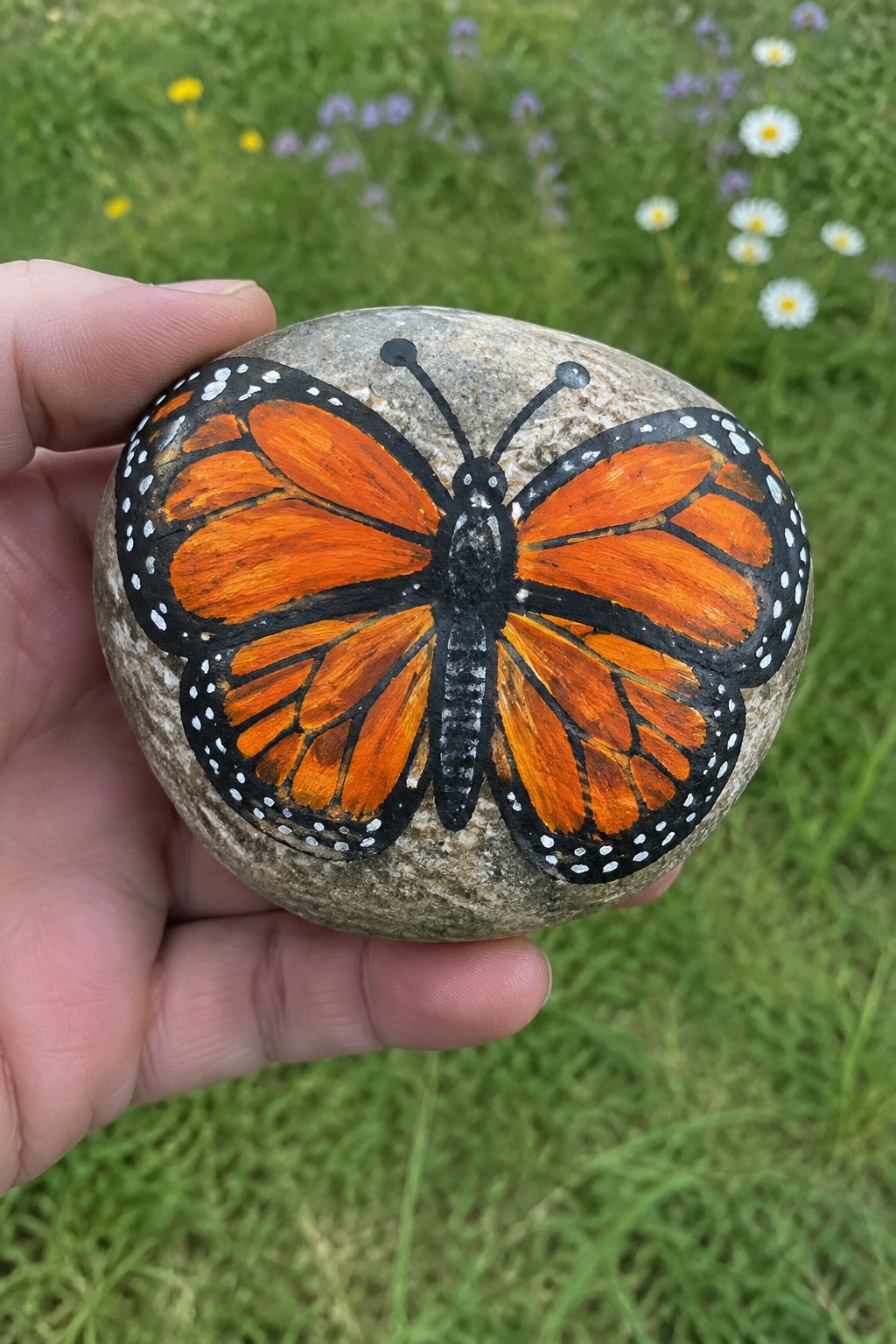
A monarch butterfly painted on a rounded stone uses the natural curve of the rock to shape the wings without needing extra outlining. The design features orange wing sections divided by black lines, with white dots along the outer edges to create the border pattern typical of this species. This animal rock idea works as a standalone garden accent because the stone’s gray tone makes the painted colors stand out clearly.
What makes this idea useful is how the butterfly can be scaled down for smaller pebbles or widened for larger stones while keeping the same wing layout. For garden decor, this type of painted rock sits well in mulch beds or along cottage paths where the orange shows against green foliage. The simple color blocking makes this easy to adapt by changing the orange to other butterfly shades or adding a second smaller butterfly on the opposite side of the stone.
Butterfly Rock Accent for Succulent Planters
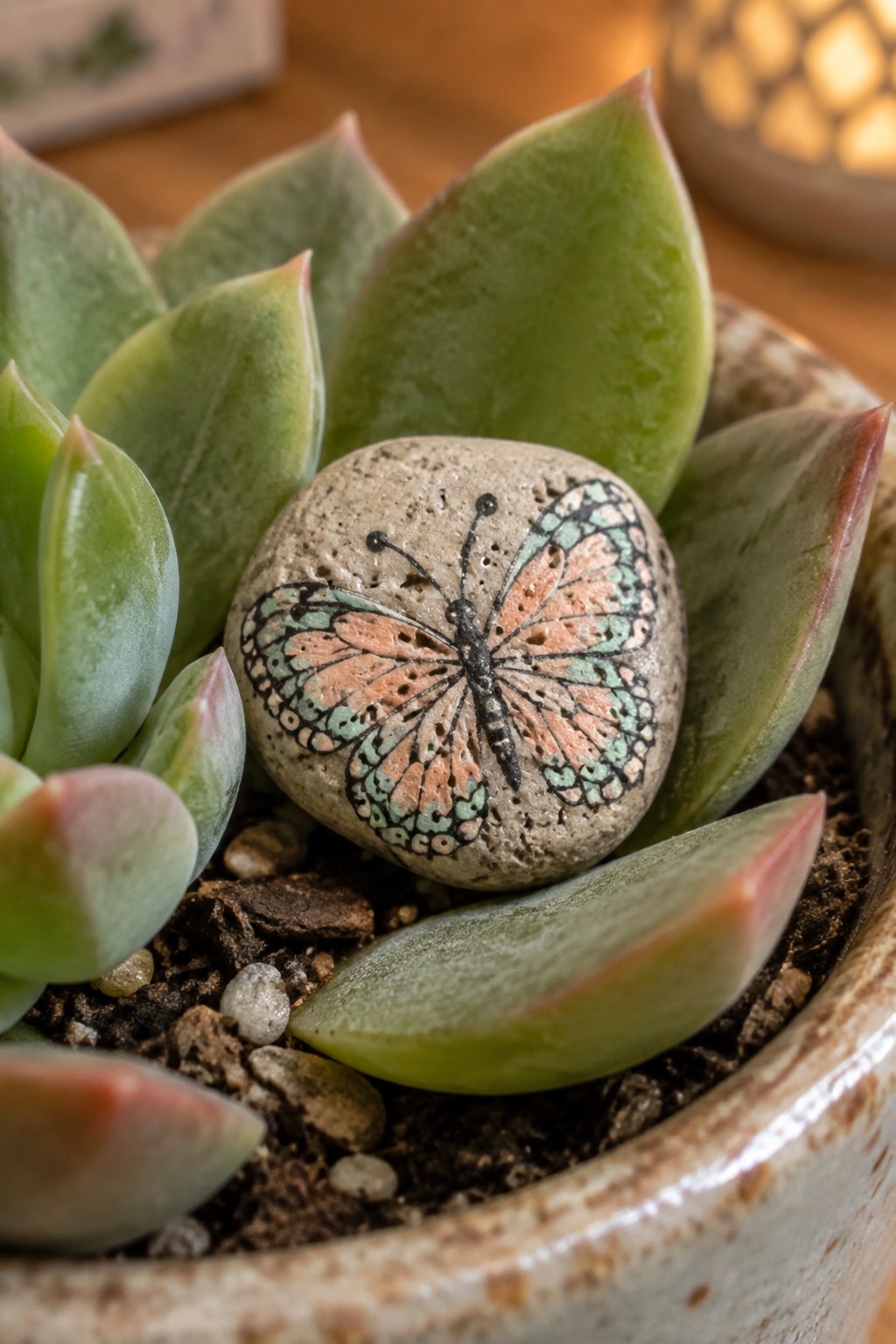
A smooth rounded stone serves as the base for this butterfly rock painting project. The design features a central butterfly motif with peach wing sections, teal highlights along the edges, and black outlines that follow the stone’s natural curve. The light stone color lets the colors stand out while the compact size keeps the whole piece suitable for garden placement.
What makes this idea useful is how the rounded stone shape lets the rock settle into pots or mulch without rolling. The color blocking on the wings can be adjusted to match other cottage garden tones like soft greens or pinks. For a different setup, the same butterfly layout works on a flatter stone placed near path edges or in shallow trays. The small scale also makes the design easy to repeat for a short collection of similar stones.
Oval Stone with Colorful Butterfly and Vine Border

A flat oval garden rock works well for this butterfly design because its broad surface gives room for the full wing spread in orange, purple, and blue sections with black outlines. The painter added a green vine border with small white flowers that follows the curved edges of the stone and leaves the center area open for the insect. This approach fits the bug rock category and keeps the focus on the painted motif rather than the stone itself.
What makes this idea useful is how the oval shape supports the wing layout without crowding. You can scale the same butterfly down to smaller stones or swap the wing colors to match plants already in your beds. For cottage gardens, place a few of these rocks along a path or at the base of larger pots so the design shows from above. The vine border can be repeated on plain stones to build a small matching set.
Gold-Edged Butterfly on a Rounded Dark Stone
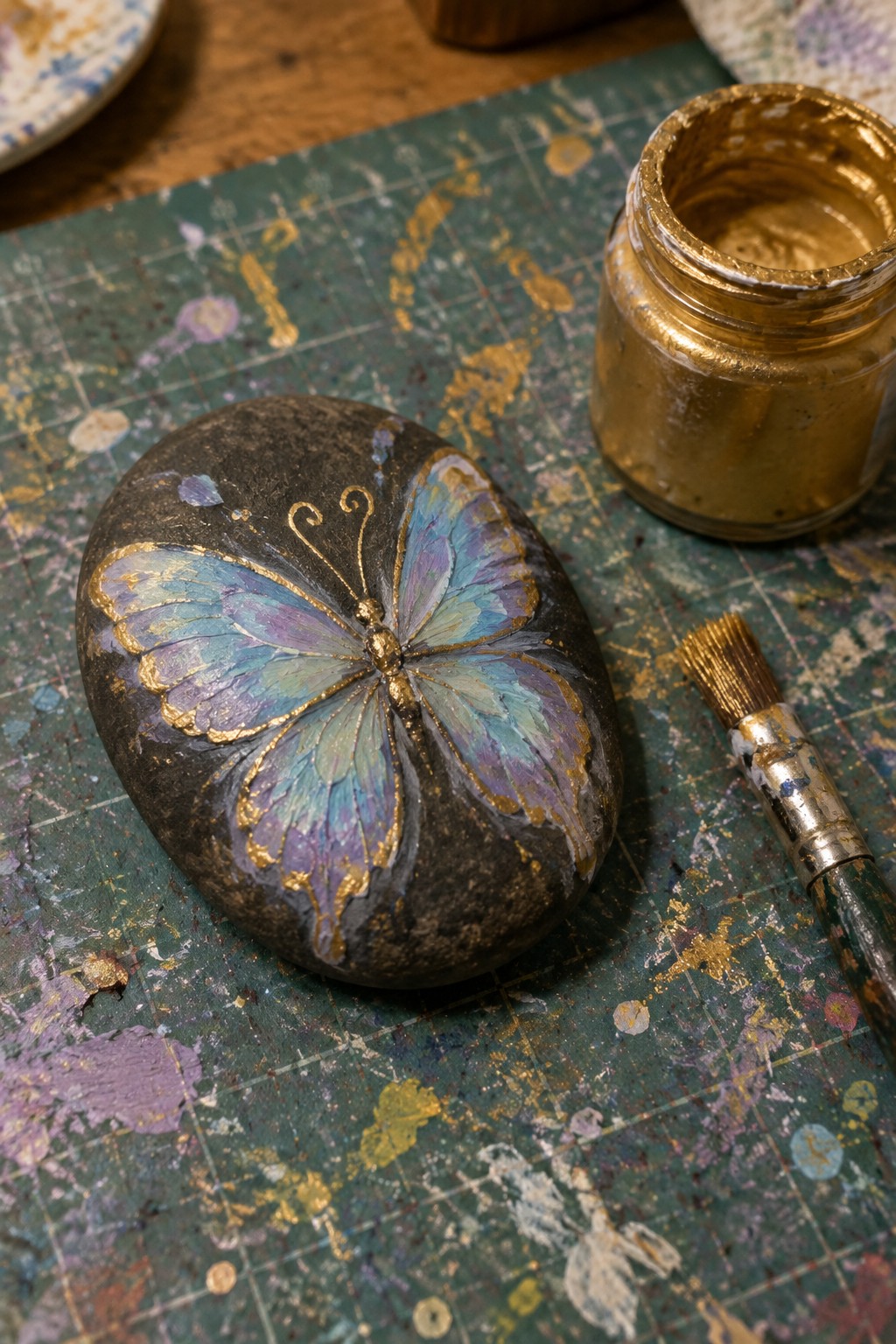
A smooth dark stone serves as the base for this butterfly design, with its oval shape naturally supporting the open wing layout. The wings use blended blue, green, and purple tones filled in across the surface, then finished with gold outlines and body details that follow the stone’s curves. This creates a clear bug motif that reads well as a physical garden accent rather than a flat illustration.
The rounded stone shape helps the design sit steadily in mulch or along path edges without rolling. You can adapt the same butterfly by shortening the wing span on a flatter pebble or dropping the gold to simple white lines for quicker versions in larger sets. For cottage gardens this works best as a scattered accent among plants instead of a focal piece.
Bright Butterfly Rock with Spotted Wings
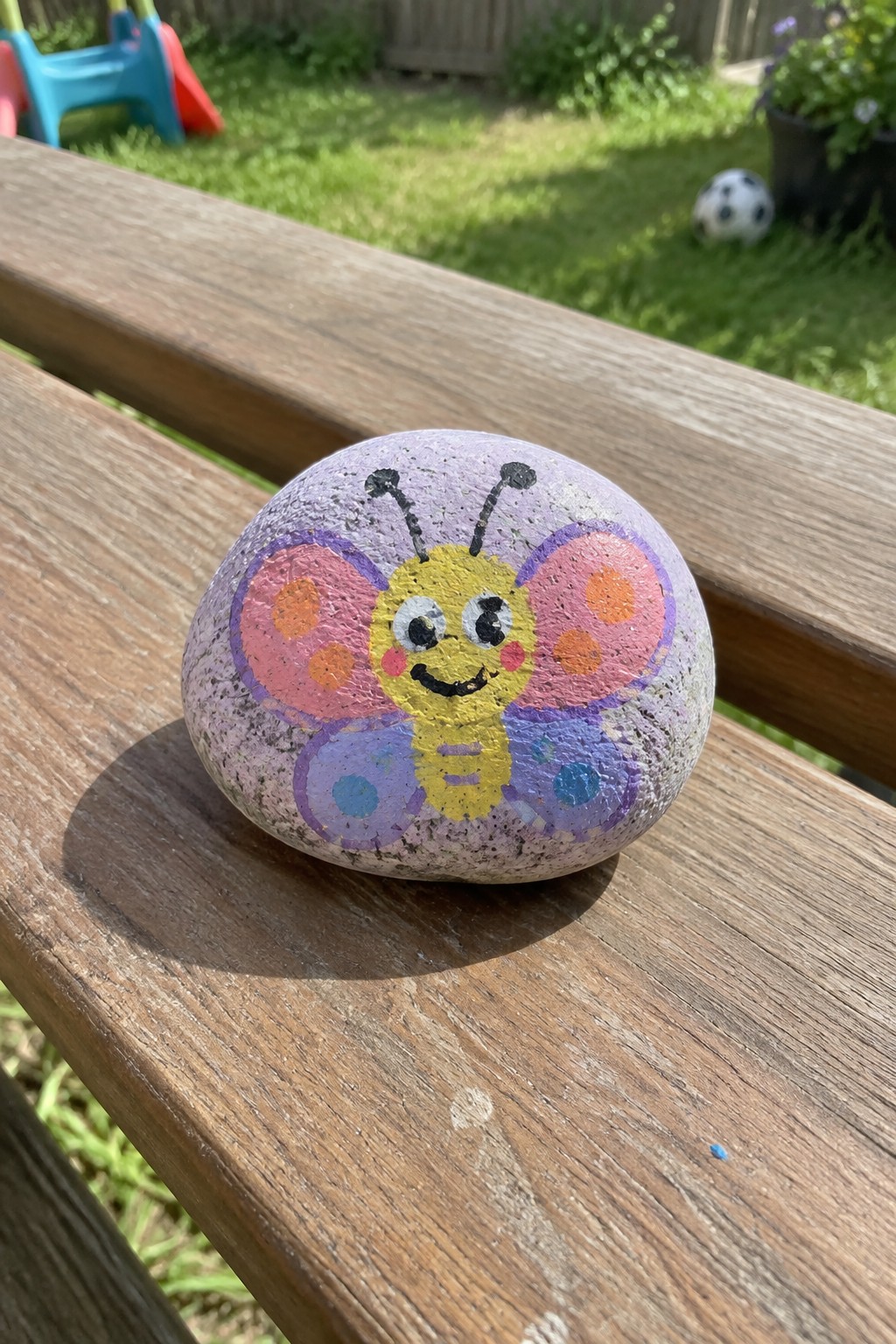
A smooth rounded rock works well for this butterfly design because its curved surface lets the wings spread naturally across the front. The central yellow body with simple black stripes and a small face sits between four large wings filled with pink, purple, blue, and orange spots outlined in darker tones. Black antennae extend from the top of the head, and the overall color blocking keeps the pattern easy to read from a short distance. This approach fits the bug rock category and suits cottage garden displays where a small accent can sit among plants or along a path.
The rock shape does a lot of the work here since the natural curve supports the wing layout without extra shaping. A painted rock like this works especially well as a filler in planters or tucked into flower beds where the bright spots catch light. The motif could easily be changed by swapping the wing colors or reducing the number of spots for a quicker version on a smaller stone. For garden decor this type of design stands out on Pinterest because the face and clear color areas photograph cleanly against mulch or greenery.
Butterfly Rock with Color Blocked Wings and Striped Body

A butterfly rock painting project works well on a flat, wide stone that can be cut or shaped into four wing sections around a central body. The design uses clear color blocking in orange, yellow, teal, and blue with scattered dots and curved shapes to form wing patterns against a dark background. This fits the bug rock category for garden decor. The rounded edges and natural stone surface help the painted motif sit naturally among moss or plants.
What makes this idea useful is that the same wing layout can be painted onto any oval or irregular flat rock without needing to shape the stone first. The mix of warm and cool tones keeps the design visible in shaded cottage garden spots like flower beds or path edges. You could reduce the number of dots and shapes on a smaller rock to keep the pattern readable. For garden decor this type of butterfly rock shows up well in photos when placed on moss or near real foliage.
Blended Butterfly on a Rounded Garden Stone
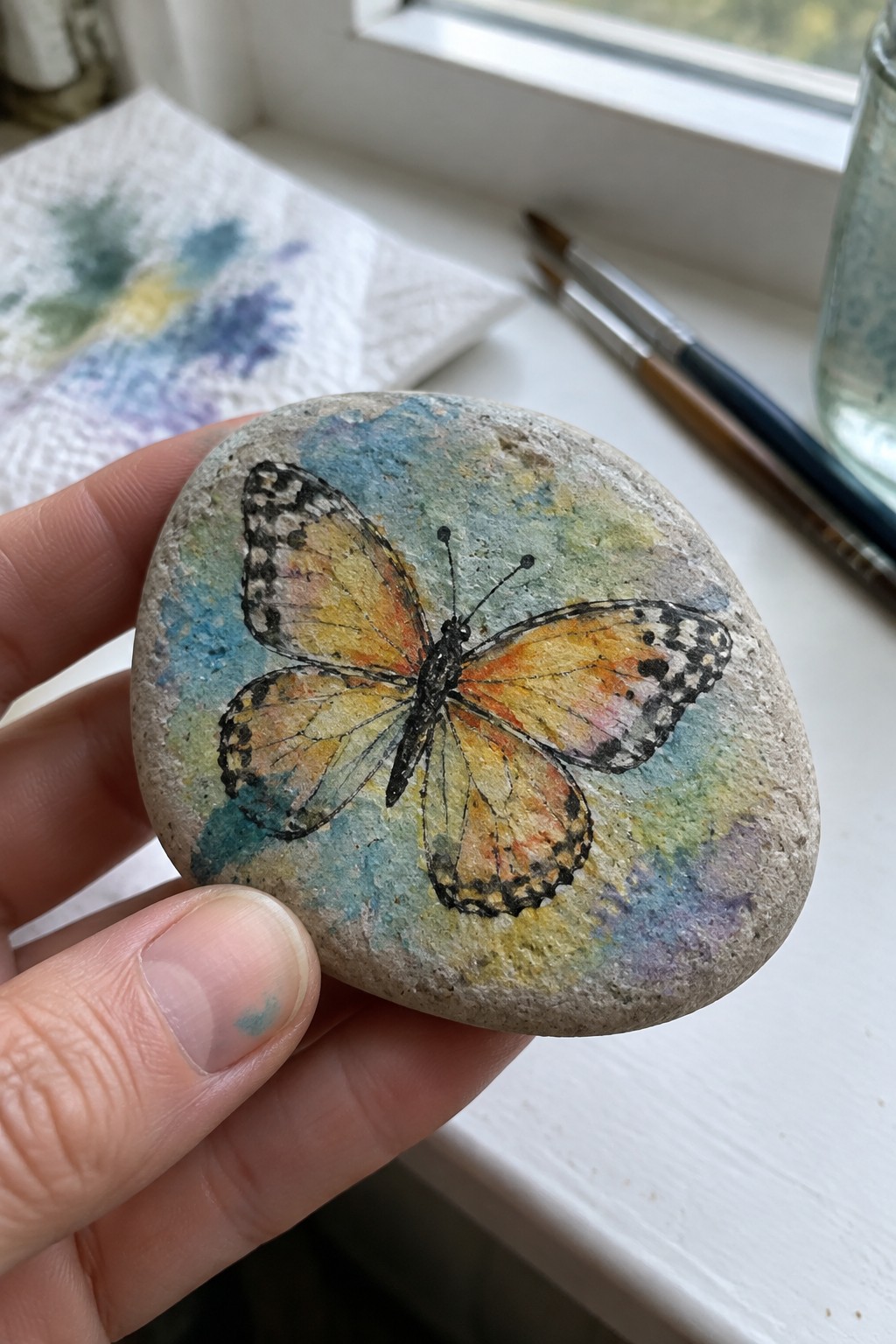
A smooth, rounded stone works well for a butterfly motif because the curved surface lets the wings follow the natural shape without distortion. The design uses a soft wash of blue, green, yellow, and purple behind an orange-and-yellow butterfly outlined in black, with the body and wing details kept simple enough to read from a short distance. This style fits the animal rock category and turns an ordinary garden stone into a decorative accent meant for outdoor use.
What makes this idea useful is how the oval rock shape supports the wing span without extra cropping or resizing. You could adapt the same color wash on flatter stones to line the edge of a flower bed or place a few in a shallow planter for a cottage path. The small scale also makes it easy to produce several versions with slight color shifts for a matching set.
Terracotta Butterfly with Dotted Trail
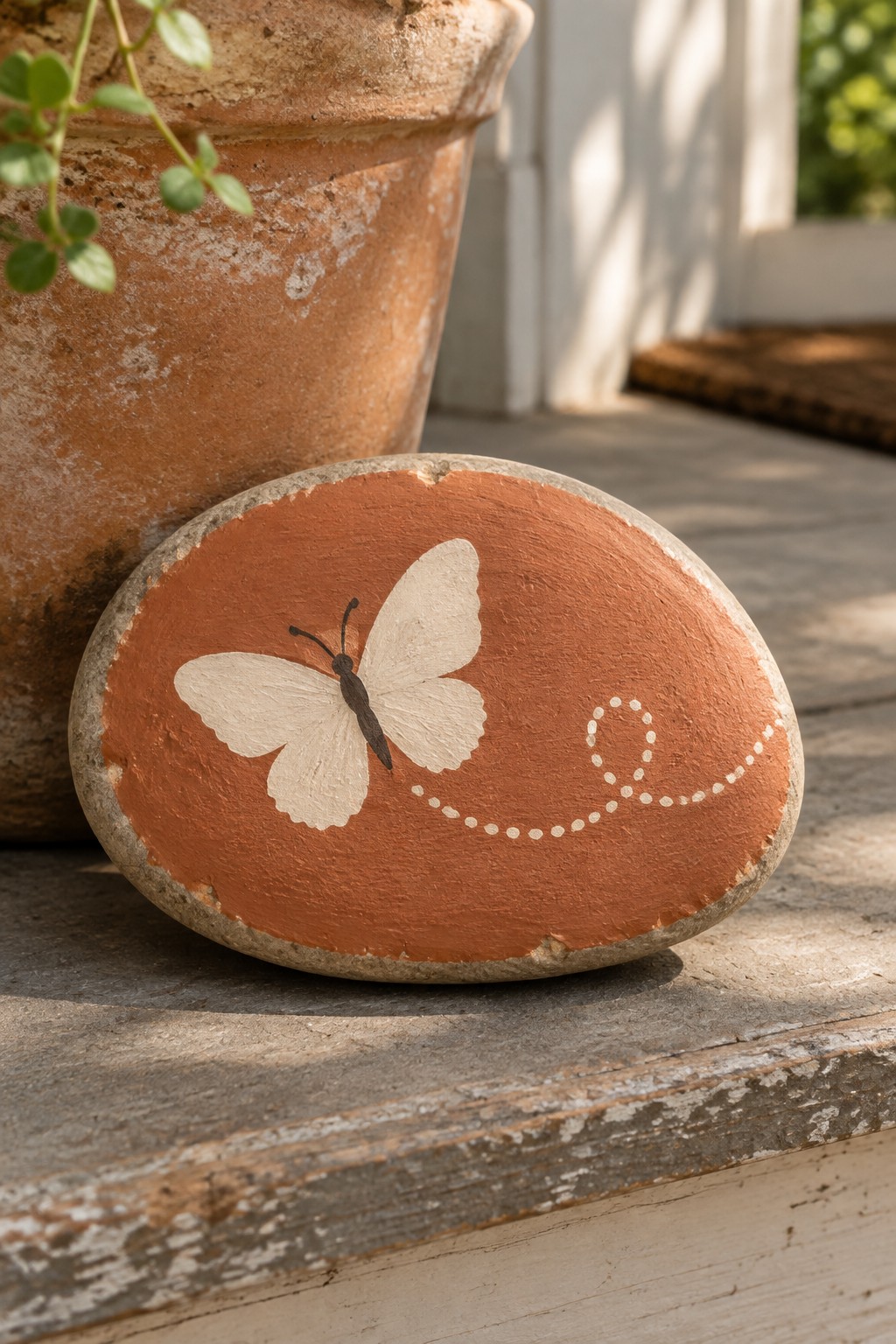
An oval garden stone painted in warm terracotta serves as the base for a cream-winged butterfly with a dark body and antennae. The wings sit toward the left side so a curving row of small white dots can trail off to the right, suggesting movement across the flat surface. Natural stone edges remain visible around the painted area, which helps the finished piece blend with other outdoor elements like clay pots and mulch.
What makes this idea useful is the way the earth-tone background pairs with common cottage garden materials. The same butterfly shape and dot trail can be repeated on smaller river rocks for a scattered group or enlarged on a wider flat stone for a single accent near a planter. The limited color palette and loose dot work keep the project quick to finish while still reading clearly from a short distance in a flower bed.
Pastel Gradient Butterflies from Grouped Oval Stones
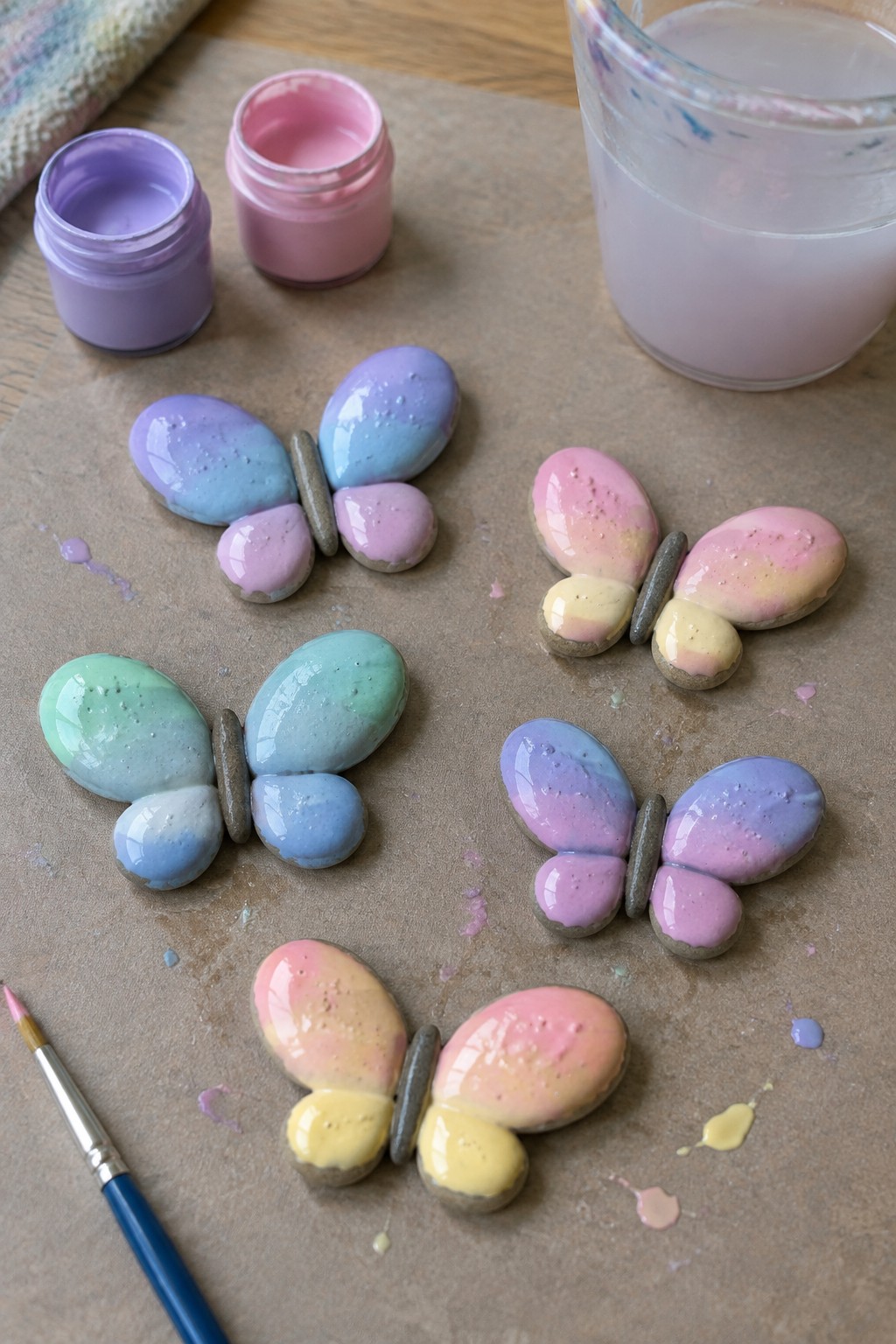
Group several smooth oval stones to form butterfly shapes, using larger stones for the upper wings and smaller ones for the lower wings with a narrow stone placed in the center as the body. Apply soft color blends across each wing section so one pastel shade fades into the next, such as purple to blue or pink to yellow, keeping the paint thin enough to let the stone texture show through slightly. The rounded edges of the stones naturally create the wing curves, so the design stays simple while the color shifts give the butterflies their main visual interest.
These fit well along cottage garden paths or nestled into mulch near low flowers where the gentle colors add a light accent without overpowering the plants. You can change the color order or limit the palette to two tones per butterfly to match whatever stones you already have. The same layout works on a single larger flat stone if you want a quicker version, and the small finished size makes them easy to move around planters or porch steps as needed.
Butterfly on Mushroom Garden Stone
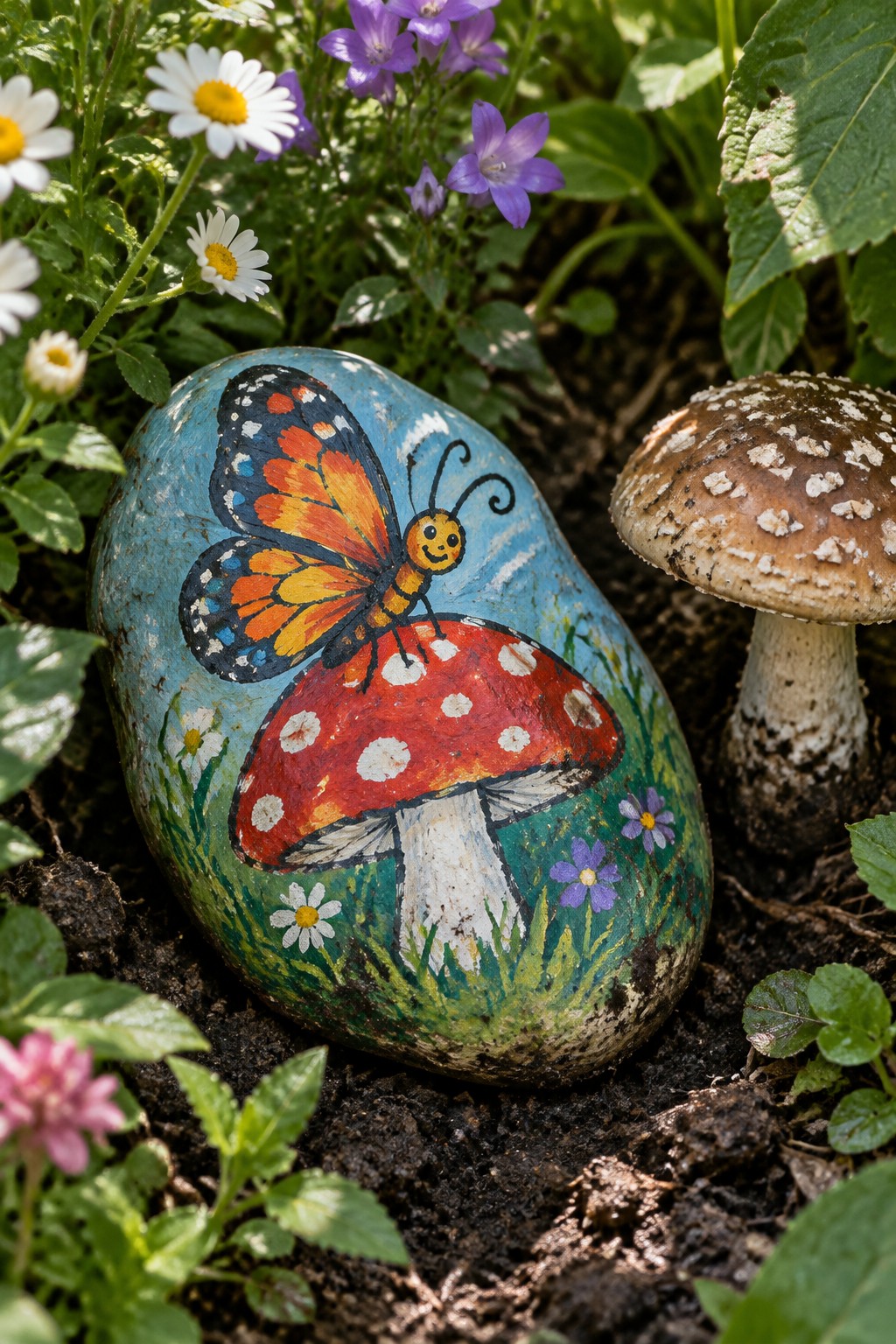
A smooth, rounded stone painted with a monarch-style butterfly perched on a red-spotted mushroom creates a simple garden accent. The design places the butterfly across the upper half of the rock with its wings spread against a blue background, while the mushroom fills the lower center and small flowers and grass line the base. Basic color blocking and white dots on the mushroom cap keep the motif clear even on the curved surface. This approach works as a bug rock or garden decor rock that sits naturally among plants.
The rounded stone shape helps the mushroom read as a solid base without extra outlining. Place a painted rock like this in mulch, along a path edge, or inside a planter where it can sit beside real foliage. You could rework the same layout on a flatter stone by shortening the mushroom stem or change the butterfly to a different species by adjusting the wing colors. For cottage-style gardens this motif stands out on Pinterest because the combination of insect and mushroom feels specific rather than generic.
Layered Wing Colors on a Rounded Stone

A butterfly painted rock starts with a smooth, rounded stone that already suggests the insect shape. The design uses color blocking across the wings in yellow, teal, and reddish tones, with dotted borders and smaller circles inside each section to add detail without complex lines. The body and antennae are painted in a single deep teal that runs down the center and connects the wings. This approach fits the bug rock category and keeps the natural stone texture visible around the edges.
What makes this idea useful is how the rounded stone shape supports the spread of the butterfly wings without extra space. The simple color blocking and dot details can be adapted to different stone sizes or changed to softer pastels for a cottage garden setting. For garden decor, this kind of painted rock works especially well tucked into flower beds or placed near potted plants on a patio. The small scale makes it easy to create a whole collection of similar butterfly rocks in varying color combinations.
Butterfly Painted Pebbles for Cottage Garden Beds

Small rounded stones make a strong base for butterfly designs since their curved tops let the wings spread evenly without distortion. Each rock carries one butterfly in solid color blocks with black outlines and simple edge dots that keep the shape clear even on textured surfaces. The result is a painted pebble collection that sits naturally among soil or mulch as garden accents.
What makes this idea useful is how the compact size lets you scatter them through flower beds or tuck them into planters without crowding other plants. You can vary the wing colors to echo nearby blooms or keep a single palette for a more uniform look across a larger group. For cottage gardens the rocks blend into paths and borders while staying easy to move or store seasonally.
Butterfly with Cottage Garden Wings

A large rounded stone serves as the base for this butterfly rock where the wings frame a complete cottage garden scene instead of simple patterns. The design uses the rock’s natural curve to hold the thatched house, path, and flower beds within the orange and yellow wing sections while the dark body and antennae run down the center. Color blocking with blues for the sky area and dotted borders around the edges keeps the landscape readable even on the uneven surface. This approach combines an animal rock with a garden decor rock by turning the butterfly into a window for the miniature scene.
What makes this idea useful is how the wide rounded shape supports the full wingspan without crowding the details. The same layout could be adapted to a flatter stone by shortening the antennae and using fewer colors for the cottage elements. For cottage-style gardens, the finished rock sits nicely along a path or at the base of planters where the painted flowers echo real ones nearby. The butterfly outline itself can be reused with different interior scenes such as a vegetable garden or pond to match other garden themes.
Monarch Butterfly on a Daisy Rock
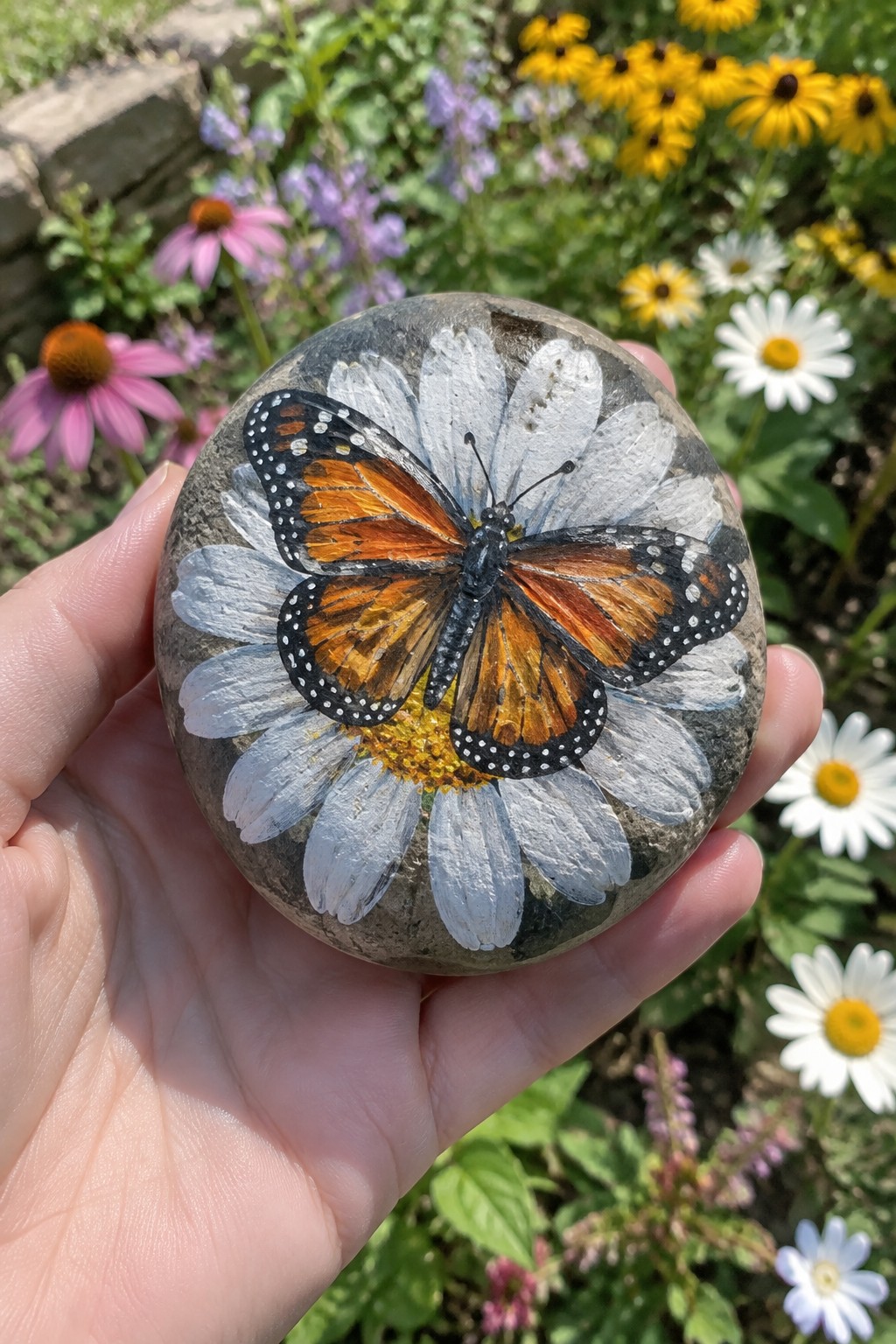
A rounded garden stone forms the base for this project where a monarch butterfly is painted across a white daisy with a yellow center. The wings use solid orange sections outlined in black with rows of white dots to create clear edges that stand out on the stone surface. This combines a bug motif with a simple flower to produce one decorative rock suited for outdoor use.
What makes this idea useful is how the stone’s natural curve lets the butterfly body and wings follow the rounded form without extra prep. Set the finished rock in a flower bed, planter, or along a garden path so it sits among real plants. The same layout could be adapted by changing the wing colors or reducing the dots to match a different butterfly type. The bright orange and white contrast makes the design easy to spot in garden decor searches.
Butterfly Cluster on a Round Garden Stone
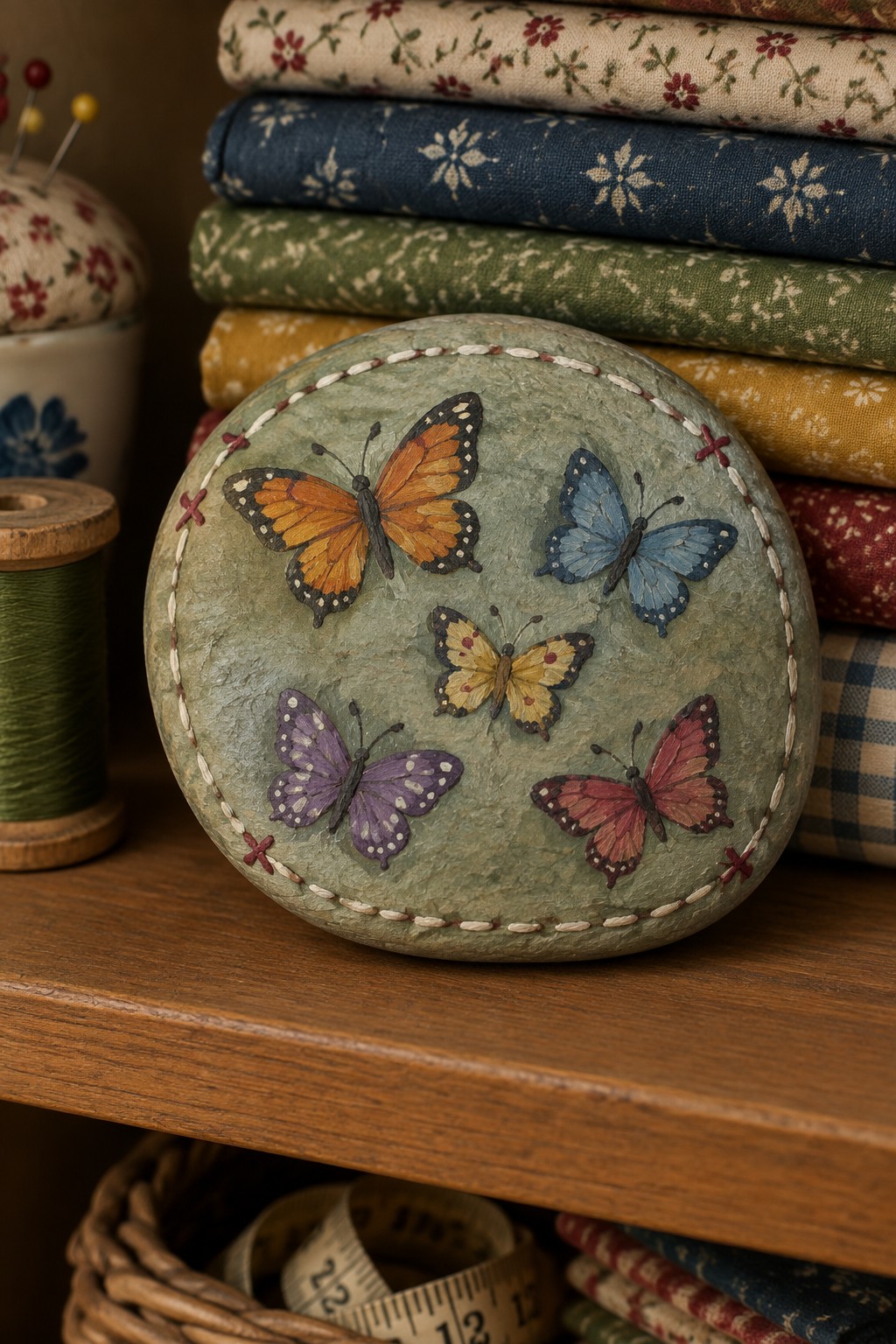
A round stone painted in soft green serves as the base for five butterflies in orange, blue, yellow, purple, and red tones. The butterflies are spaced across the surface with simple outlines and small dots on the wings, while a stitched border of white dashes and red X marks frames the whole design. This approach turns a single flat stone into a compact bug-themed piece that fits the style of cottage garden accents.
What makes this idea useful is how the rounded shape holds multiple butterflies without crowding. A painted rock like this works especially well tucked into flower beds, along garden paths, or inside a large planter. The small scale makes it easy to adapt by painting just three butterflies or switching the background color to match other stones in a set. For cottage-style gardens, the border detail helps the rock read as intentional decor rather than a random painted pebble.
Monarch Butterfly Rock with Bee Accent
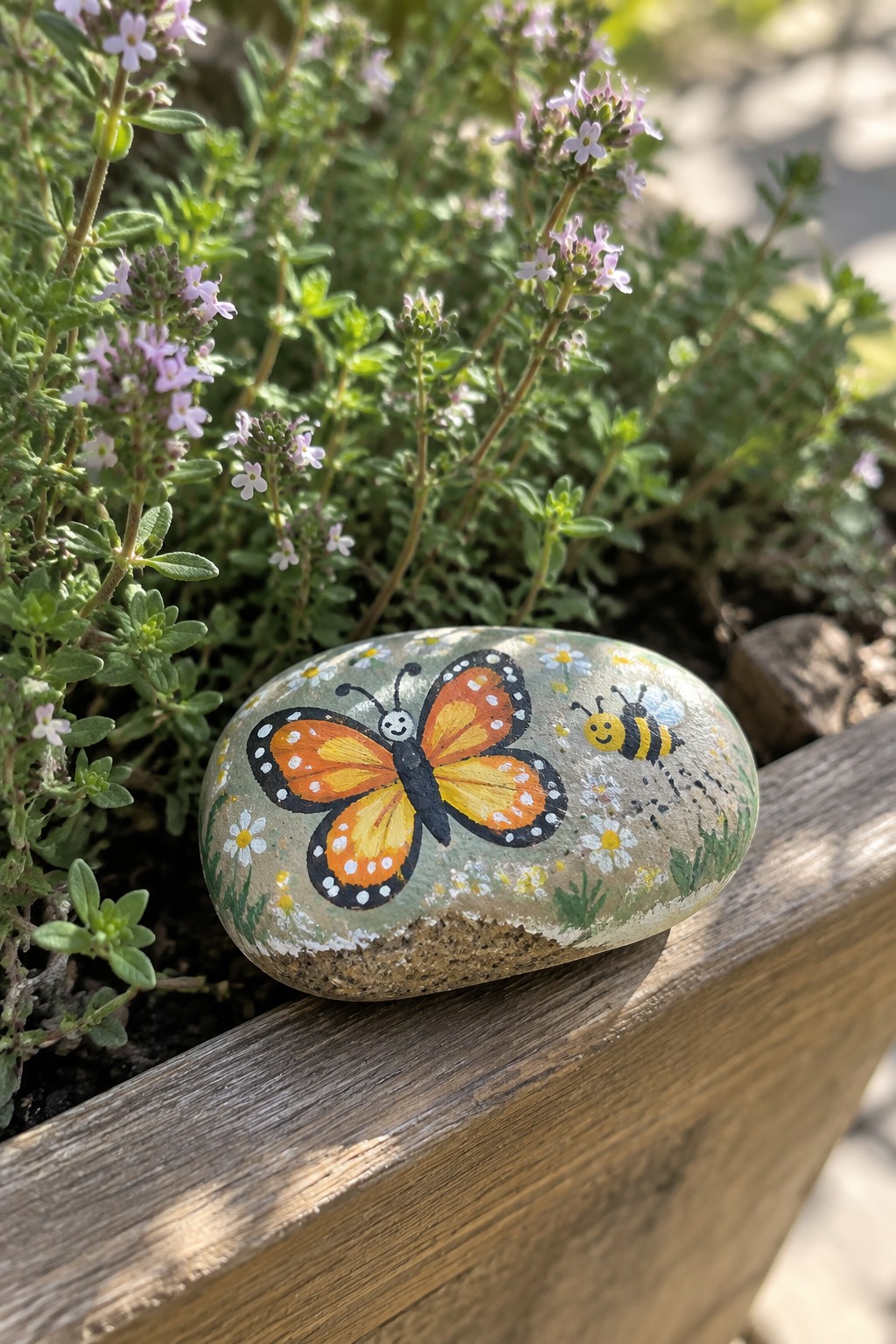
An oval garden stone serves as the base for this butterfly rock project, with its smooth curved surface allowing the monarch wings to spread evenly across the top. The design uses clear orange and black color blocking for the main butterfly, accented by white dots on the wing edges, plus a smaller yellow bee and a few daisy motifs scattered around the sides. This creates a straightforward bug rock that works as garden decor without requiring complex shading or fine detail work.
The rounded stone shape does a lot of the work here by keeping the butterfly centered and balanced even when the rock sits among plants. You can adapt the same wing layout onto a flatter stone for a path marker or repeat the bee as a smaller standalone accent on a pebble set. For cottage-style gardens, this painted rock fits easily into flower beds or along porch steps where the colors stand out against green foliage.
Butterfly Migration Trail on a Flat Garden Stone
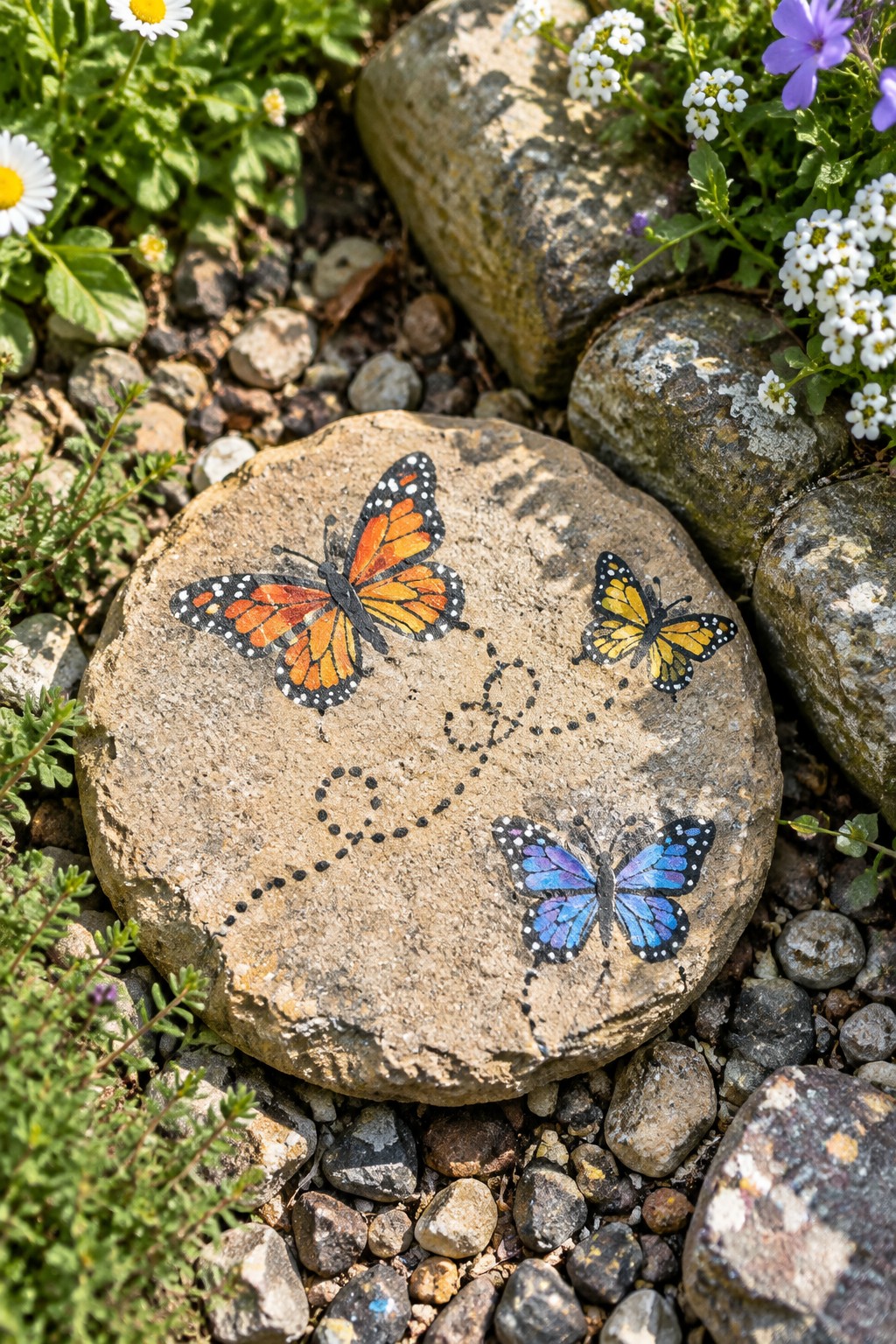
A large flat stone serves as the base for this butterfly rock project, with three painted butterflies of varying sizes and colors arranged across the surface. The orange monarch takes up the left side while a smaller yellow butterfly and a blue one sit on the right, linked by a curved line of small dots that suggests movement. This style fits the animal rock or bug rock category and works as garden decor because the broad flat surface gives room for the full scene without crowding.
What makes this idea useful is how the natural stone shape supports multiple butterflies at once while keeping the design readable from a short distance. You could scale the same dotted trail down to a smaller rock by using just two butterflies or swap the colors to match plants already in your beds. For cottage-style gardens this type of painted rock blends into mulch, sits on a path edge, or rests near a planter without looking out of place. The simple color blocking on each butterfly also makes it easy to repaint the motif on other stones if you want a matching set.
Frequently Asked Questions
What supplies do I need to create whimsical butterfly painted rocks for my garden? Acrylic paints in bright colors work best for the designs since they stick well to stone surfaces and offer good coverage. Gather smooth rocks from your yard or a craft store, fine detail brushes, a pencil for sketching, and a clear outdoor sealer to finish them. Start with a base coat of white or light color if your rocks are dark so the butterfly patterns show up clearly.
How can I protect the painted rocks so they hold up outdoors? Let the paint dry fully for at least 24 hours before applying two or three thin layers of waterproof acrylic sealer. This step shields the colors from rain, sunlight, and temperature changes. Reapply the sealer once a year in early spring to keep the butterflies looking fresh season after season.
Where should I position these rocks in a cottage style garden? Tuck them along winding paths, at the base of flowering shrubs, or near birdbaths to create charming focal points. Group several rocks together in odd numbers for a natural feel, and mix them with real plants like lavender or daisies so the painted butterflies appear to blend with the living ones.
What painting techniques help beginners achieve whimsical butterfly looks? Sketch a simple outline with a pencil first, then fill in the wings using broad strokes for the main colors and smaller brushes for veins or dots. Add personality with fun touches like tiny hearts on the wings or smiling faces on the bodies. Work in good lighting and keep a damp cloth nearby to fix small mistakes before the paint sets.
How do I choose rocks that suit different butterfly designs? Select flat, oval rocks around four to six inches wide for classic wing spreads and rounder stones for more playful, compact butterflies. Avoid very porous rocks since they absorb paint unevenly. Test a few shapes by laying them out in your garden first to see which ones fit the space and style best.
