


I started painting rocks with botanical designs a while back to decorate my garden beds.
It is a fun craft that does not require a lot of supplies or space.
My favorite ones include different types of flowers and leaves painted in natural colors.
I have put together some ideas here that you might like to try yourself.
Daisy Motif on a Rounded Garden Stone

A smooth oval stone painted with a white daisy and solid yellow center creates a simple botanical accent for outdoor spaces. The petals are arranged in a circle that follows the curve of the rock, keeping the design balanced on the rounded surface. This approach belongs to the flower rock category and works as a direct way to add a painted botanical element among real plants.
The rounded stone shape makes this smart for placing in flower beds or mulch where it can sit naturally without tipping. You could rework the same motif onto a flatter stone or change the center color to match other flowers already in the garden. For garden decor this type of painted rock stays visible through the season and requires no watering or special care once set in place.
Rose Motif on a Rounded Stone

A smooth, rounded stone works as the base for a layered rose painted in soft pink tones with visible brush strokes that follow the curve of the rock. Green leaves fill in around the edges using the same paint layers, while the stone’s natural speckled texture shows through in spots to add depth. This approach creates a flower rock that suits garden decor without needing extra elements.
What makes this idea useful is how the rose sits centered on the stone so the design stays balanced even on slightly irregular shapes. The same motif could be simplified with fewer petal layers or shifted to one side for smaller stones you find outdoors. For garden decor, this type of painted rock tucks easily into flower beds or sits on a windowsill near real plants without looking out of place.
Wildflower Meadow Painted on a Garden Rock

A large, rounded garden stone works as a flower rock when covered with a full meadow scene of red poppies, white daisies, and blue cornflowers. The design packs multiple flower types together across the curved surface so the colors and shapes create a dense botanical pattern. This type of painted rock fits the garden decor category and sits naturally among real plants or along a gravel edge.
What makes this idea useful is how the irregular stone shape lets the floral layout follow the contours instead of fighting them. For garden decor, this kind of painted rock can be tucked into flower beds or placed near paths where it adds color without needing extra stands. You could scale the same mix of poppies, daisies, and cornflowers down to a smaller pebble by using fewer blooms and simpler outlines while keeping the color balance.
Botanical Wildflower and Fern Stones for Garden Beds

Smooth oval stones make strong bases for botanical designs because their curved surfaces let stems and leaves follow natural lines without extra shaping. Paint clusters of lavender, small blue blossoms, a full fern frond, and a simple yellow flower using green stems, basic leaves, and solid color blocks for the petals. These painted rocks belong in the flower garden rock category and sit well among real plants or mulch.
What makes this idea useful is how the same layout adapts to other common garden plants like daisies, ivy, or hosta leaves by changing only the flower color and leaf shape. The small scale works especially well in planters, along path edges, or tucked into flower beds where larger decor would crowd the space. For a gift, something like this can be finished in one session by blocking in the main shapes first then adding the finer leaf details last.
Sunflower Motif on a Rounded Garden Stone

A rounded stone painted as a sunflower creates a straightforward botanical accent for outdoor spaces. Thick yellow strokes form the petals around a textured brown center, letting the rock’s natural circular shape define the flower form. The design stays simple yet visible against soil or mulch because the color areas follow the stone’s curve without needing fine details.
What makes this idea useful is how the rock shape does most of the layout work for the petals. It sits well in flower beds, along paths, or inside large planters where it can echo real sunflowers nearby. The same approach adapts easily to smaller stones by reducing the number of petals or to larger ones by adding more layers of yellow. For garden decor this type of painted rock stands out in photos because the bright center and petal contrast read clearly from a distance.
Eucalyptus Wreath Stone for Planter Rims

A smooth, rounded stone receives a botanical wreath painted in a loose circle across its top surface. The design uses layered green leaves with visible vein details and clusters of small pink berries to create a natural frame that leaves the center unpainted. This garden decor rock idea works because the curved stone shape supports the circular motif without extra borders or backgrounds.
What makes this idea useful is how the wreath layout stays readable even on an uneven rock surface. You can change the leaf shapes to match other plants in your beds or swap the berry color for a different season while keeping the same arrangement. In a planter, this type of painted rock adds a botanical accent that matches surrounding foliage without competing for attention. The small scale also makes it simple to repeat the design on several stones for a grouped display.
Botanical Tulips and Daisies on Rounded Garden Stones

Smooth oval stones make a natural base for these flower designs because their curved surfaces let stems and petals follow the rock shape without extra shaping. Paint a red tulip with broad green leaves on one stone, a white daisy with a yellow dotted center on another, and clusters of purple lavender on the smaller stones to build a simple matching set. The clear color blocks and basic leaf outlines keep the motifs readable even from a short distance in the garden.
What makes this idea useful is how easily the same flowers can move from a tabletop display into mulch or along a path edge. Swap the tulip color for yellow or add more lavender stems to match your existing plants without changing the whole layout. The small scale also lets you test new bloom shapes on spare stones before committing to a larger group.
Hydrangea Cluster Painted on a Rounded Garden Stone

A smooth, rounded stone makes a good base for this botanical design because the curved surface lets the hydrangea bloom sit naturally without needing a flat canvas. Layers of blue and purple petals are painted in a tight cluster, with small green leaves added at the edges to follow the stone’s shape and give the flower depth. The result is a simple flower rock that can sit directly in soil or mulch without looking out of place.
What makes this idea useful is how well the round stone shape matches real garden stones, so it blends into flower beds or planter edges. You can adapt the same motif by changing the petal colors to match other blooms in your yard or scaling it down for smaller pebbles along a path. The design stays effective even if the edges are a bit soft, which keeps it quick to paint and easy to repeat for a small collection. For garden decor, this type of painted rock adds a botanical accent that works in both sunny beds and shaded corners.
Ivy Vine Design on an Oval Garden Stone

A large oval rock painted with a trailing ivy vine creates a simple botanical accent for garden settings. Multiple shades of green are used to form the leaves and stems, with lighter tones highlighting some edges so the design stands out against the stone’s natural surface. The vine runs diagonally across the rock, following its rounded shape rather than fighting it. This style fits the garden decor rock category and keeps the focus on the painted plant motif instead of added text or symbols.
What makes this idea useful is how the vine layout can be shortened or extended to match longer or rounder stones for use in planters or mulch beds. The same leaf shapes work on smaller pebbles if you reduce the number of leaves and keep the color range limited to two or three greens. A painted rock like this blends into real foliage in a flower bed while still reading as handmade when viewed up close. For a different look, swap the ivy for another simple leaf shape such as fern or hosta and apply it to a flatter stone for a stepping stone accent.
Tulip Cluster on a Rounded Garden Stone
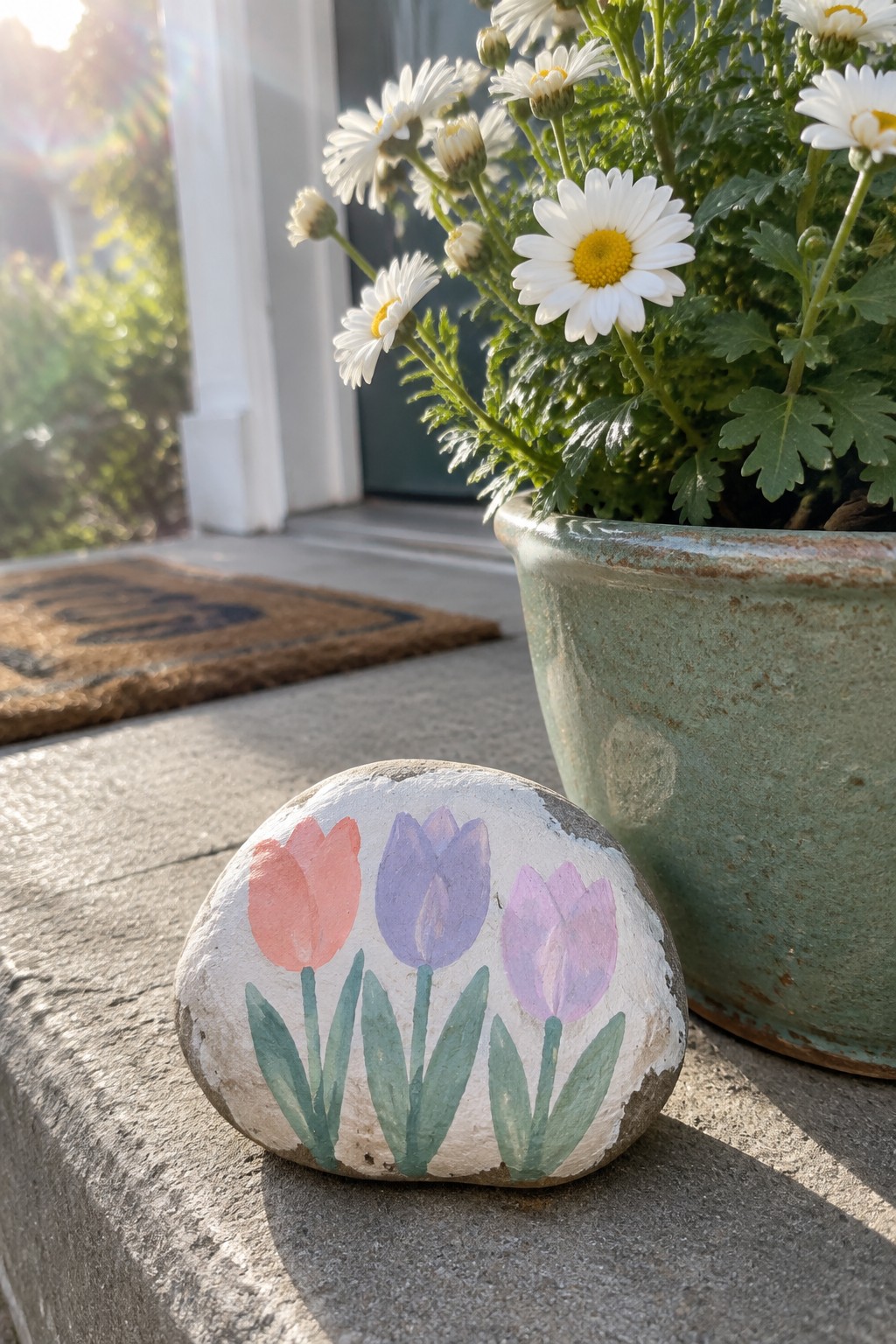
A smooth, rounded stone works well for this botanical rock painting idea. Three tulips in soft coral, lavender, and pale purple sit side by side across the surface, each with a simple green stem and a few pointed leaves. The design uses basic color blocks and clean outlines that follow the curve of the rock without needing fine detail work. This type of flower rock fits garden decor projects where the painted motif stays visible outdoors.
What makes this idea useful is how the natural stone shape already frames the flowers like a small bouquet. The same tulip layout can be scaled down for smaller pebbles or repeated across a set of stones for a planter border. In a flower bed or on porch steps it blends with real plants without looking out of place. The color blocking is easy to change to match other garden blooms or to use whatever paints are already on hand.
Botanical Poppies and Peonies on Garden Stones

Smooth river rocks and pebbles painted with large peonies and poppies form a flower rock collection that suits garden displays. The designs use the rounded stone surfaces to shape layered petals and dark centers, letting some natural rock texture remain visible between brush strokes. This style of painted physical rock works as decorative stone craft because the botanical motifs stay tied to the actual shape and scale of each stone rather than covering it completely.
What makes this idea useful is how easily the same flower approach transfers to other stones in a garden setting. You can place these painted rocks in mulch beds, along stepping stones, or inside large planters where the red and pink blooms add color without needing live plants. The elongated stone with leaf details shows one way to adapt the motif for variety, while smaller pebbles could carry just a single poppy or cluster of white flowers. For a simpler version, block out the main petal shapes first and add centers last so the design still reads clearly on uneven surfaces.
Wildflower Meadow on a Large Garden Boulder
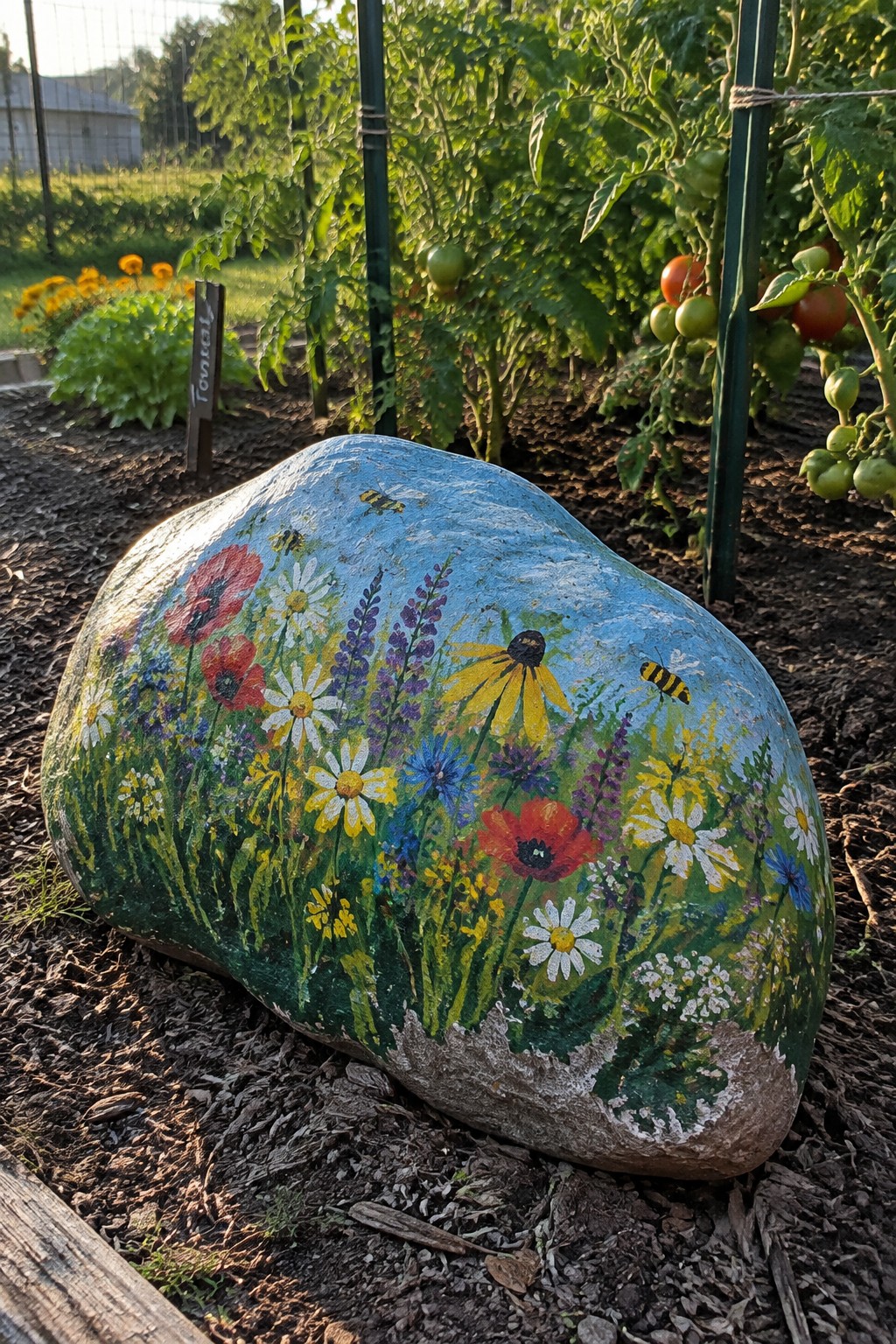
A large rounded boulder serves as the base for a dense botanical painting that covers most of the surface with overlapping wildflowers in red, yellow, white, and purple tones. The design packs in poppies, daisies, coneflowers, and small clusters of filler blooms along with a few bees and a butterfly set against a simple blue sky section. This creates a flower rock that reads as a miniature garden patch rather than scattered motifs. The project fits the garden decor rock category for outdoor use.
What makes this idea useful is the way the curved stone shape supports a full meadow layout without forcing a flat composition. You can adapt the same layered flower approach to a smaller rock by reducing the number of blooms and keeping just one or two insects for focus. For garden decor this type of painted rock sits naturally along bed edges or near vegetable rows where it adds color that matches surrounding plants. The motif could easily be changed into a version with only daisies and bees on a flatter stone for stepping areas.
Lavender Spray on an Oval Stone
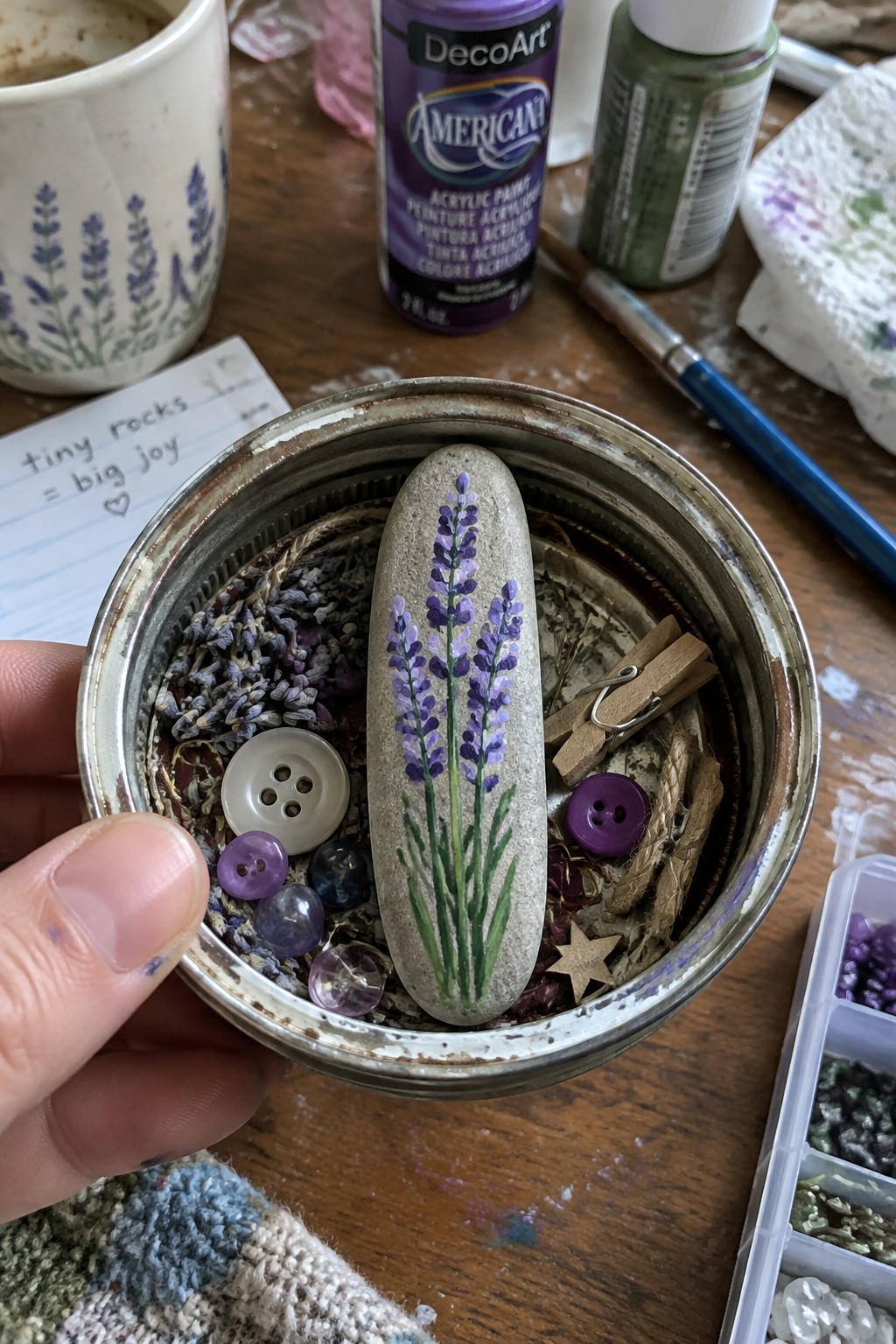
A smooth oval stone works well for a vertical lavender design painted in layered purple tones with green stems and leaves that follow the rock’s length. The motif uses the stone’s natural shape to suggest the tall growth habit of lavender without extra framing or borders. This approach creates a simple botanical accent that reads clearly as a painted garden rock rather than a flat illustration.
The rock shape does a lot of the work here by giving the stems a built-in vertical line. You could repeat the same lavender layout on several smaller stones to scatter through a flower bed or shift the colors to match other garden plants. For garden decor this style stays subtle outdoors while showing up nicely in close-up photos for inspiration boards.
Daisy Cluster on a Rounded Stone
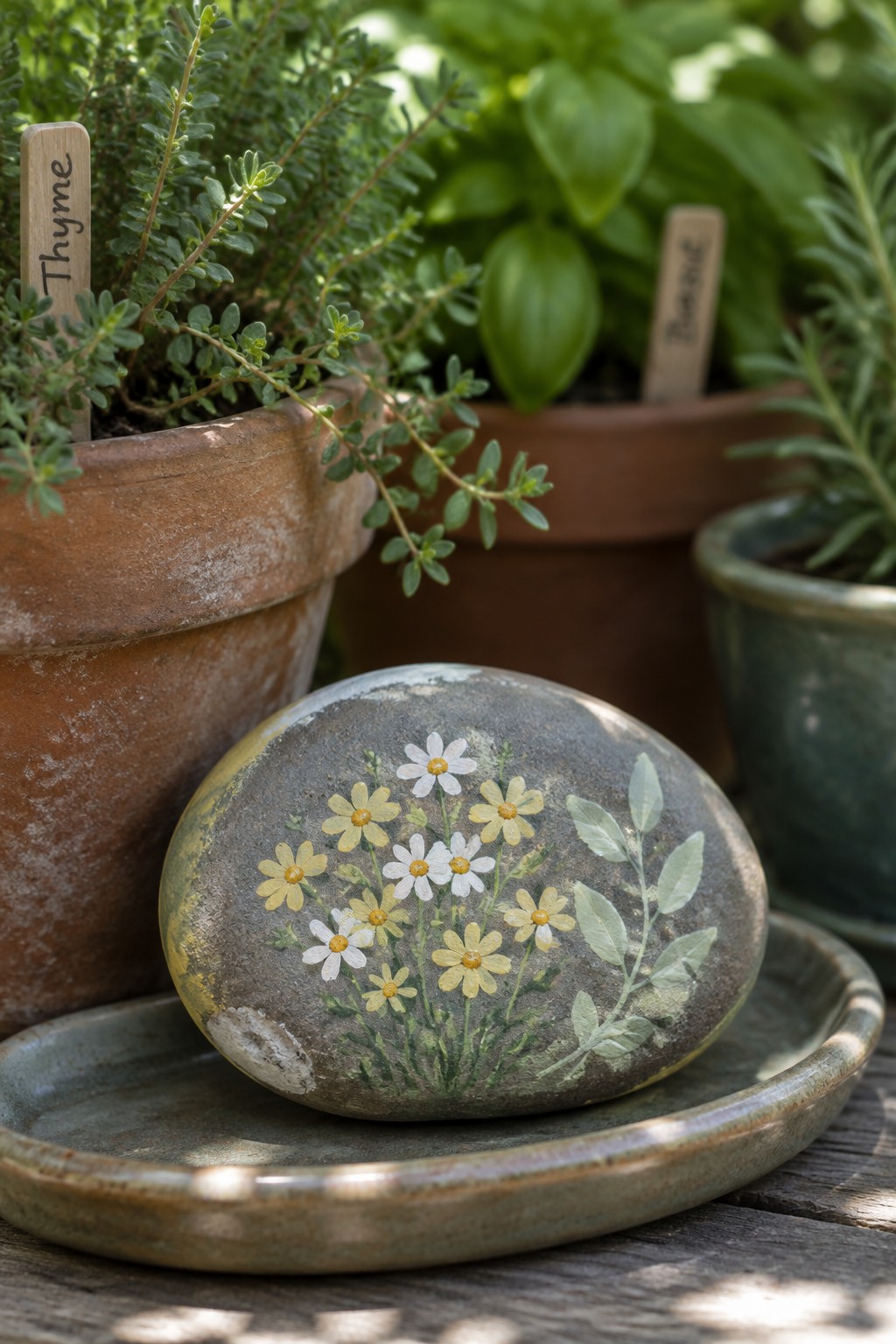
A smooth oval stone painted with a tight cluster of yellow and white daisies creates a simple botanical accent for garden use. The design places the flowers in the center with green stems and leaves extending toward the edges, letting the natural gray surface of the rock act as background. This flower rock approach works because the rounded shape supports the bouquet layout without needing extra framing or borders.
What makes this idea useful is how easily it drops into a planter tray or sits among potted herbs. The same daisy cluster can be scaled smaller for river pebbles or spread wider on a flat stone for a path marker. For garden decor, this type of painted rock adds a floral detail that blends with real plants while staying weather-resistant once sealed. The motif could easily be changed into other daisy varieties by adjusting petal count or leaf shape.
Sunflower and Herb Motifs on Rounded Garden Stones
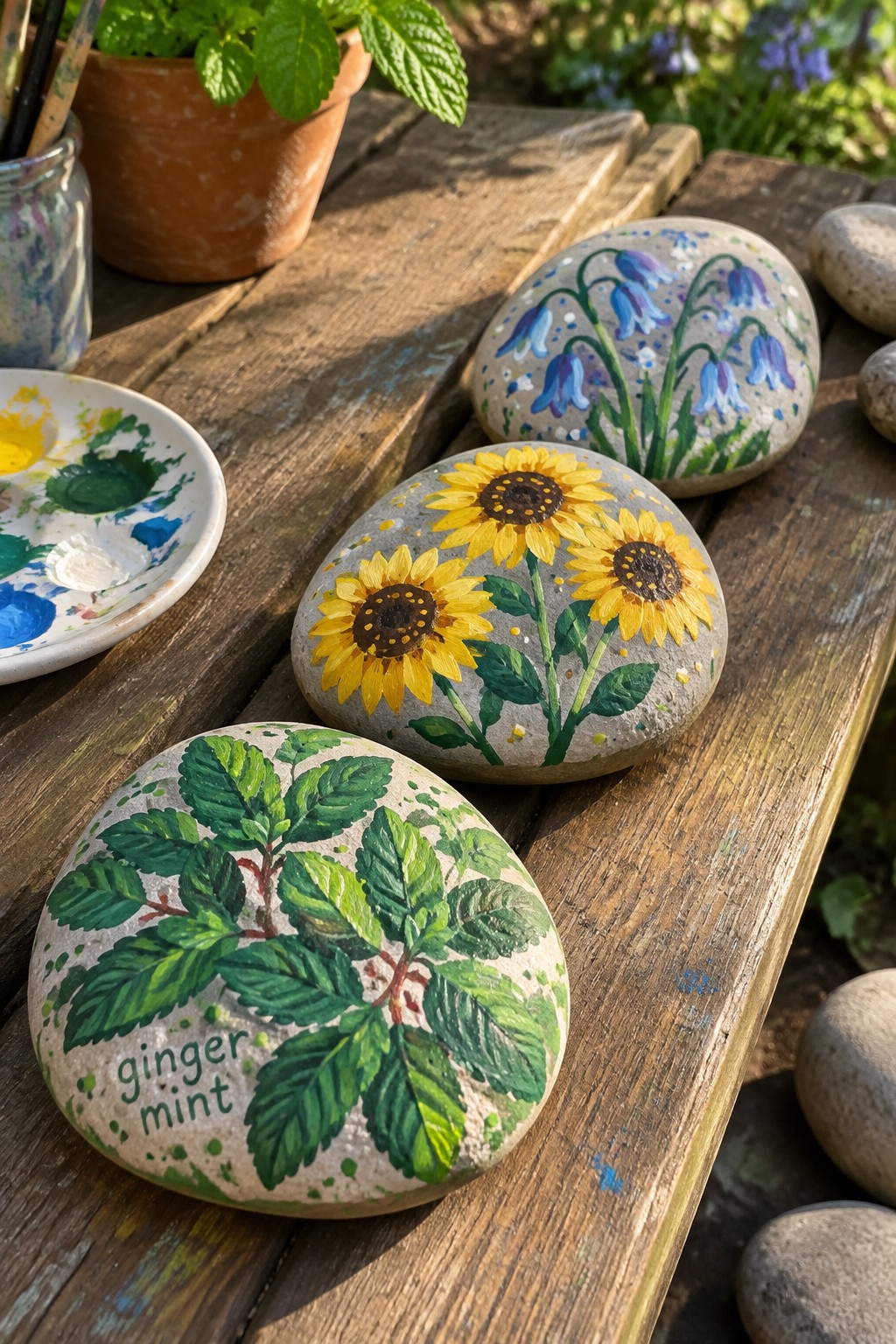
Painted rocks with sunflower clusters and leafy herb designs turn smooth, rounded stones into botanical accents for outdoor spaces. The yellow sunflower petals and layered green leaves stand out clearly against the gray stone, with stems and dots adding natural detail that follows the rock’s curved surface. This approach belongs in flower garden rock ideas because it uses simple plant motifs to create decorative pieces that blend with real garden plantings.
What makes this idea useful is how the stone shape supports the flowing stems and leaf clusters without extra outlining. These rocks work especially well tucked into flower beds, mulch areas, or around potted herbs where the designs echo nearby greenery. The same sunflower layout could be reduced to one bloom on a smaller pebble, while the herb style could shift to other common garden plants for a matching set. For garden decor this kind of painted rock holds up through weather and adds lasting color without much upkeep.
Cosmos Flower Painted on a Garden Stone
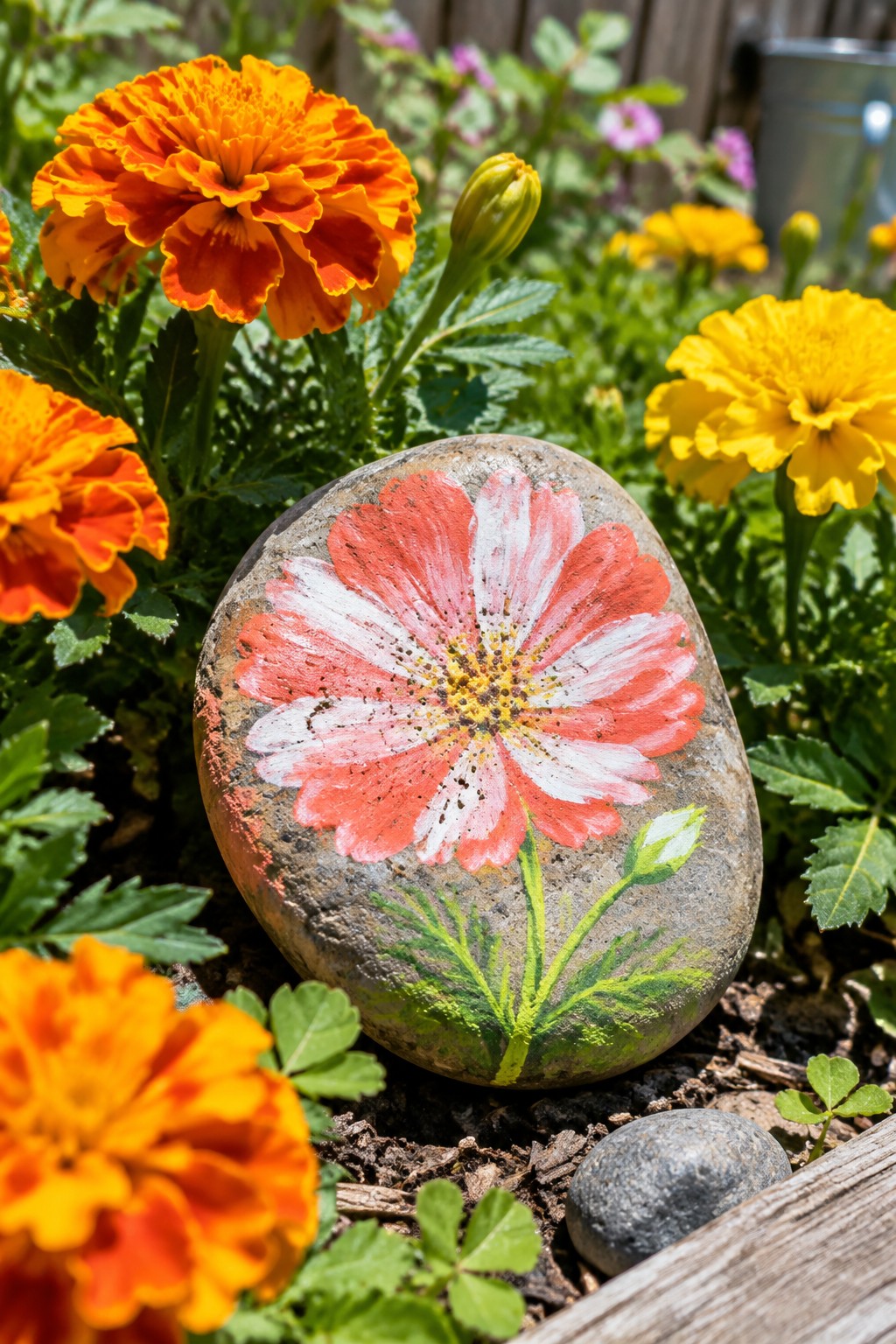
A rounded garden stone makes a strong base for a botanical flower rock when the design uses the curved surface to place a large bloom with layered pink and white petals around a yellow dotted center. Green brushwork for the stem and leaves at the base keeps the motif grounded and balanced against the stone’s natural gray tone. This style fits the flower rock category and works as garden decor because the painted elements echo real plants without trying to hide the rock texture.
What makes this idea useful is how the rounded shape guides the flower layout and lets the design sit naturally in soil or mulch. You can adapt the same petal layering and stem placement to flatter stones for path markers or repeat the motif in different colors for a small collection. For garden decor this kind of painted rock blends into flower beds or planters where the botanical detail adds interest without needing a label or stand.
Symmetrical Floral Mandala on a Rounded Stone
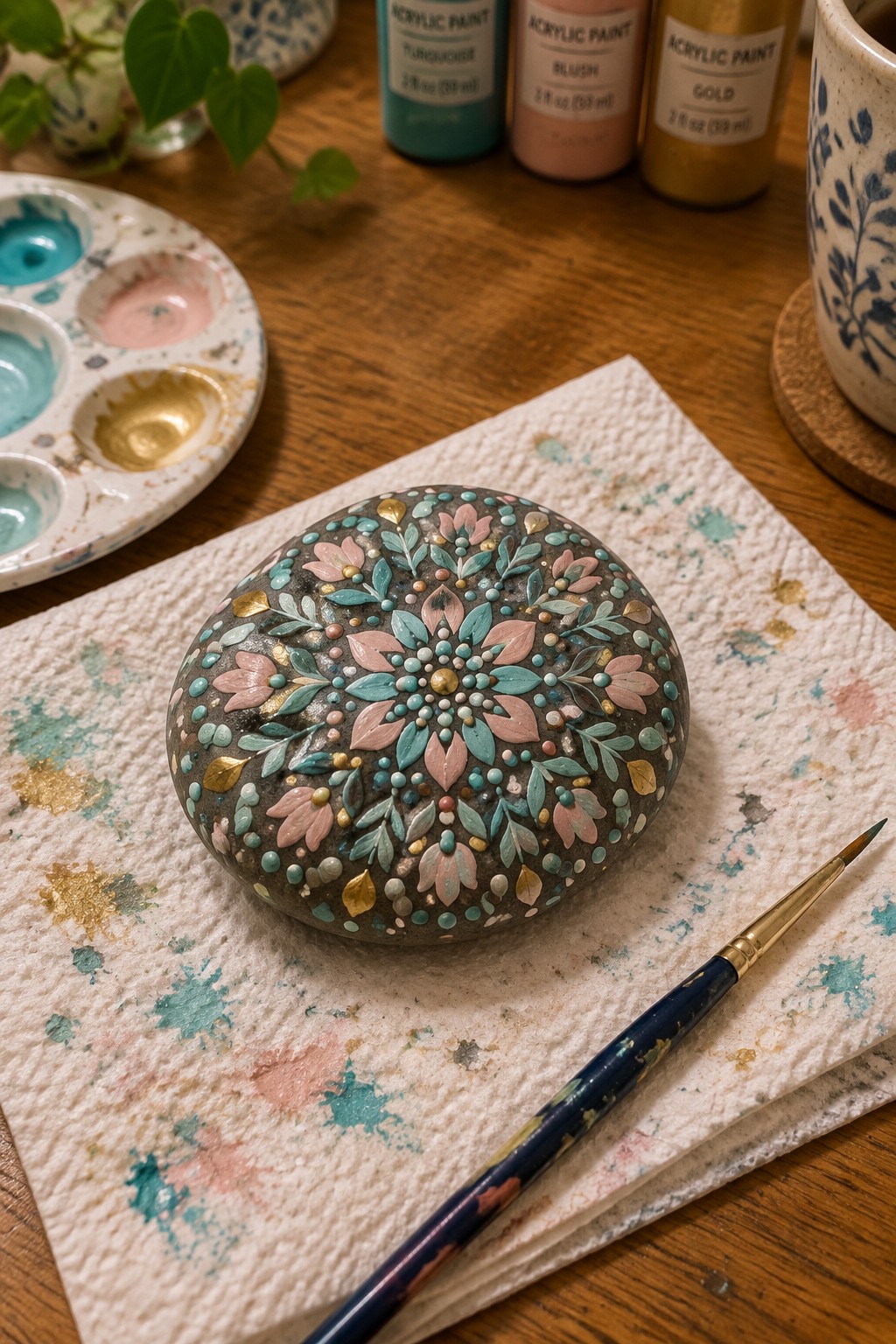
A rounded stone works as the base for a full botanical mandala built from layered petals and leaves. The design fills the surface with repeating flower shapes in soft pink and teal, accented by small gold dots and leaf details that follow the curve of the rock. This creates a compact flower garden accent that stays clearly recognizable as a painted physical rock rather than a flat illustration.
What makes this idea useful is how the round form supports the mandala layout so the pattern stays balanced from every angle. The same motif can be scaled down for smaller pebbles or simplified by using fewer petal rings and less dot work. For garden decor, this type of painted rock sits well in a planter, along a path edge, or on a porch step where the color contrast shows against soil or wood.
Poppy Field Landscape on a Rounded Garden Stone

A smooth, rounded stone makes a good surface for painting a complete poppy meadow scene that wraps around the form. The design uses clusters of red poppies with dark centers, green foliage, and a strip of blue sky with clouds to create a miniature botanical view. This approach turns the rock into a self-contained flower garden accent rather than a flat painted object.
What makes this idea useful is how the curved shape helps the poppies look like they sit in a real field when the rock is placed among plants. You could adapt the same layout to smaller stones by using fewer blooms or switch to other garden flowers like daisies or lavender while keeping the sky and ground bands. For garden decor, this type of painted rock blends into mulch beds, sits on porch steps, or lines a path without needing a stand. The rounded stone shape makes this smart for outdoor use since it rests stably and shows the design from multiple angles.
Rosemary Sprig Botanical Stone

A smooth rounded stone painted with a single rosemary sprig creates a clean botanical accent for garden use. The design shows a brown stem with narrow green leaves and tiny white flowers clustered along the branch. This approach works as a flower garden rock because it copies real plant shapes instead of using abstract or geometric patterns. The flat surface of the stone keeps the fine leaf lines and flower centers readable even when the rock sits among actual plants.
What makes this idea useful is how easily it fits inside planters or along the edge of a flower bed. The compact sprig can be scaled down for smaller stones or repeated across a few rocks to match different herbs in the same pot. You could change the leaf shape to lavender or thyme while keeping the same stem and flower placement. For garden decor this type of painted rock stays subtle next to real foliage instead of competing with it.
Botanical Flower and Fern Rocks for Garden Beds

Paint smooth, rounded stones with botanical motifs such as full blooms and fern fronds to make garden accents that sit naturally among plants and soil. The larger round rock carries a red flower with layered petals and a dark center, the smaller one shows a purple bloom with yellow details, and the oval stone holds a green fern frond built from stacked leaflets. These designs follow the curved surfaces of the stones so the painted elements look like extensions of real garden growth rather than separate objects.
What makes this idea useful is how the motifs can be placed directly in flower beds, mulch, or around potted plants without extra hardware. You could rework the fern onto a narrower stone for a path border or change the flowers to match whatever is blooming in your yard that season. The compact sizes make them easy to move between pots, steps, or a rock garden display. This style photographs well for Pinterest because the clear leaf and petal shapes stand out against dark soil.
Botanical Wreath on a Flat Garden Stone

A large rounded stone with a smooth flat top gives plenty of space for a full circle of mixed garden flowers and leaves. The design places daisies, orange blooms, yellow flowers, and small white clusters around the edge while leaving the natural gray center bare. Leaves and stems connect the different flowers so the ring feels continuous rather than scattered. This approach turns the stone itself into a garden accent instead of a background for a single motif.
What makes this idea useful is how the open center keeps the painting from feeling busy on a bigger rock. The same wreath style works on a smaller stone by using just three or four flower types and tighter spacing. It fits well along a porch step, inside a large planter, or tucked into mulch near real plants where the painted blooms add color without competing. You could swap in whatever flowers grow in your own beds to make the design match the spot where the finished stone will sit.
Fern and Wildflower Stone for Garden Beds

A rounded garden stone painted with overlapping green fern fronds and one purple bellflower creates a botanical accent that sits naturally among real plants. The design uses the curved surface to let the leaves and stem follow the rock shape, with the single bloom placed off-center for balance. This turns an ordinary stone into a flower rock that fits the botanical garden decor category.
What makes this idea useful is how the natural rock texture shows through the paint layers to keep the look grounded. A painted rock like this works especially well nestled in moss, mulch, or a planter edge where it adds plant detail without standing out as artificial. The fern motif could easily be swapped for other leaf shapes to match different garden beds, and the same layout scales down for smaller stones in a path or pot. For garden decor, this type of design stands out on Pinterest because it reads as part of the planting rather than obvious craft.
Rose Bouquet Garden Stone

A smooth oval stone makes a strong base for this botanical design of clustered roses in peach and pink. The flowers sit in the center with layered petals, green leaves framing the edges, and a small bow tied at the stems. The painted motif follows the rock’s natural curve so the arrangement feels balanced rather than crowded. This fits the flower rock category and works as garden decor rather than indoor display.
What makes this idea useful is how the rounded shape supports a full bouquet without extra framing. You could reduce the number of blooms for smaller stones or change the colors to match plants already in your beds. For garden decor this kind of painted rock blends into mulch or sits along a path where the botanical pattern looks at home with real foliage. The same layout adapts easily by tightening the cluster or extending the leaves to fit a longer stone.
Painted Garden Stones with Leaf and Flower Motifs
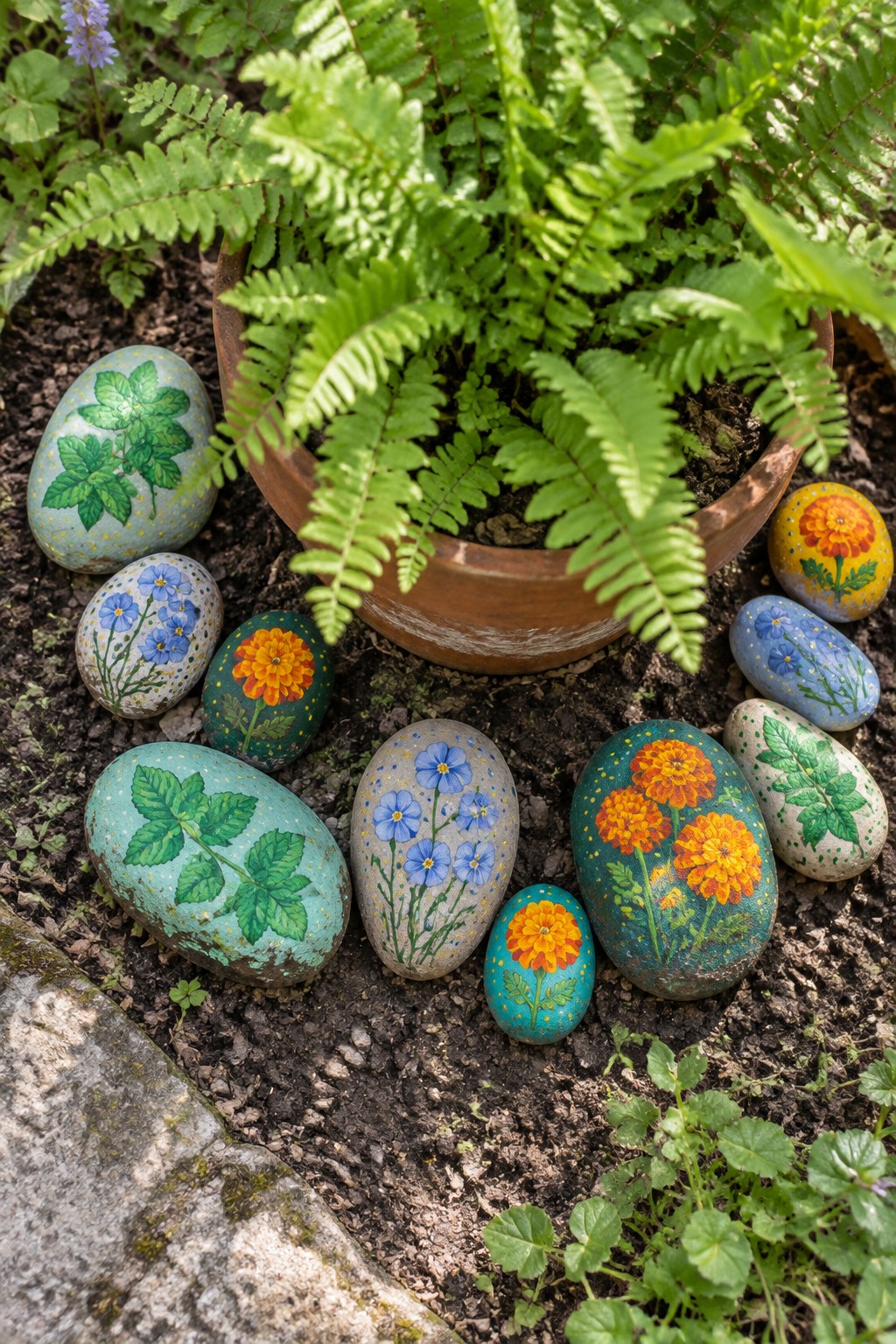
Smooth oval stones painted with botanical designs make a simple addition to any flower bed or planter area. Some rocks show clusters of green leaves in different shades while others feature orange blooms or blue flowers on stems, all accented with small dots. The curved surfaces let the painted motifs follow the natural shape of each stone instead of sitting flat. This approach works as a decorative stone craft that blends painted elements with real garden plants.
What makes this idea useful is tucking the finished stones into mulch around potted plants or along a garden path where the colors echo nearby foliage. The variety of rock sizes lets you scale the same leaf and bloom patterns up or down depending on the space. For garden decor this kind of painted rock adapts easily by swapping in flowers that match your own beds. The small scale keeps the project quick to finish and easy to rearrange when you want a fresh layout.
Frequently Asked Questions
How do I select rocks that enhance botanical designs in a flower garden? Choose stones with natural textures like limestone or granite that echo plant forms and allow moss or lichens to grow. Mix sizes from pebbles to larger boulders to create layered depth that supports flowers without overpowering them and always test placement to ensure good drainage for roots.
Which flowers pair best with rock features in botanical themed gardens? Select low growing options such as sedum, creeping phlox, or alpine strawberries that spread gently between stones. These choices highlight botanical details by mimicking wild habitats and provide color contrast while thriving in the well drained conditions rocks naturally create.
What maintenance steps keep a rock and flower garden looking its best year round? Remove debris and weeds weekly from crevices and water deeply but infrequently to encourage deep roots. Prune spent blooms to maintain clean lines and add organic mulch sparingly around plants to preserve the botanical focus without hiding the rock elements.
How can I adapt these ideas for a small yard or balcony setting? Scale down by using container friendly rocks and compact plants like miniature hostas in pots or vertical planters. Focus on one or two designs at a time and rotate seasonal flowers to keep the botanical theme fresh without needing large ground space.
Where should I look for affordable materials to build these projects? Check local quarries or landscape suppliers for bulk rocks and visit native plant nurseries for region appropriate flowers. Online garden forums often share sourcing tips and community swaps that reduce costs while ensuring materials suit botanical designs.
