

I often paint small rocks to place along my garden path.
It is nice to see a positive word or two when I am out there tending to the plants.
I picked out some encouraging phrases that work well for this kind of project.
You might want to use weatherproof paint so they hold up over time.
This is one of those crafts that does not take much space or special tools.
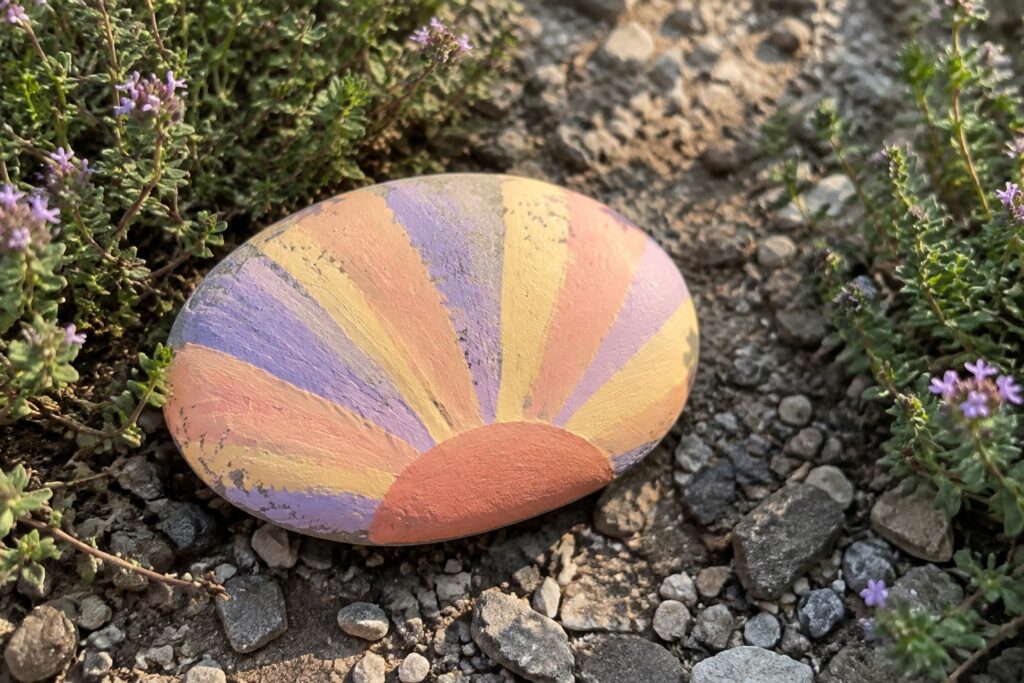
Sunburst Motif on an Oval Path Stone

A smooth oval river rock works well for this project because its flat top surface gives the radiating lines room to spread outward from a central yellow circle. The painter used broad brush strokes in layers of orange, purple, and yellow to create the sunburst effect, letting some of the stone texture show through between the colors for a natural look. This fits the category of a positive symbol rock that relies on color and shape rather than lettering.
What makes this idea useful is that the radiating pattern stays visible even when the rock sits among gravel or mulch on a garden path. The rounded edges help the design follow the stone’s curve without needing perfect symmetry, so the same motif can be scaled down to smaller pebbles or widened on a larger flat stone. For garden decor this kind of painted rock adds color contrast against dirt and plants without requiring text. The simple color blocking also makes it easy to adapt by swapping in different hues or adding a short word along the bottom edge if desired.
Rainbow Arc Garden Path Rock

A smooth, rounded stone makes an ideal base for painting a rainbow with wide curved stripes in red, orange, yellow, green, blue, and purple. The natural curve of the rock guides the stripes into a clean arc that follows the stone shape without extra outlining. White dashes along the edges of each band keep the colors distinct and help the design read clearly from a short distance. This approach turns an ordinary garden stone into a simple positive symbol rock for outdoor use.
What makes this idea useful is how the curved rainbow pattern works on many sizes of rounded stones without needing lettering. The same stripes can be shortened or lengthened to fit flatter or more oval rocks found in any craft supply. For garden decor, this type of painted rock sits well in mulch beds, along paths, or near planters where the colors stand out against dark soil. You could rework the motif by swapping one color band for a different shade or adding a small unpainted space below the arc if you want to include a short word later.
Star Motif Rocks for Garden Paths

Smooth rounded stones painted in soft pastel shades form the base for this garden path project. Each rock gets a solid color coat in lavender, mint, or blush pink, followed by a bold white star centered on the surface and scattered gold speckles around the edges. The design stays simple enough to complete on river rocks or beach stones of similar size and works as a decorative stone craft rather than a word-based marker.
What makes this idea useful is how the rounded shape lets the star sit evenly without extra prep. These painted rocks fit well along mulch borders, between stepping stones, or in low grass where they add color without blocking the path. The speckle detail can be swapped for dots or left off entirely if you want a cleaner look, and the same star can be scaled up or down depending on the stone size you find. For garden decor this type of painted rock stands out in photos because the pastel and white contrast reads clearly even from a short distance.
Arrow Painted Rock for Garden Path Guidance

A smooth oval stone with a natural reddish surface gets a bold white arrow painted across the center to create a clear directional marker. The thick brush strokes and simple shape let the arrow stand out against the stone color without extra details. This positive symbol rock fits the garden decor category and works as a physical painted stone rather than a printed or ceramic piece.
What makes this idea useful is how the rounded form sits flat on paths or between plants without rolling. The arrow motif could easily be changed into different colors or paired with a short word on a larger stone for extra encouragement. For garden decor, this type of painted rock helps mark routes or highlight a turn in the path while staying weather friendly. The small scale makes this easy to adapt onto other stones in a matching set.
Sunny Motif Stone for Path Placement

A rounded stone serves as the base for a sun design with a solid yellow center circle and short radiating stripes in coral, orange, and mint green. The stripes follow the curve of the rock edge with even spacing that keeps the pattern balanced. This approach creates a positive symbol rock that works as garden decor without any lettering. The natural stone texture remains visible in the gaps between colors, which helps the paint sit on the surface rather than covering it completely.
What makes this idea useful is how the round rock shape supports the circular sun layout without extra framing. For garden decor, this type of painted rock sits flat along paths or between plants where the color bands show up clearly from above. The motif could easily be changed into other simple symbols by adjusting the number of rays or swapping the stripe colors. The small scale makes this easy to repeat on similar stones to build a set of matching path accents.
Heart Symbol Rock for Garden Paths

A rounded stone painted in deep green creates a solid base for a large pink heart that fills most of the visible surface. Gold dots trace the outer edge of the heart in a clean border that follows the curves without crowding the center. This positive symbol approach keeps the design simple while still delivering an uplifting message through shape and color alone.
What makes this idea useful is how the bold color blocking lets the heart read clearly from several feet away along a path or in a flower bed. The rounded form helps the border stay even as it wraps the curve, and the same layout can be reused with different heart colors or by adding a short word inside the shape later. For garden decor this kind of painted rock works especially well because it needs no text to feel encouraging yet leaves room to personalize if desired.
Oval Stone with a Painted Seedling Sprout
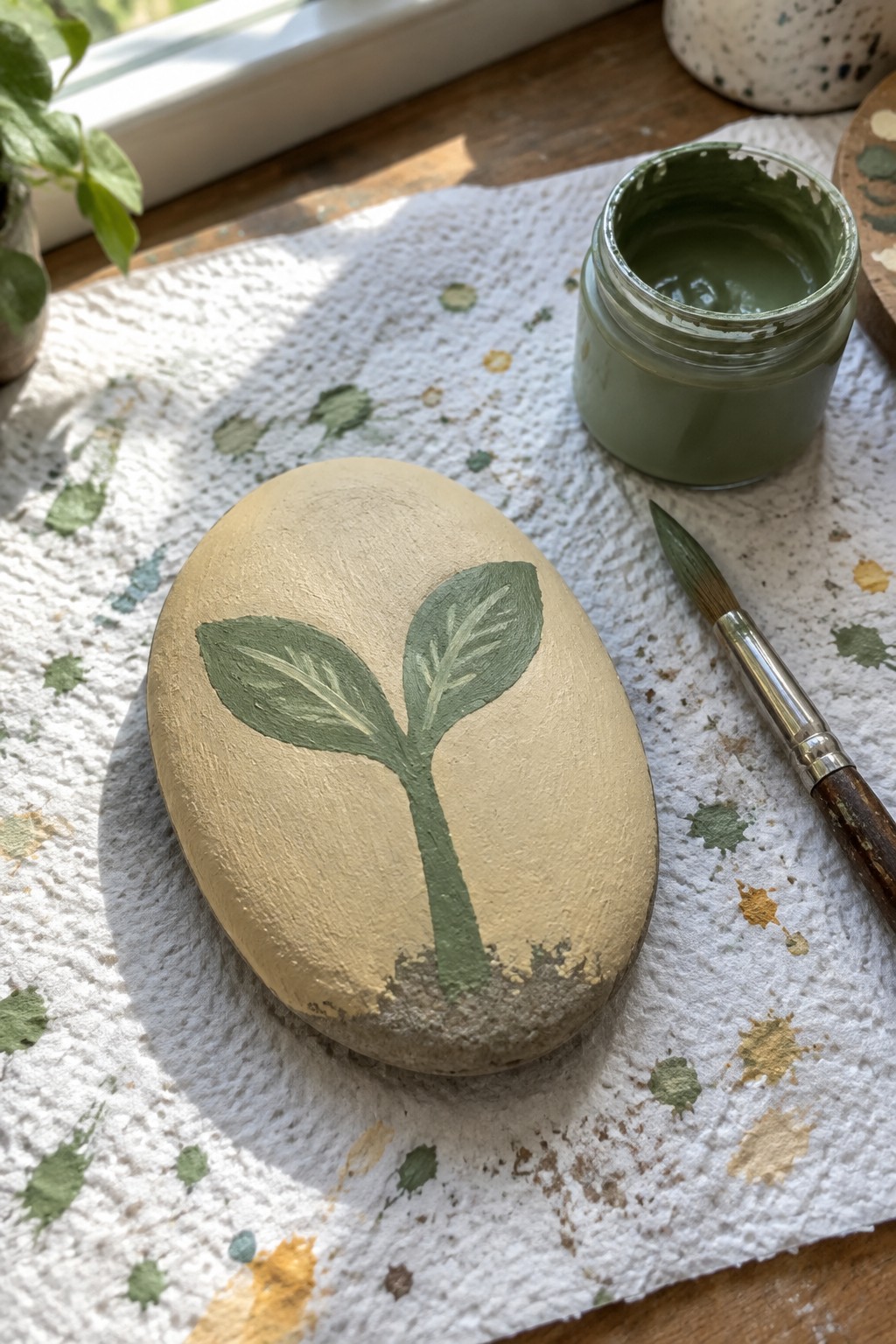
A smooth oval stone serves as the base for this garden decor rock project. The surface is covered in a light tan base coat that lets some of the natural texture remain visible. A green seedling motif is painted on top with two broad leaves and a central stem, using simple color blocks plus fine lines to show the leaf veins. This approach fits the positive symbol rock category and works as a non-text option for garden paths.
The rock shape does a lot of the work here by giving the sprout a natural curved surface that mimics soil. You can adapt the same motif to flatter stones or change the leaf count for variety. For garden decor, this type of design sits well in mulch or along a walkway without competing with plants. The small scale also makes it simple to repeat across a set of stones if you want a matching collection.
Dove Silhouettes on a Blue Path Stone
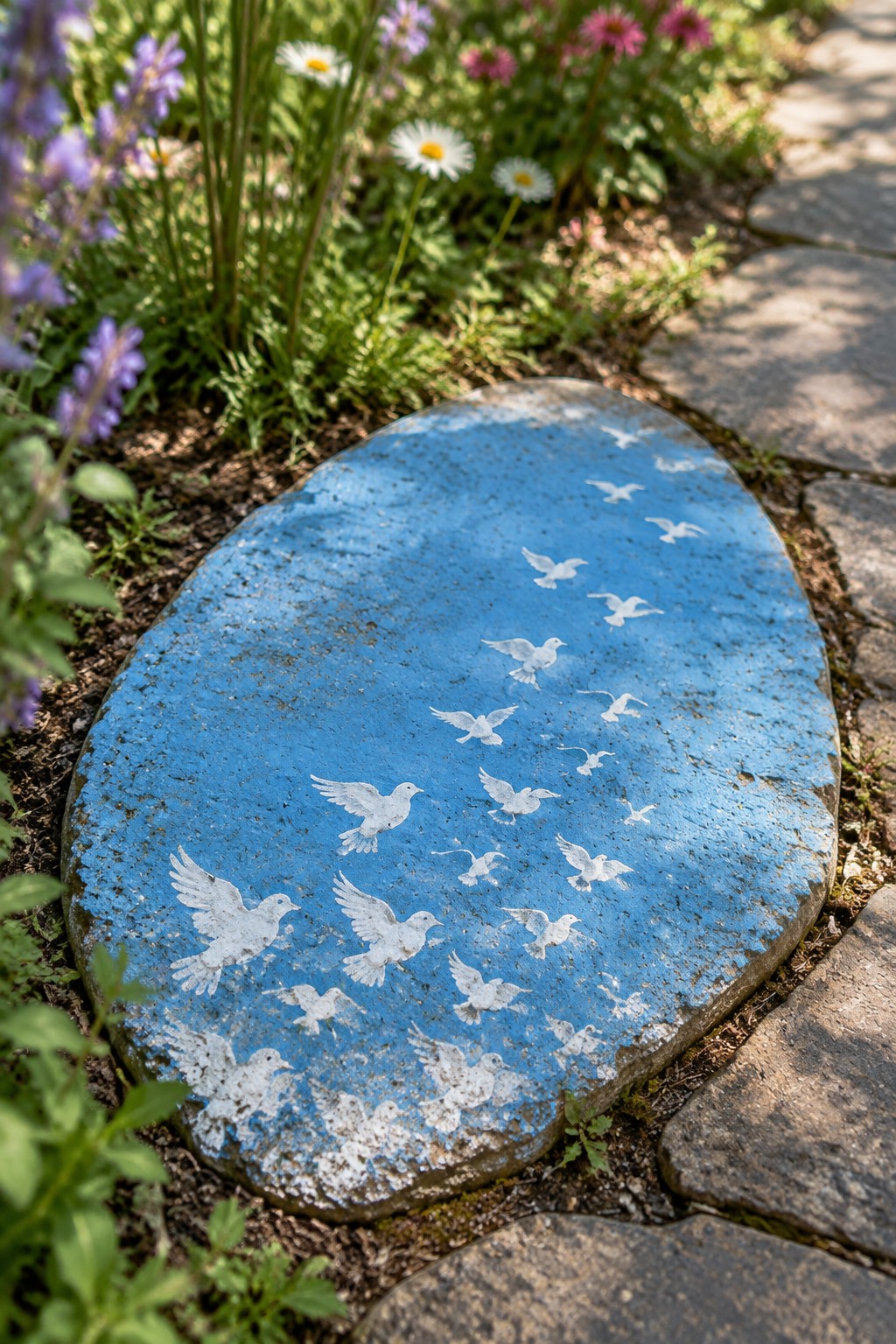
A flat, irregular garden stone painted solid blue creates a simple backdrop for white dove shapes scattered across the surface. The birds vary in size and angle to suggest movement without needing extra details or borders. This approach uses the rock’s natural shape and texture to support a repeating motif that reads clearly from a short distance.
What makes this idea useful is how the solid color blocks make the white shapes stand out against mulch or soil. The design adapts easily to smaller stones by reducing the number of birds or to larger ones by adding more layers of flight paths. For garden decor this kind of painted rock sits well along a path edge or in a planter grouping where the blue holds up against outdoor light. The motif could switch to other simple outlines like leaves or stars while keeping the same background color.
Ladybug Painted Rock for Planter Rims
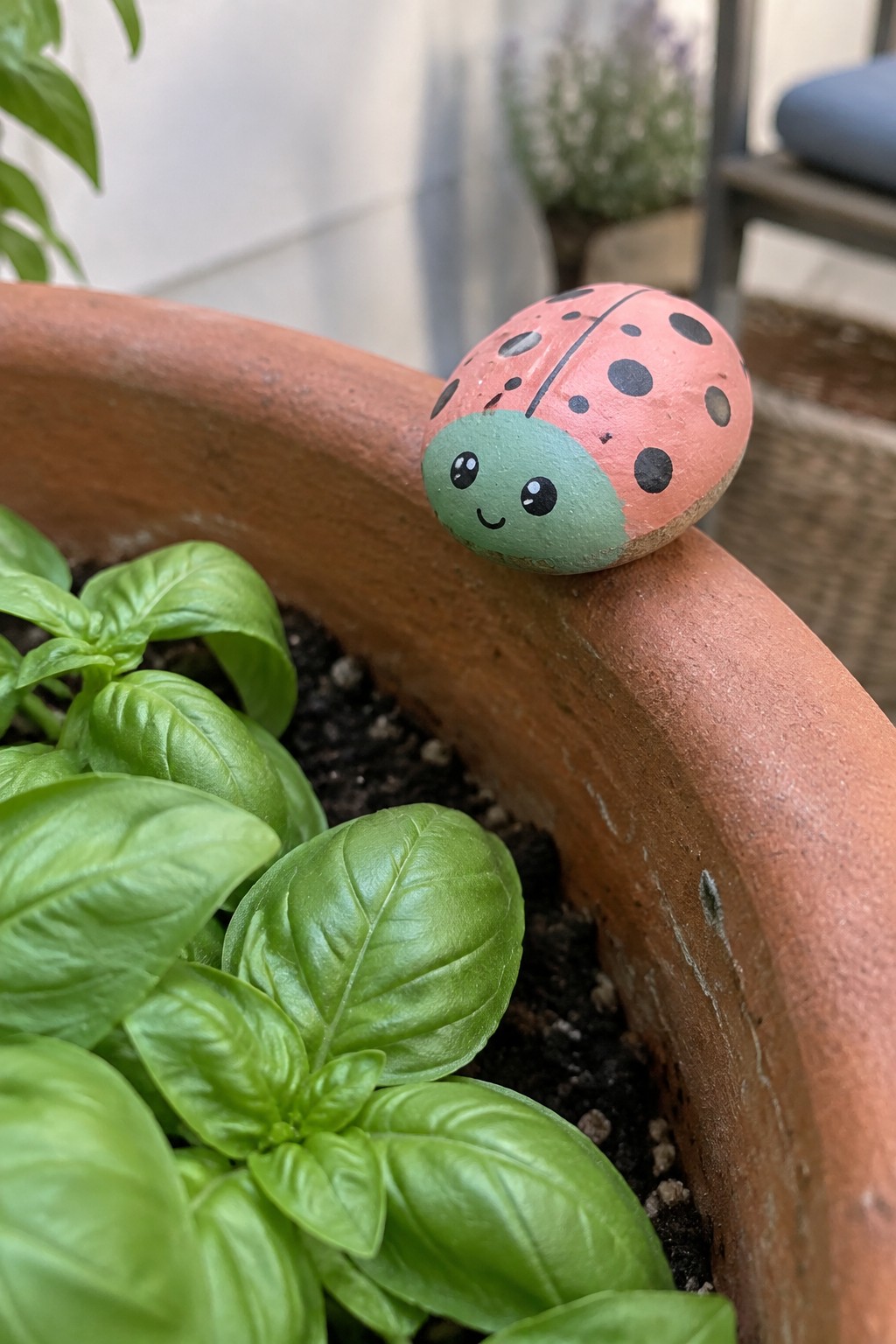
A rounded stone painted as a ladybug serves as a simple bug rock for garden use. The natural curve of the rock supports the oval body shape, allowing clean red paint on the main section, black dots for spots, and a green area at one end for the head with basic facial details. This approach keeps the design compact and easy to place among plants without extra hardware or stands.
What makes this idea useful is how the small scale tucks neatly onto the edge of a terracotta pot or into mulch along a path. The color blocking and dot pattern can be adapted to different stone sizes or repeated across several rocks to form a set. For garden decor this kind of painted rock works well in flower beds or patio containers where it adds a clear motif without needing text. The same ladybug layout could be simplified further by dropping the face and using only spots on a flatter stone.
Chevron Direction Rock for Garden Paths
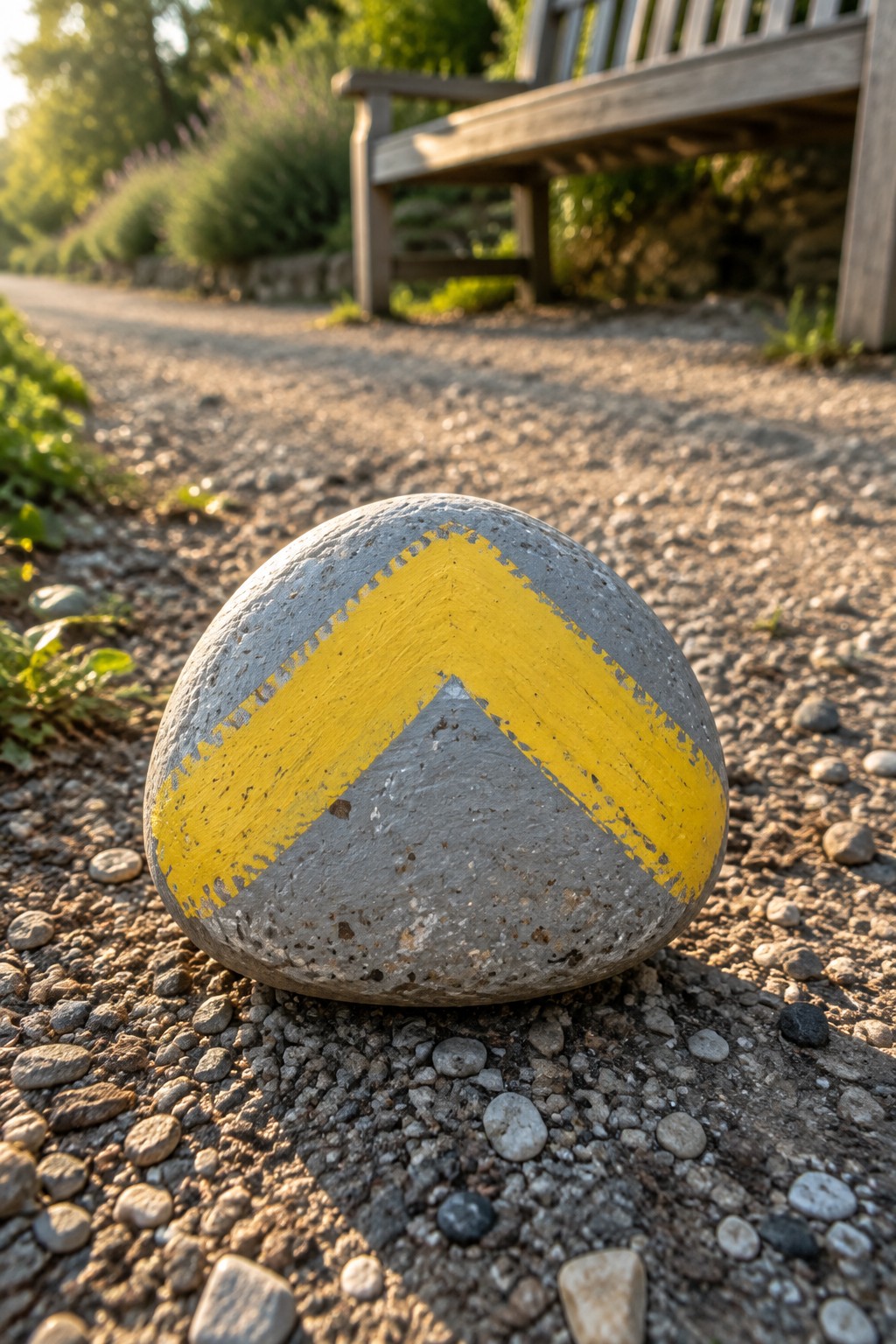
A rounded gray stone painted with a bold yellow chevron creates a simple directional marker for garden paths. The design uses wide color blocks that follow the curve of the stone, with the chevron lines spaced to stand out against the natural gray surface. This approach turns an ordinary rock into a positive symbol rock that works as garden decor without any lettering.
What makes this idea useful is how the chevron can guide foot traffic along a path or toward a bench without requiring words. The rounded stone shape sits steady on gravel or mulch and reflects light well during the day. You could scale the same chevron down for smaller stones in a set or swap the yellow for another high-contrast color that matches your existing garden accents.
Celestial Motifs on Rounded Beach Stones
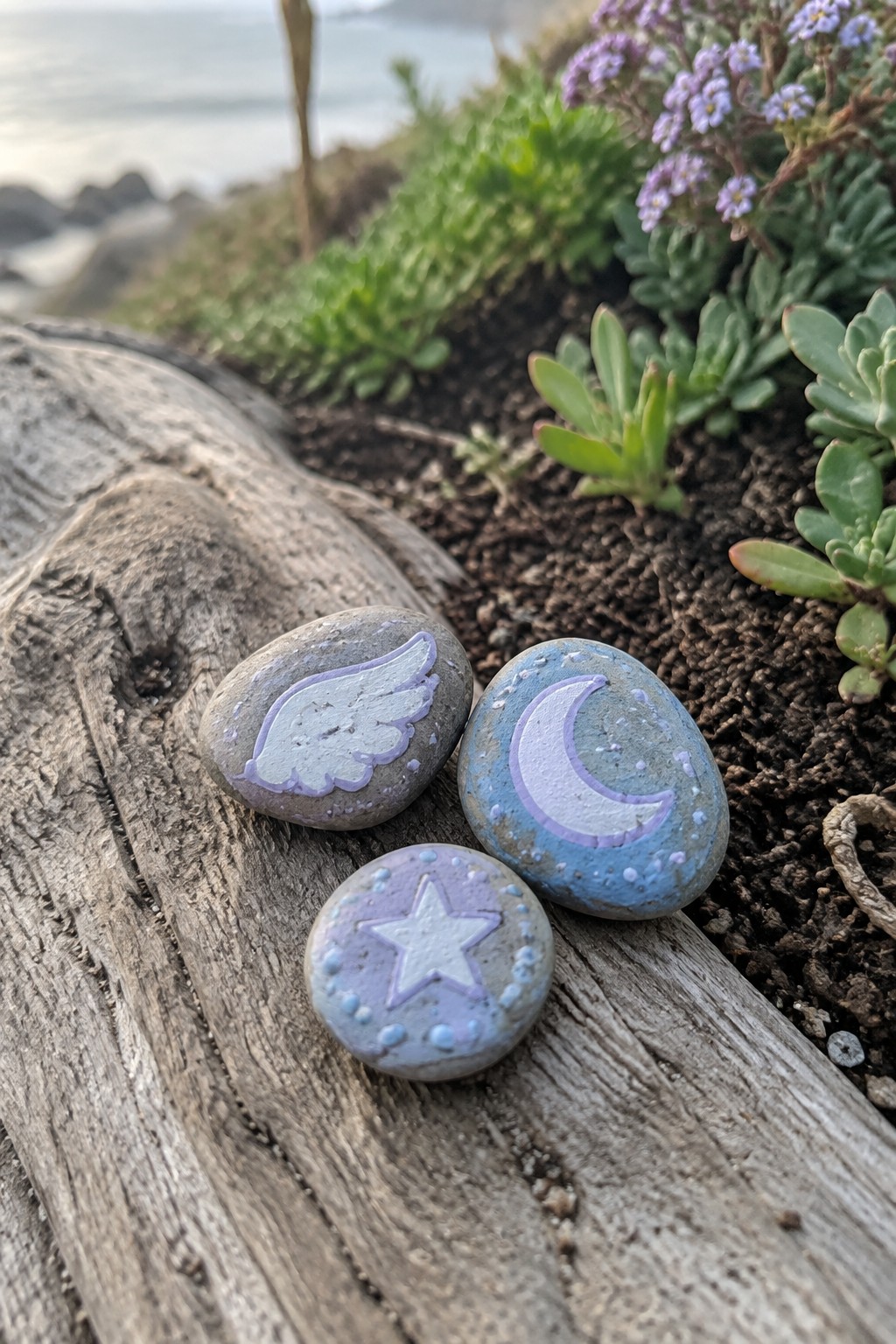
These rounded stones use simple white and soft purple paint to create a wing, a crescent moon, and a star centered on each surface. The designs sit directly on the natural gray and blue-gray tones of the stones with clean outlines and small dot borders that follow the curves. This style turns ordinary beach or river rocks into positive symbol rocks suitable for garden paths where visual motifs replace words.
What makes this idea useful is how the compact size and smooth shapes let the stones sit naturally along a path edge or in mulch without tipping. The light color palette stands out against soil and greenery while staying calm enough for repeated use in the same bed. You could swap the wing for a simple heart or add more dots around the star to refresh the set on a new batch of stones.
Bumblebee Rock for Garden Paths

A smooth, oval garden stone works as the base for a bumblebee design painted with yellow and black stripes across the body, white brush strokes for the wings, and a curved line of white dots trailing behind. The natural rounded shape of the stone follows the bee’s form and gives the dotted path room to curve without crowding the edges. This bug rock approach keeps the motif simple and visible against dark mulch or soil.
What makes this idea useful is how the compact size and rounded form let the rock nestle directly into a path or planter without tipping. The clear color blocking on the body stands out from a short distance, so the same layout could be repeated on other stones or swapped for a different insect like a ladybug or butterfly. For garden paths, this type of painted rock adds a seasonal accent that photographs well for sharing. You could scale the design down for smaller pebbles or extend the dotted trail across two stones placed side by side.
Footprint Path Stones for Garden Trails

A medium oval stone with a naturally pink surface works well for a path motif painted in soft teal. Multiple footprint shapes run in a gentle curve down the rock, each one spaced to suggest forward movement across the curved surface. This garden decor rock relies on the stone’s rounded form and visible texture to make the repeated prints stand out without extra outlines or shading.
What makes this idea useful is how the footprint trail can mark actual walking routes through mulch or between plants. The same line of prints can be shortened or lengthened to fit smaller or longer stones, and the color can shift to match other garden accents. For garden decor, this kind of painted rock sits cleanly along paths or near steps where the motif reinforces direction. The design adapts easily by swapping the teal for a brighter shade or adding a second row of prints on a wider stone.
Helping Hands Symbol on a Garden Path Stone

A smooth, rounded garden stone painted in teal provides a strong background for two white hands placed side by side with palms facing each other and fingers spread. The hands are centered on the flat surface so the design reads clearly from a short distance. This creates a simple positive symbol rock that fits the style of garden path markers.
What makes this idea useful is the way the hand motif works without any lettering, so it stays effective even after weather exposure. The rounded shape lets the rock sit steadily among mulch or along a walkway edge. You could rework the same layout on a smaller pebble using just the outlines or change the background color to match other stones in a set.
Butterfly Painted Rock for Garden Paths

A medium-sized rounded garden stone makes a solid base for a butterfly design when the wings are blocked in with a soft peach tone and the body plus antennae are added in black. The natural speckled surface of the stone remains visible around the painted areas so the motif sits cleanly without covering the entire surface. This bug rock style turns an ordinary path stone into a simple decorative accent that can sit directly in soil or among low plants.
What makes this idea useful is how the rounded shape lets the rock nestle stably into mulch or along a walkway edge without rolling. The basic color blocking and outline method adapts easily to smaller or larger stones and works with whatever shades of orange or coral you already have. For garden decor this kind of painted rock adds a light motif that blends with flowers yet stays visible from a path. The same butterfly layout can be simplified further by using fewer wing sections or swapped for other bug shapes on similar stones.
Concentric Rings on a Flat Path Stone
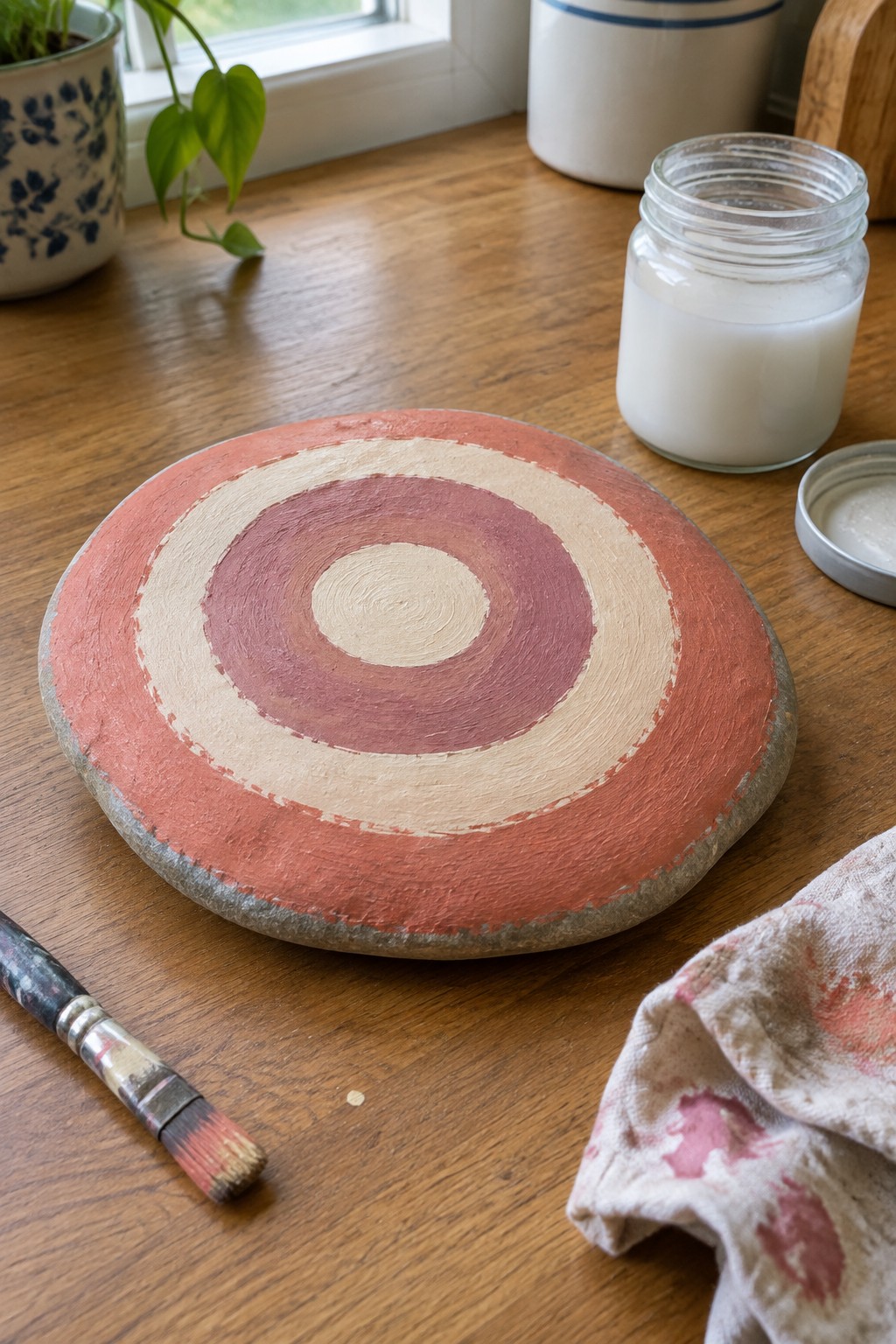
A flat, rounded stone forms the base for this bullseye-style pattern made of overlapping rings in terracotta red, muted rose, and cream. The rings start small at the center and widen outward, following the stone’s natural curve with visible brush texture that stops short of the rough outer edge. This approach keeps the design simple while making good use of the rock’s circular shape and flat top surface. It fits the category of decorative stone craft for outdoor use.
What makes this idea useful is how the bold rings create a clear focal point that reads well from a short distance on a garden path. The color blocking stays easy to adapt by changing the shades to match nearby plants or other path markers. You could scale the same rings down onto smaller stones or expand them on larger ones without adding lettering. For garden decor, this type of painted rock works along mulch edges or between stepping stones where a pattern stands out more than plain text.
Smiling Cloud Rain Rock for Garden Paths
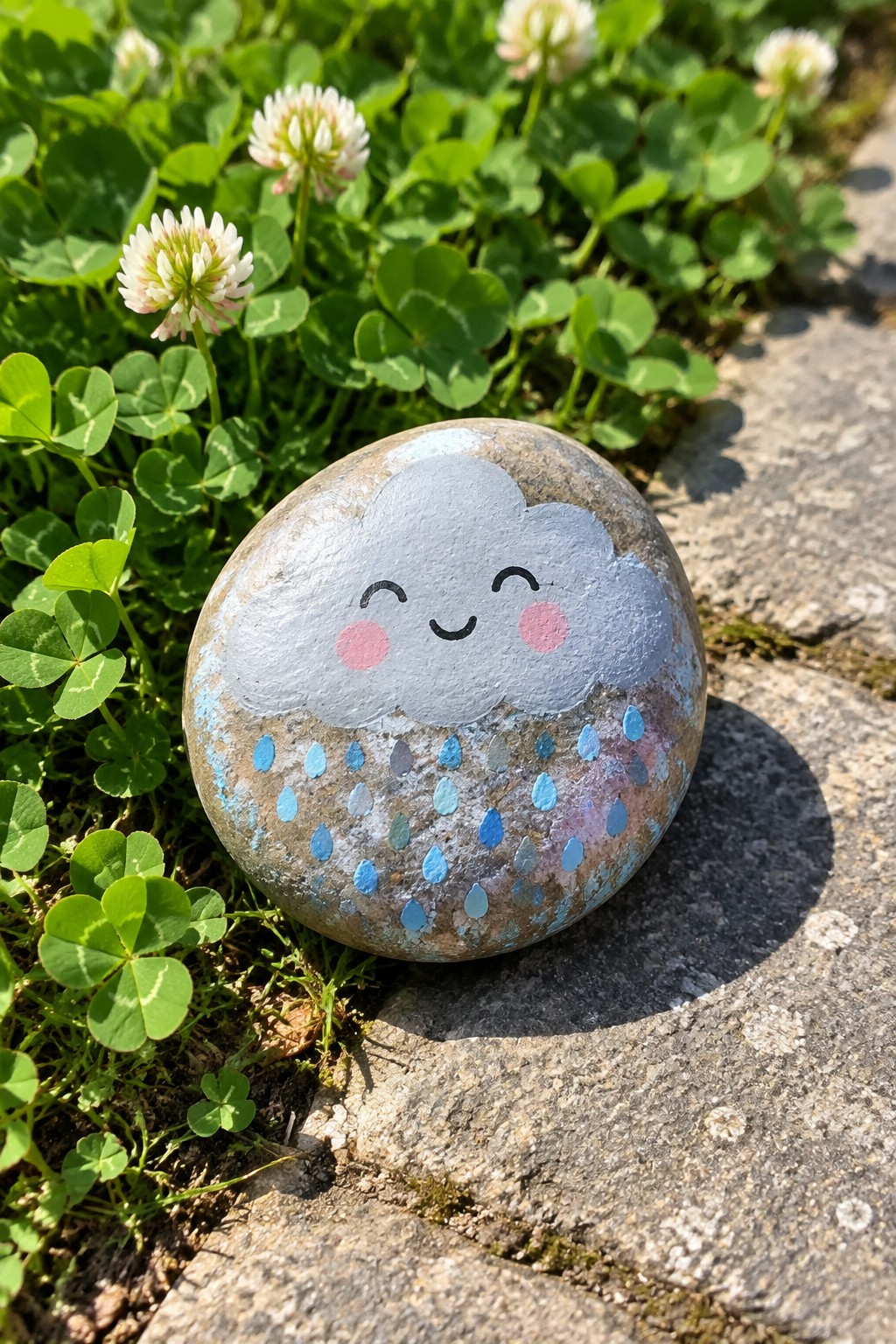
A smooth rounded stone makes a good base for a cloud and rain design that sits along a garden path. Paint the upper portion gray to form a cloud shape then add a simple face with curved lines for closed eyes and small pink circles for cheeks. Scatter blue and gray teardrop shapes across the lower half to suggest falling rain while letting some of the natural stone show through between the drops. This positive symbol rock works as garden decor without any lettering.
What makes this idea useful is how the rounded stone shape lets the cloud sit naturally at the top with raindrops following the curve below. The rain pattern could be simplified to fewer drops or changed to different shades to match other path stones in a set. For garden decor this type of painted rock blends into mulch edges or sits between pavers without needing a flat surface. The small scale makes it easy to repeat with slight color shifts for a full collection along a walkway.
Vertical Gold Stars on a Mint Green Path Stone

An elongated oval stone painted in solid mint green holds five gold stars stacked in a straight vertical line down the center. The bottom section of the rock is left natural to create a simple two-tone effect that highlights the painted area. This approach works well on a smooth, rounded river rock because the curved surface lets the stars sit evenly without distortion. It falls into the positive symbol rock category for garden decor.
What makes this idea useful is how the vertical layout fits the tall shape of the stone and keeps the design balanced on a path. The same star motif could be scaled down for smaller pebbles or repeated across a set of rocks in different greens. Placing one like this along a walkway adds a clear visual cue without needing text. The natural base also makes it easy to adapt by switching the top color to match other garden accents.
Painted Cottage Rock for Garden Paths

A rounded garden stone works as the base for a miniature house design, with brown paint covering the upper curve to form a roof and lighter paint on the body to suggest walls. A small window with a flower box and an open door are added in darker tones to create the main details. The natural curve of the rock helps the roof shape fit without extra outlining, turning an ordinary stone into a garden decor piece.
The rock shape does a lot of the work here by already suggesting a house form, so only basic color areas are needed. A painted rock like this works especially well tucked along a path edge or in a flower bed where the scale stays visible. The simple color blocking makes this easy to adapt by switching door or roof colors for different looks. For garden decor, this type of design fits paths or planters without needing lettering.
Sun and Arrow Design for a Garden Path Stone

A rounded stone with natural texture takes a sun motif and arrow well because the curved surface lets the rays spread evenly outward. Red and yellow paint create bold color blocks for the half-circle sun and straight arrow, with visible brush strokes giving the lines a handmade look. This fits the positive symbol rock category and works as garden decor without any lettering. The design keeps the stone’s rough edges visible so it blends into mulch or soil along a walkway.
What makes this idea useful is how the arrow adds direction to the sun motif, helping the rock guide the eye along a path or flower bed edge. You can adapt the same layout on a flatter stone by tightening the rays or swapping in softer shades for a different season. For garden decor, this kind of painted rock stands out in photos because the warm tones pop against dirt and greenery without needing extra props. The small scale makes it easy to repeat the pattern on several stones for a short trail.
Frequently Asked Questions
1. What supplies will I need to create these uplifting rocks? Gather smooth, flat rocks from your yard or a garden store. Use acrylic paints in bright colors, fine-tipped brushes for lettering, and a clear waterproof sealant such as acrylic spray. Stencils can help if you want neat lettering without freehand drawing.
2. How do I protect the painted words from rain and sun? Let the paint dry fully for at least 24 hours. Apply two to three thin coats of outdoor sealant, allowing each coat to dry between applications. Check the rocks every few months and add a fresh sealant layer to keep the colors vibrant.
3. Where is the best spot to place the 20 rocks on a garden path? Position them along the edges or in the center at even intervals of about two to three feet. This spacing lets walkers read one encouraging word at a time without crowding the path. Rotate their orientation slightly so each message catches the eye from different angles.
4. What if I want to change the words after a season? Paint over the old words with a base coat of white or neutral acrylic paint, let it dry, then add new messages. A fresh layer of sealant will restore the protective finish. This method keeps the rocks reusable year after year.
5. How can I make the project last longer on a busy path? Choose heavier rocks that will not shift underfoot. Place them slightly off the main walking area or embed them lightly in soil or mulch. Avoid high-traffic zones where they could be stepped on repeatedly.
