


I painted some large rocks last summer to place in my garden beds.
They ended up serving as good focal points without taking over the space.
I kept the designs fairly simple so they would not clash with the surroundings.
Here are the ones I liked the most after trying them out.
They have held up through a couple of seasons now.
Large Sunflower Rock as a Garden Focal Point
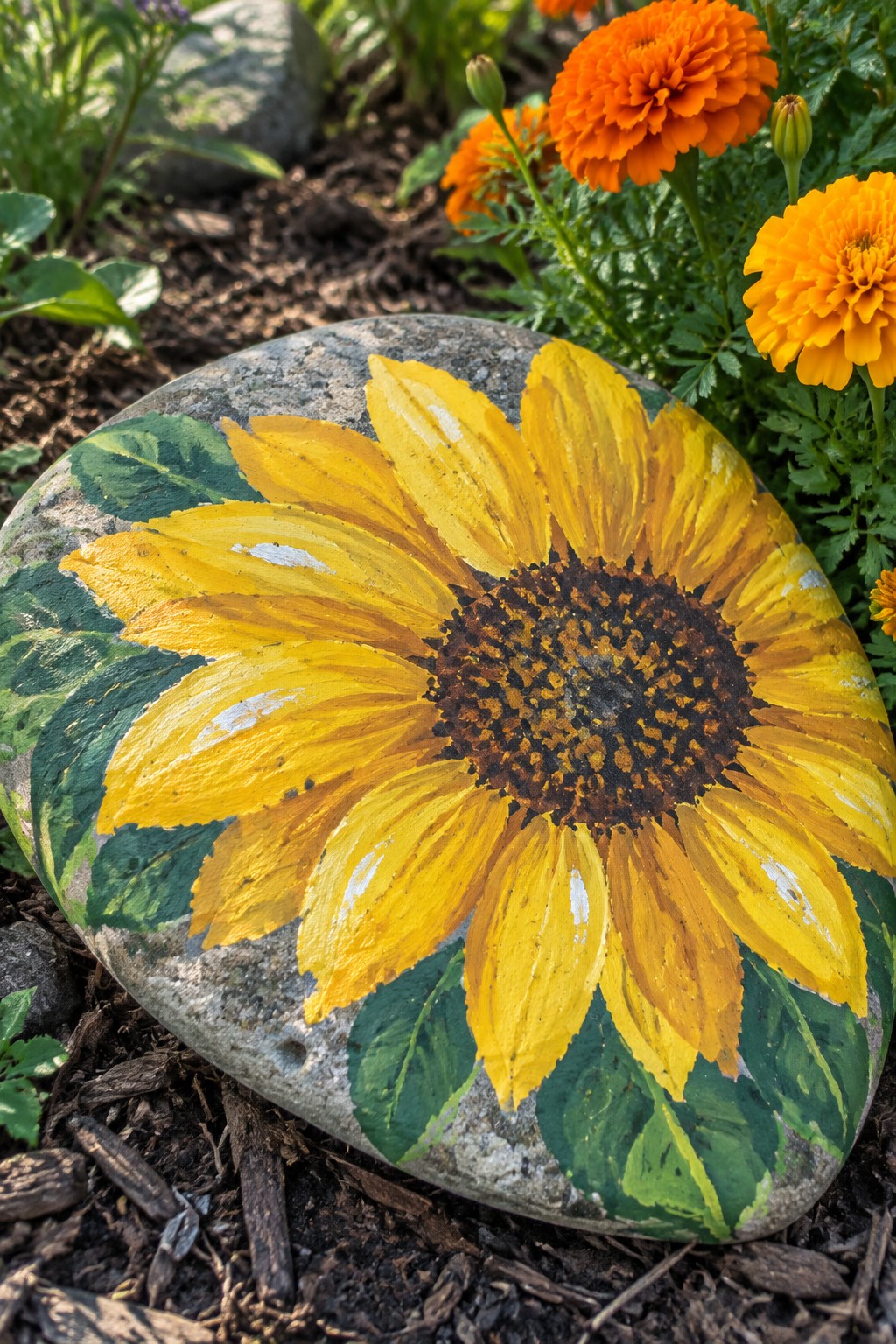
A large rounded garden stone makes an effective base for a sunflower because its broad surface gives room for wide yellow petals to spread from a dark dotted center. Green leaves painted around the lower edges follow the stone’s natural curve and help the design sit naturally among soil and plants. This flower rock category works as a fixed outdoor accent rather than a temporary decoration.
What makes this idea useful is its size, which lets the painted sunflower register from a distance in a flower bed or along a path. The same motif could be scaled down to a medium stone by reducing petal layers and keeping the center as simple dots. For garden decor, this kind of painted rock stands out best when placed near real blooms so the colors echo each other without needing extra props.
Sunset Landscape Rock for Garden Borders

A large rounded garden rock works well for this project because its broad curved surface supports a full landscape scene. The design uses a bold black tree silhouette against blended bands of orange, pink, and purple to create a sunset over teal water, with a simple yellow circle for the sun. The natural rough texture of the stone shows through the paint edges, giving the finished piece an outdoor-ready look that fits among mulch or along a path.
What makes this idea useful is how the rock shape itself frames the horizon line without needing extra borders. The strong contrast between the dark tree and the bright sky colors helps the piece read clearly from a distance in a flower bed or near a patio. You can adapt the same layout to any sizable stone by keeping the water band low and letting the sky take up most of the surface. The motif also translates easily to other large rocks if you swap the tree for a different simple silhouette like a mountain or cactus.
Bold Chevron Stripes on a Large Garden Rock
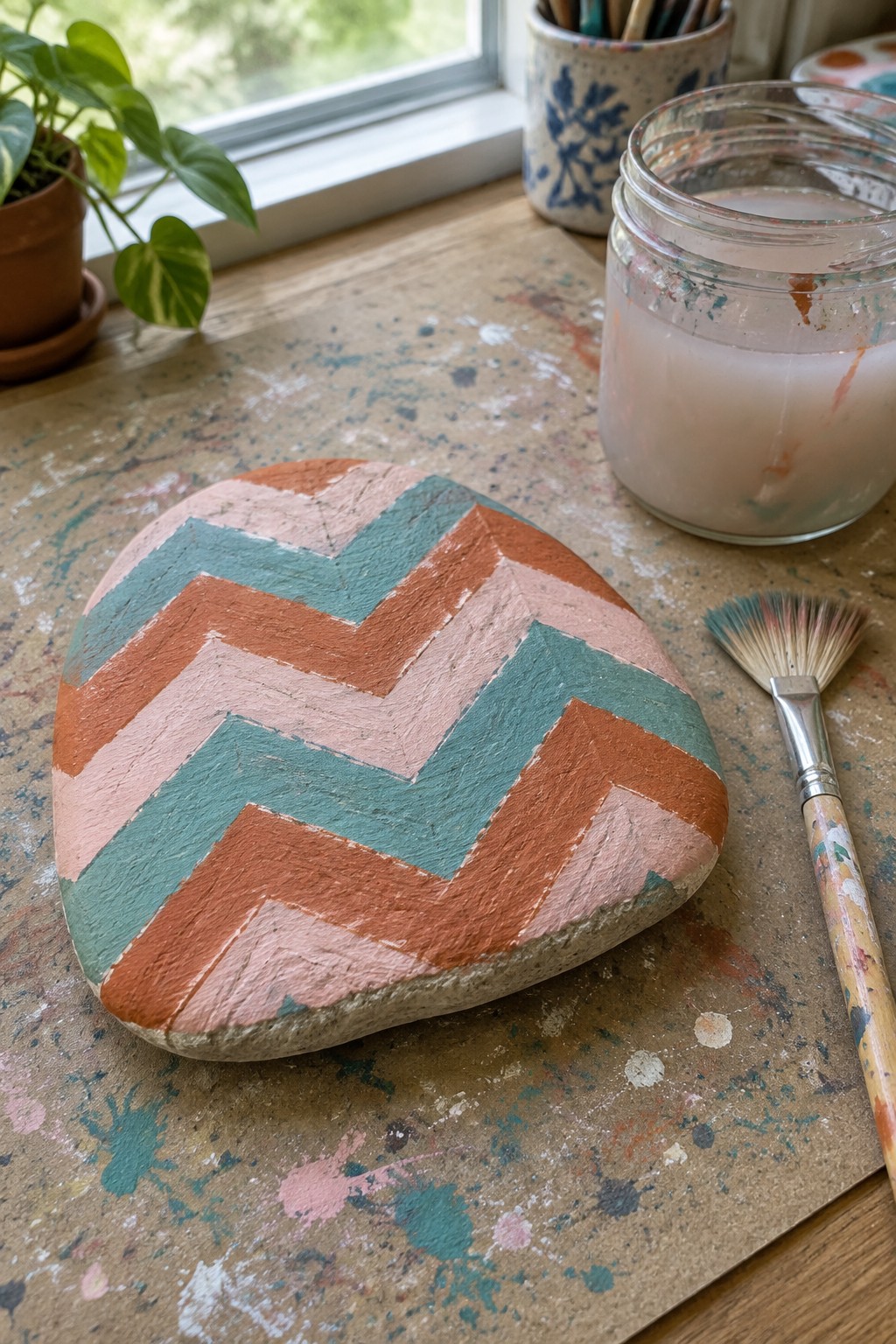
A substantial flat garden stone painted with wide chevron stripes in teal, rust orange, and soft pink turns the natural rock shape into a strong geometric focal point. The repeating V pattern runs across the surface in clean color blocks that follow the stone’s curve without needing fine detail work. This style of painted rock fits the decorative garden stone category and works well outdoors because the bold lines remain visible from a distance.
The rock shape does a lot of the work here by giving the stripes a built-in flow that would look flatter on a perfectly round stone. A painted rock like this works especially well as a border marker in mulch beds or a standalone accent on a patio. You could rework the same chevron layout on an even larger stone using just two colors or flip the direction of the Vs to create a different rhythm. For landscape focal points, the high-contrast color blocking helps it stand out without competing with surrounding plants.
Large Frog Face Rock for Pond Edges
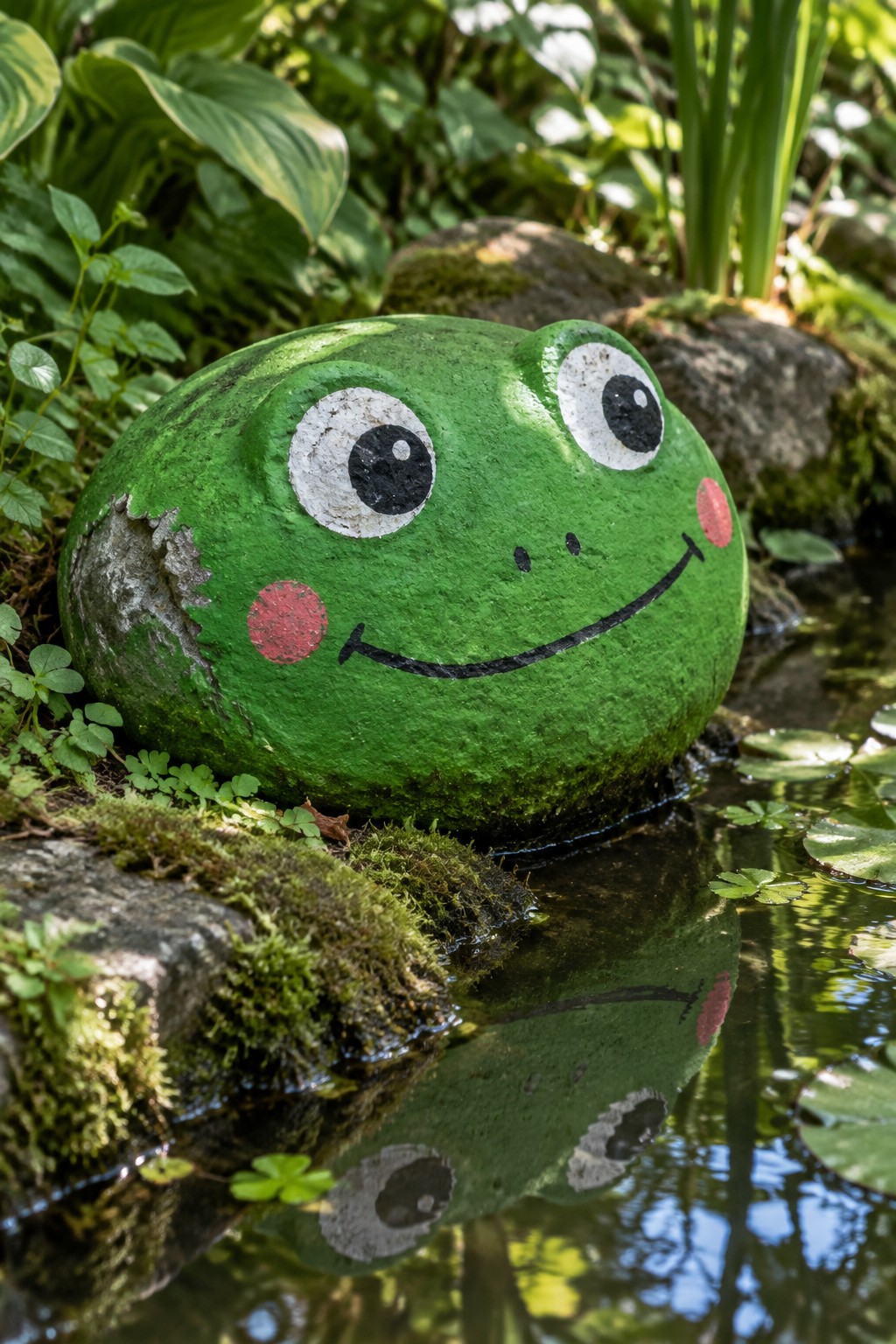
A large rounded boulder painted bright green creates a frog face using simple color blocking for the head, with oversized white eye circles that have black pupils and small white highlights. Red dots mark the cheeks while a curved black line forms the mouth, all following the stone’s natural curve so the features wrap around the surface without distortion. This approach turns an ordinary garden rock into an animal-themed focal point suited for placement near water features or in lush planting beds.
The rounded form of the stone does most of the shaping work, letting the frog motif read clearly from a distance in a landscape setting. A painted rock like this stands out as a durable outdoor accent that can be repeated with different animal faces on other large boulders scattered through the garden. The same eye and cheek placement works on flatter stones too if you adjust the mouth curve to match the new shape.
Oversized Stone Covered in Mixed Daisy Blooms
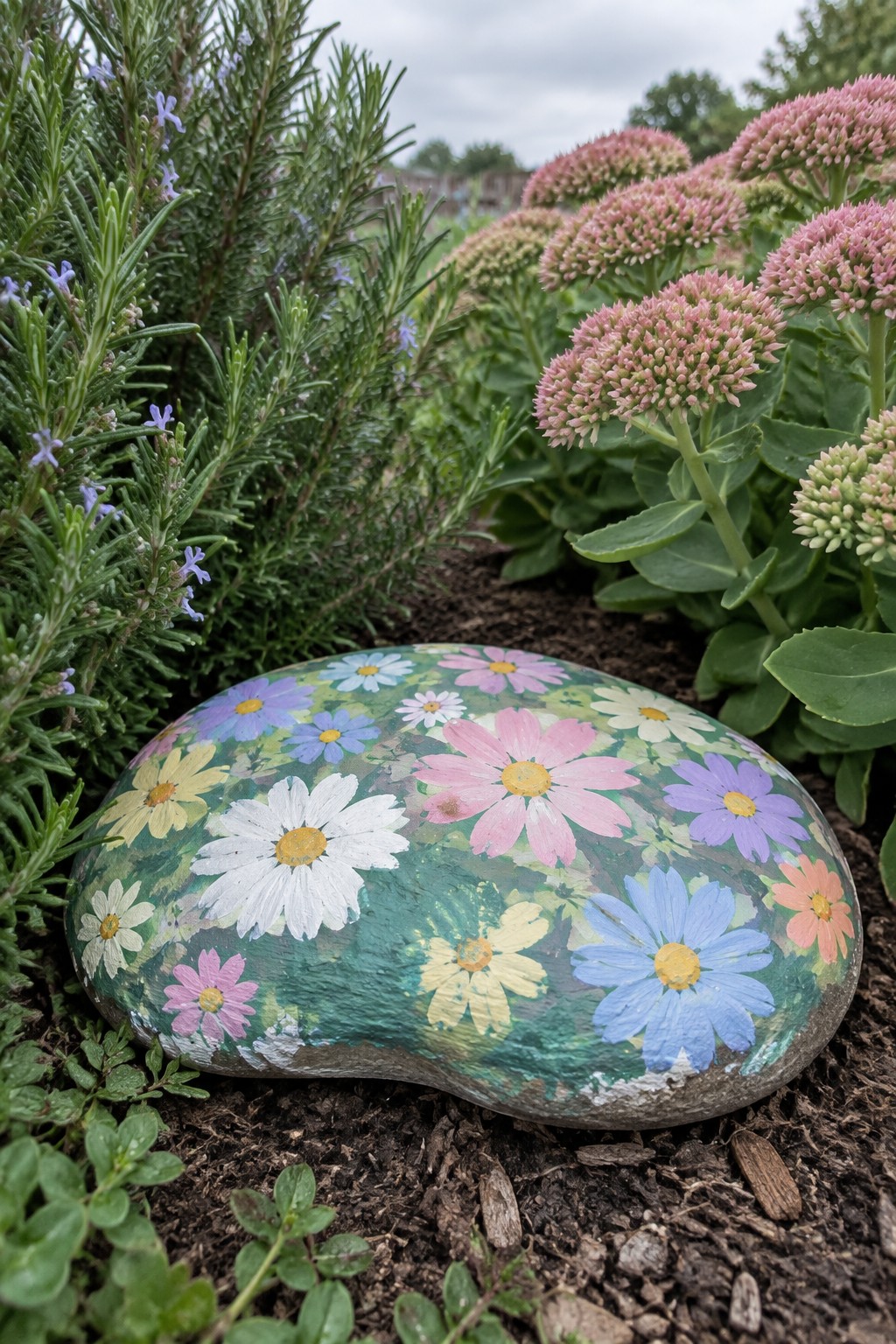
A broad rounded garden stone makes an effective base for a flower rock when covered with daisies in white, pink, yellow, blue, purple, and peach against a green ground. The petals vary in size and angle so the design follows the curve of the rock without crowding. This style of painted stone fits the garden decor rock category and stays visible among low plants and mulch.
What makes this idea useful is how the large surface area lets the motif read from several feet away in a flower bed or along a walkway. You could rework it on another wide stone by reducing the number of colors or spacing the blooms farther apart. For garden decor this kind of painted rock anchors a corner of a border or sits near the edge of a patio without tipping. The rounded shape also lets it nestle into soil or gravel while keeping the painted surface upright.
Large Beehive Rock with Striped Pattern

A large rounded rock painted with wide yellow and black horizontal stripes forms a beehive design that follows the stone’s natural curve. The base features a black arched opening outlined with short vertical marks to suggest an entrance, while small bees with yellow and black bodies appear across the stripes along with dotted lines for flight paths. The rough texture of the stone remains visible under the paint, giving the stripes an uneven, handmade quality that suits outdoor use. This approach falls into the garden decor rock category as a bug-themed project.
What makes this idea useful is how the rounded shape already suggests a hive, so the stripes only need to follow the existing contours rather than create new ones. You could simplify it by using fewer bees or wider stripes on a similar large stone, or swap the bees for other insects if you want a different garden accent. Place the finished rock in a flower bed, near a path, or beside a planter where the bold stripes contrast with greenery and create a clear focal point from a distance. The scale works especially well for landscape displays because the design reads clearly even when viewed from several feet away.
Tile-Inspired Scrollwork on a Large Garden Boulder

A sizable rounded stone serves as the base for an all-over pattern of blue and coral floral motifs connected by scrolling lines and small accents. The design covers the curved surface evenly, using the natural stone shape to let the repeating elements flow without interruption. This style fits the decorative garden stone category, where the painted rock functions as a permanent landscape accent rather than a small portable craft.
What makes this idea useful is the way the large scale supports denser linework and repeated motifs that would feel cramped on smaller stones. Position the finished piece along a patio border, in a gravel bed, or beside a planter so the colors stand out against the surrounding earth tones. You can adapt the layout by reducing the number of floral elements on a slightly smaller boulder or by swapping the blue and coral for colors that already appear in your garden hardscape. The same scrolling structure also works as a border-only treatment if you want to keep more of the natural stone visible.
Painted Rocks with Succulent Rosette Patterns
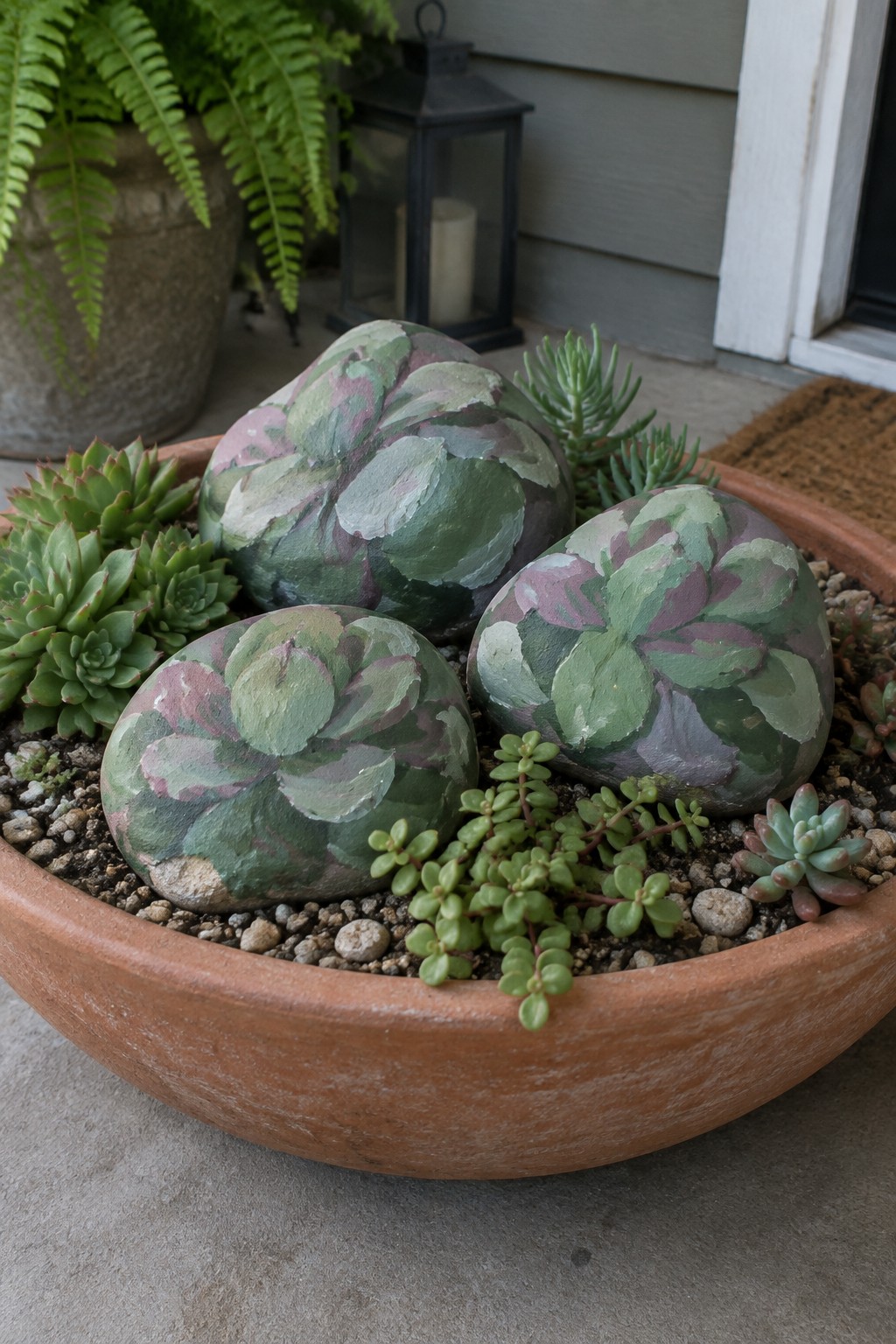
Large rounded garden stones work well for this project because their smooth, curved surfaces let the overlapping leaf shapes follow the rock form naturally. The design uses layered greens and muted purples to create rosette patterns that echo real succulents, so the painted rocks sit comfortably among live plants without looking out of place. This approach falls into the garden decor rock category and turns ordinary stones into repeating focal points that can fill empty space in a planter or bed.
What makes this idea useful is how the same rosette layout can be scaled up or down depending on the size of available stones. The color blocking stays simple enough to repeat across multiple rocks for a grouped display, yet the motif can shift to different leaf arrangements or added tones to match surrounding plants. In a large pot or along a path edge, these painted stones add visual weight without needing extra structures or maintenance. The approach also translates easily to other rounded stones if you want to expand the set for a bigger landscape area.
Large Watermelon Slice Garden Rock
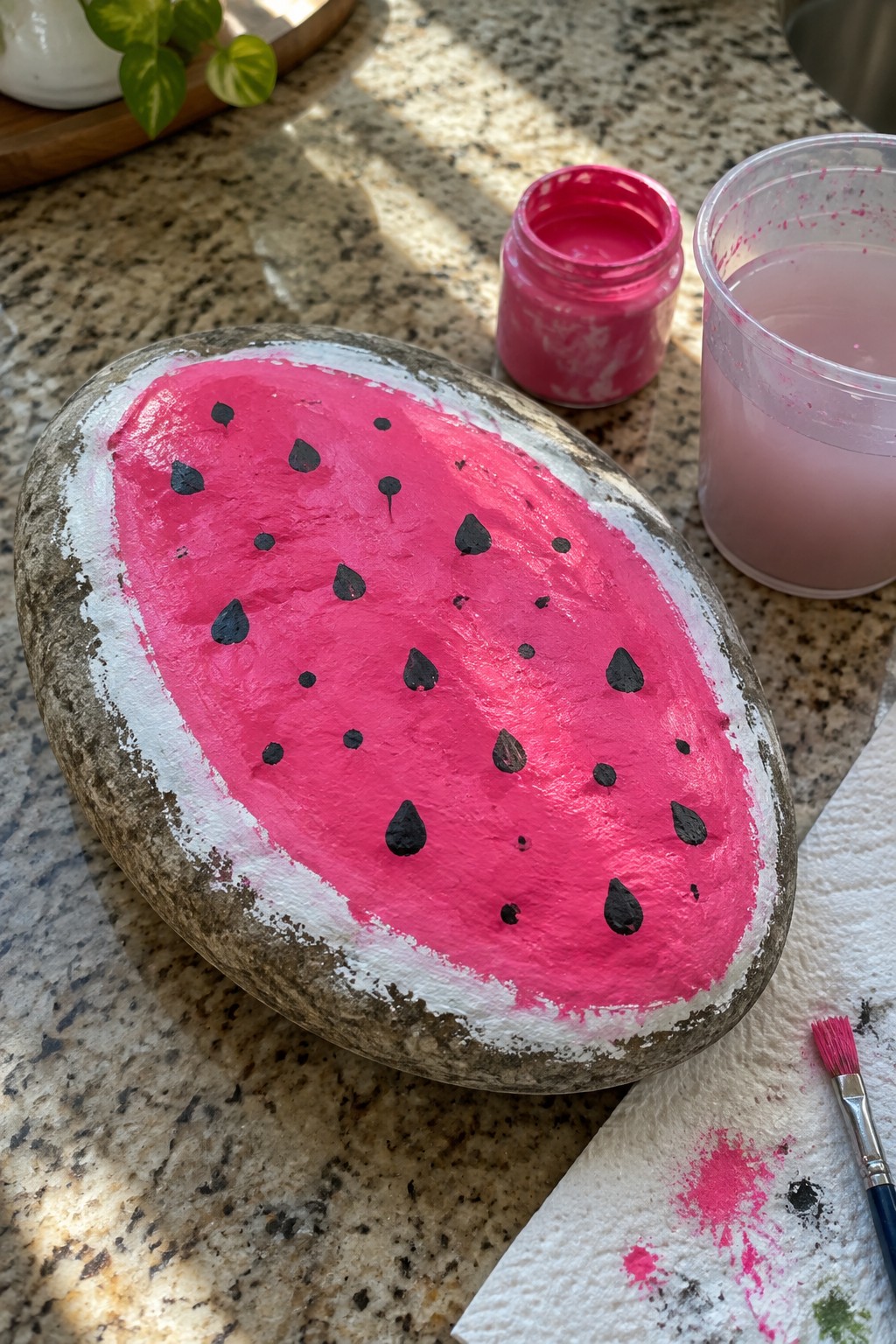
A large oval garden rock painted with a solid pink center, scattered black seed shapes, and a white border along one curved edge turns the stone into a watermelon slice. The natural rounded form of the rock supports the fruit motif while the unpainted stone texture serves as the outer rind. This food-inspired rock works as a garden decor idea because the simple color blocks and dot details follow the stone’s surface without extra layers.
What makes this idea useful is how the rock’s existing oval shape does most of the work for the watermelon look. A painted rock like this works especially well as a focal point in mulch beds, along paths, or near planters where the bright pink stands out from a distance. The same design could be adapted to other large stones by changing the seed placement or trying different fruit colors such as orange for a cantaloupe slice. The high-contrast color blocking also photographs cleanly for outdoor project shares.
Night Sky Landscape on a Large Garden Boulder
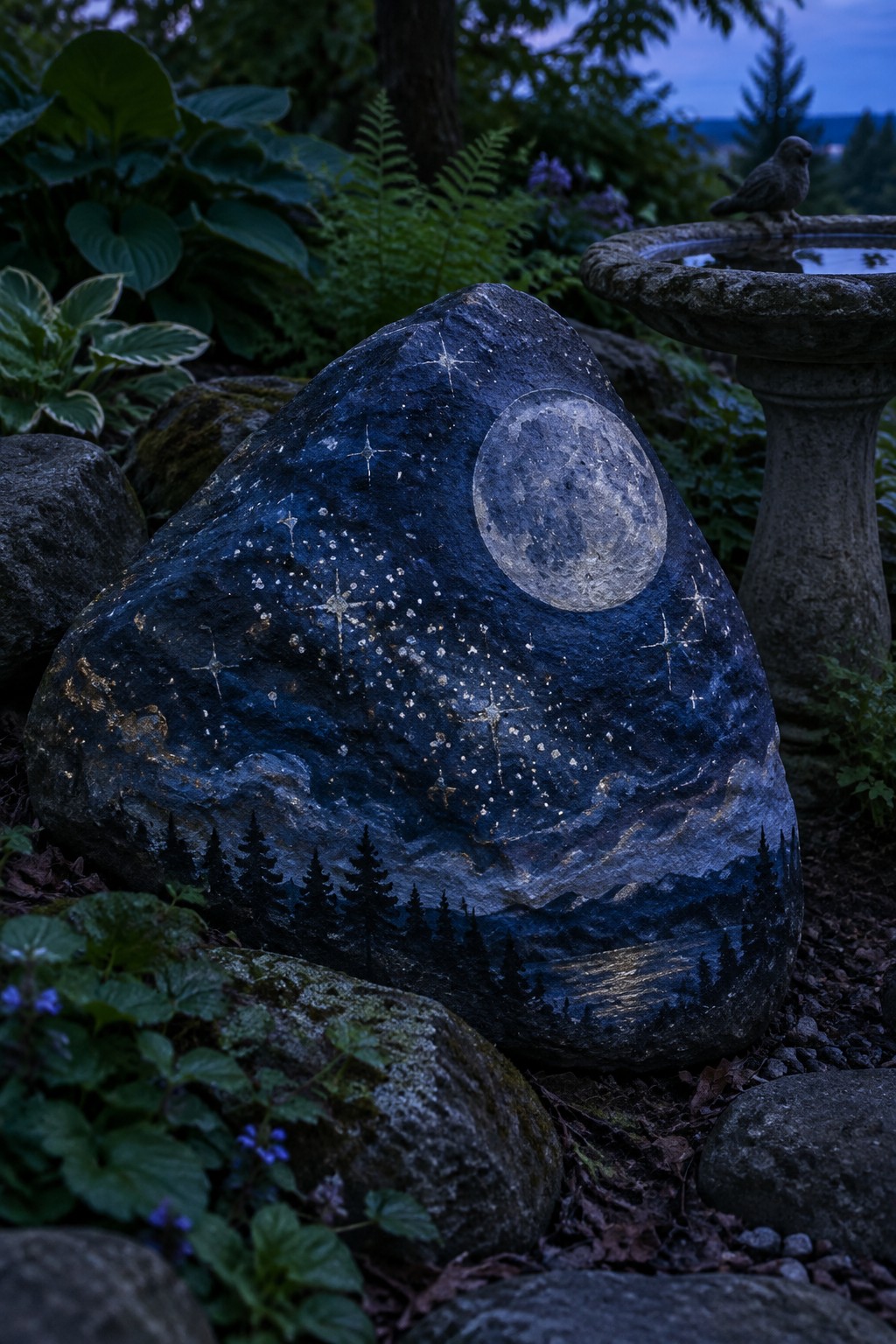
A large rough boulder painted with a full night scene creates a strong focal point in any garden bed or rock grouping. The design uses a glowing moon, scattered stars of varying sizes, dark pine trees, and layered mountains with a water reflection along the lower edge. The natural curve and texture of the stone help the painted layers recede, giving the scene depth without extra shading. This approach fits the decorative stone craft category and works best on rocks big enough to hold the full composition.
What makes this idea useful is how the existing rock shape already supplies the horizon line and curved sky. You could adapt the same motif by shrinking it to just the moon and stars on a medium stone or by flipping the layout so the water sits higher for a flatter rock. For garden decor, set the finished piece near mulch or low plants where the dark blues blend with evening light. The limited color range of deep blue, white, and metallic accents makes the design easy to repeat on other large stones you already have on site.
Oversized Ladybug Rock for Garden Focal Points

A large rounded stone painted bright red with black spots forms a bug rock that mimics a ladybug. The design places a solid black section at one end for the head, adds white eyes with black centers, and uses simple linework for the mouth and wing division down the center. This approach works because the stone’s natural dome shape supports the rounded body while the bold color blocks and spots create clear contrast from a distance.
What makes this idea useful is its size, which lets the finished rock serve as a standalone accent in a flower bed, along a path, or near a patio edge. The same rounded form and red-and-black scheme can be scaled down for smaller stones or repeated with slight spot variations to build a set. For garden decor this kind of painted rock stands out on Pinterest because the motif reads clearly even when viewed from several feet away.
Quilt Block Pattern on a Large Garden Stone

A large rounded stone works as the base for a patchwork quilt design made up of multiple squares. Each square holds a different motif such as a heart, pinwheel, star, flower, or checkered block, all connected by dashed blue lines that suggest stitching. Soft pastel colors keep the overall look balanced while the natural curve of the stone lets the pattern follow the surface without distortion. This approach falls into the decorative stone craft category for outdoor use.
What makes this idea useful is how the full-surface pattern turns a plain rock into a focal point that holds attention in a flower bed or along a path. The rounded shape supports wrapping the design around the sides so it reads well from multiple angles. You could rework the same layout on a flatter or smaller stone by reducing the number of blocks or enlarging the individual motifs. For garden decor, this kind of painted rock stands out because the mix of patterns creates interest without needing text or extra elements.
Large Painted Bug Rocks for Garden Focal Points

Rounded garden stones painted as oversized bugs create striking focal points when placed directly in flower beds or along lawn edges. Each rock uses its natural curved shape as the body, with bold primary colors blocked across the surface and large cartoon eyes added for instant recognition. Simple antennae formed from painted sticks or dowels attached to the top give the bugs a three-dimensional look that stands out against grass and mulch. This bug rock approach works well because the rounded forms already suggest insect bodies, so the paint job only needs to emphasize eyes, color sections, and feelers.
The rock shape does a lot of the work here by letting the bugs sit naturally in soil without tipping. A painted rock like this works especially well as a border accent in vegetable gardens or perennial beds where bright colors draw the eye from a distance. The same idea could be adapted by using just two colors on a flatter stone or scaling the antennae down for a more subtle version in smaller spaces. For garden decor this style stands out on Pinterest because the grouping of multiple bugs creates an easy, repeatable pattern that photographs well outdoors.
Pumpkin Rock Painting for Fall Garden Focal Points

A large rounded garden rock painted orange with vertical darker streaks forms a realistic pumpkin shape for outdoor use. The stone’s natural curves and any raised areas are painted to suggest ridges, while the top uses a brown or gray tone for a stem and the base gets a lighter wash to suggest soil or shadow. This approach turns the rock into a fruit-inspired garden decor piece that blends painted details with the stone’s own texture and weight. It works as a seasonal accent rather than a permanent fixture since the design follows the rock’s existing form.
What makes this idea useful is how the rounded shape lets the finished rock sit steadily in mulch beds, along pathways, or on porch steps without extra stands. You could adapt it by using a slightly flatter stone for a subtler look or by widening the ridge lines on a bigger rock for stronger visual impact from a distance. For garden decor, this kind of painted rock holds up in fall displays near planters or entryways where real produce would decay quickly. The simple color blocking makes this easy to rework as a different squash variety by changing the stem shade or adding a few painted leaves at the base.
Wavy Color-Blocked Stripes on a Large Flat Rock

A large smooth oval stone serves as the base for this abstract design of broad wavy stripes in teal, coral, and yellow. The colors are blocked into flowing curved bands that follow the rock’s rounded shape and create visual movement across the surface. A clear sealer adds a glossy finish that protects the paint for outdoor use. This approach falls under decorative stone craft and works as a simple garden accent without requiring detailed drawing.
What makes this idea useful is how the rock’s natural curves help the wavy lines look intentional even with basic application. The design scales well for other large flat stones placed in flower beds, along paths, or near entry steps where it can act as a focal point. You could rework the same blocking method with different color combinations to match existing garden tones or reduce it to two colors on a smaller stone for quicker results. The high-contrast stripes make the piece easy to spot in photos and garden layouts.
Large Fox Head Rock as a Garden Focal Point

A large rounded garden rock painted with a fox face uses broad color blocking to separate the reddish-brown fur areas from the white muzzle and inner ears. The natural contours of the stone help shape the head and snout while simple black accents define the eyes, nose, and mouth lines. This animal rock project fits the garden decor category and works because the scale and rounded form let the painted design read clearly from a distance.
What makes this idea useful is how the rock shape already supplies the basic head outline so only the color areas and facial lines need painting. A painted rock like this works especially well tucked against a stone wall, along a flower bed edge, or near a patio where its size turns it into a landscape focal point. The same approach could be adapted to other animal faces such as a raccoon or owl by changing the color blocks and ear placement while keeping the same large stone size. For garden decor this type of design stands out on Pinterest because the animal motif combined with the rock’s bulk creates a strong visual anchor without needing extra props.
Layered Mandala on a Large Flat Garden Stone

A large round stone with a flat top surface works well for this style of project. The design uses concentric rings of oval and petal shapes in pink, teal, and yellow, separated by rings of small dots that follow the curve of the rock. The central yellow circle anchors the pattern while the outer rings expand outward to fill the available space. This approach turns a plain landscape rock into a decorative garden piece through simple color blocking and repeated shapes.
What makes this idea useful is how the flat surface and round outline let the pattern stay balanced without needing perfect symmetry. A painted rock like this works especially well as a focal point along a garden path, in a mulch bed, or near a patio edge where the bright rings catch attention from a distance. The same layout can be simplified by reducing the number of rings or swapping the petal shapes for basic stripes if the rock size changes. The small scale of the dot borders makes it easy to adapt the idea onto other flat stones while keeping the overall mandala look intact.
Driftwood Style Rock with Seashell Accents

A large oval garden rock works as the base for this project by getting painted in layered shades of blue, teal, gray, and brown to create a weathered wood grain look across its curved surface. Several real seashells get attached directly onto the painted areas to complete the beach-found driftwood effect. The natural rock shape and texture help the paint follow the contours so the finished piece reads as a single solid object rather than separate decorations. This approach falls into the decorative stone craft category for outdoor use.
What makes this idea useful is the way the rock’s elongated form already suggests a piece of driftwood before any paint is added. The same design can be scaled down onto smaller stones or simplified by using fewer shells and broader brush strokes for quicker coverage. A painted rock like this works especially well placed among mulch in a coastal-style bed, along a garden path, or on a patio corner where the size gives it presence without needing a stand. The motif could easily be changed into a plain wood-grain rock by skipping the shells or adapted with different shell sizes to match whatever beach finds are on hand.
Mushroom Cluster on a Large Oval Garden Rock

A large rounded stone receives a cluster of mushrooms painted directly onto its surface to serve as a garden focal point. The design shows several toadstool shapes with brown caps, white speckles, and pale stems set against a green base that follows the rock’s natural texture and curves. This creates a simple woodland motif that suits outdoor placement among plants and soil.
What makes this idea useful is how the oval shape supports multiple mushroom sizes without needing extra space. A painted rock like this works especially well tucked into a shaded bed or along a path edge where the green tones blend with existing foliage. The same cluster approach could be simplified to fewer mushrooms or swapped for other garden motifs like leaves on a comparable large stone.
Frequently Asked Questions
What paint and sealant should I use on large garden rocks to make the designs last through rain and sun?
Use exterior acrylic paints formulated for masonry or stone surfaces, as these adhere well and resist fading. Apply two thin coats of paint, letting each dry fully between applications. Finish with multiple layers of a clear outdoor polyurethane sealant or a stone-specific sealer, which creates a waterproof barrier. Reapply the sealant every year or two depending on your local weather exposure.
How do I prepare large rocks before painting them for garden use?
Start by cleaning the rocks thoroughly with a stiff brush and mild soap to remove dirt, moss, or loose debris. Rinse them well and allow complete drying, which may take several days in the sun. If the surface feels very smooth, lightly sand it to create better paint grip. Avoid painting rocks that stay constantly wet, such as those in ponds, since moisture can cause peeling over time.
Where should I position painted rocks to create strong focal points in my landscape?
Place them at the end of a path, near a seating area, or beside a garden entrance where they naturally draw the eye. Group three rocks of varying sizes together for added impact, or set a single large painted rock against a backdrop of green shrubs. Consider the viewing angle from windows or patios so the design remains visible year round.
Can I add lighting to highlight my painted rock focal points at night?
Yes, solar spotlights work well because they require no wiring and can be positioned to shine upward onto the rock surface. Choose warm white lights to bring out the paint colors without washing them out. Bury the solar panels in nearby soil or mulch so they stay hidden during the day while charging.
How can I maintain the painted rocks over multiple seasons without repainting everything?
Inspect the rocks each spring for chips or sealant wear, then touch up small areas with matching paint before resealing. Keep surrounding plants trimmed so they do not rub against the painted surfaces. If a design begins to fade noticeably, a fresh top coat of sealant often revives the colors without needing a full repaint.
